Read a page of their writing.
E · Doctors of the Church
Saint Leo the Great
The pope who taught the Church about Christ and met Attila, saving Rome from destruction.
Memorial · 11-10
 book
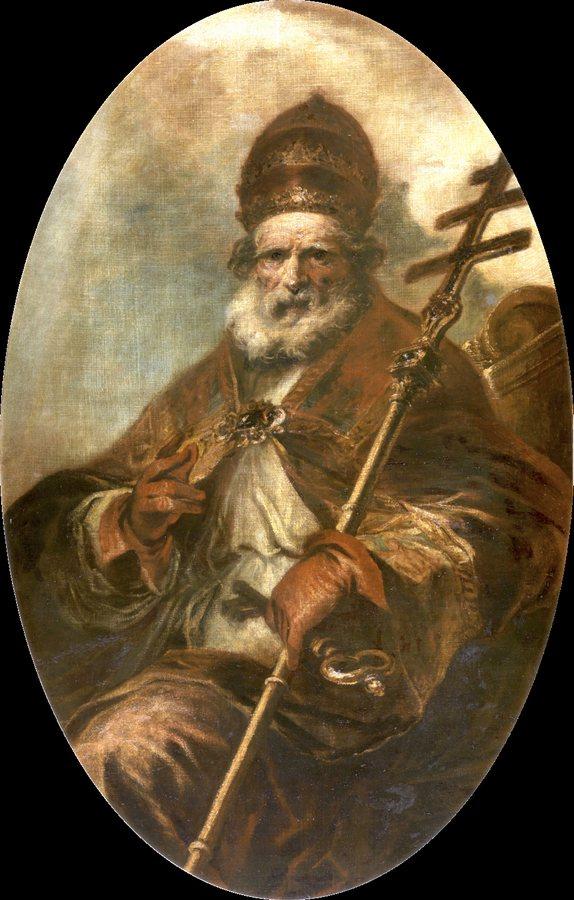
El papa San León I Magno Francisco Herrera the Younger - Public domain, via Wikimedia Commons
- Feast
- 11-10 · Memorial
- Patronage
- Popes, diplomats, the city of Rome
- Era
- 5th century
- Region
- Rome
The life
The pope who taught the Church about Christ and met Attila, saving Rome from destruction.
Pope Leo I (Italian: Leone I) (c. 391 – 10 November 461), also known as Leo the Great (Latin: Leo Magnus; Italian: Leone Magno), was Bishop of Rome from 29 September 440 until his death on 10 November 461. Leo was a Roman aristocrat.
During his reign, he contributed significantly to developing ideas of papal authority, which he founded upon the apostolic succession of the bishop of Rome from Saint Peter. He is perhaps best known for meeting Attila the Hun in 452 and persuading him to turn back from his invasion of Italy, though how large a part his personal authority played is debated by scholars. He is also well-known for his role in the debates of the Council of Chalcedon, the fourth ecumenical council, during which he issued the famous Tome of Leo, which elucidated the hypostatic union of Christ's two natures, divine and human, united in one person.
For his theological contributions, he was named a Doctor of the Church by Pope Benedict XIV with the title Doctor unitatis Ecclesiae ("Doctor of the Church's Unity"). Additionally, he is the first of the three Popes listed in the Annuario Pontificio with the title "the Great," alongside Gregory I and Nicholas I.
Why the Church remembers
Holiness is not a personality type. The Doctors are not a rank of importance but a recognition of service: their writing and holiness helped the Church understand and teach the faith. Their books are still worth opening.
Pray with them
Ask for light in your study or work.
Teach one truth gently to someone who needs it.
More in this family
Collections
Sources
| Tier | Reference |
|---|---|
| Tier 1 | Catechism of the Catholic Church, 946-962 (the communion of saints) (opens in new tab) |
| Tier 2 | Wikipedia, "Saint Leo the Great" (biographical outline) (opens in new tab) |
Last reviewed: 2026-11-14