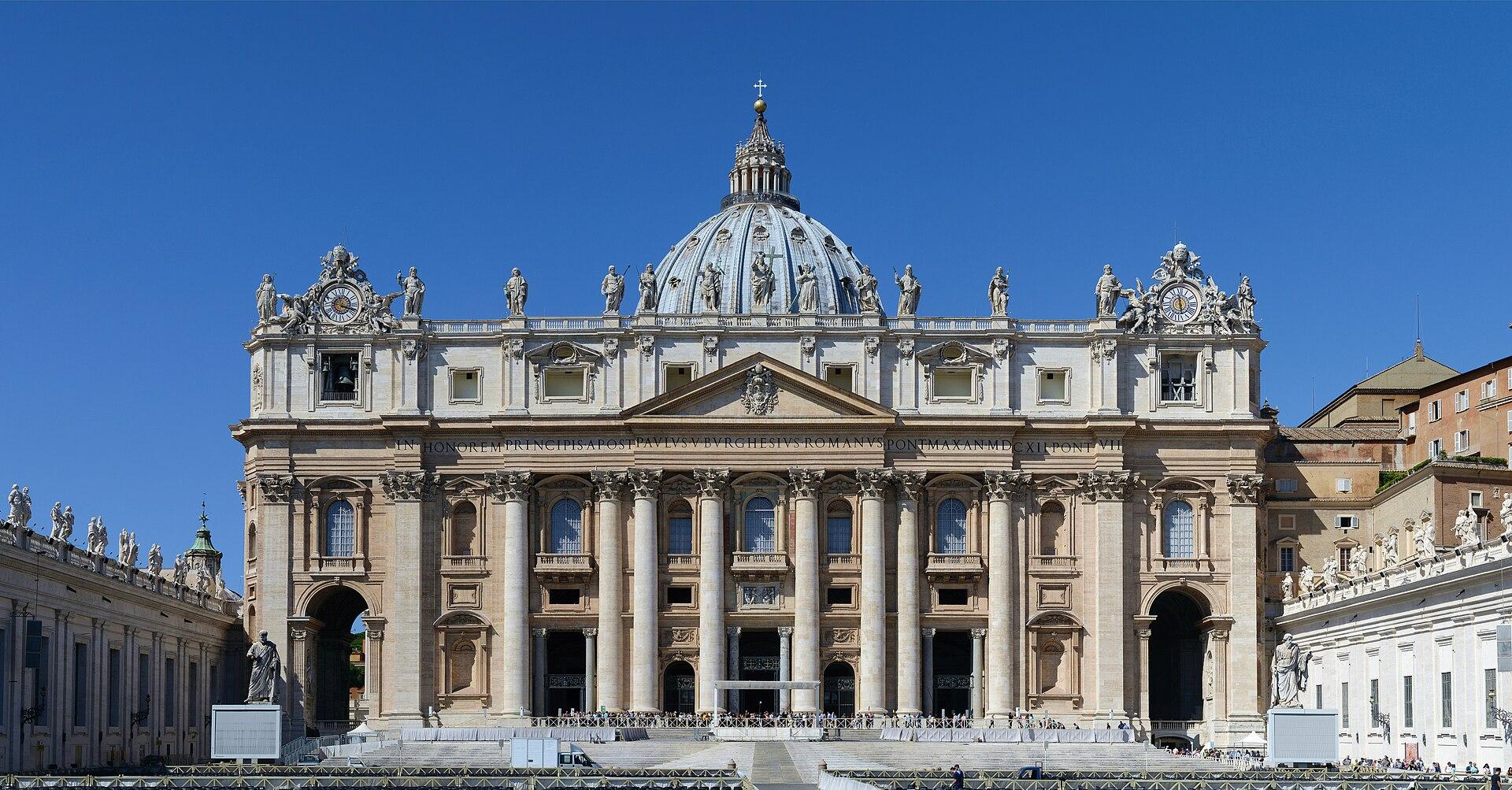
The Catholic Church is the community Jesus Christ founded, kept in existence by the Holy Spirit, and handed to Peter and the apostles to rule and teach. She claims to be the one Church of Christ, visible, universal, and still standing after twenty-one centuries. You meet her in a building with people in it, and those people are sinners, including the pope.
What the word "church" means
You picture a roof and a tabernacle. The word says something else. "Church" translates the Greek ekklesia, a verb noun built on ek-ka-lein, "to call out." It means a convocation, a summons that gathers people (CCC 751). When the first believers called themselves a Church, they claimed the inheritance of Israel's assembly on Mount Sinai, the crowd God called out of Egypt to receive a covenant.
So the thing the Creed professes is not real estate. It is a summoned people, scattered across the world, held together by one faith, one baptism, and one Eucharist (CCC 830). The building is where you meet her. She is who sits in it.
Where she comes from
The Catechism starts her story before any human being existed. God did not plan a religion. He planned a family: "the plan of the Father is to gather the whole human race into one People of God" (CCC 761). He created the world for that, chose Abraham, formed Israel, made a covenant at Sinai, sent prophets, and kept promising. Each of these steps prepared the shape of what was coming (CCC 781).
The chain runs like this: the Father sends the Son, the Son and the Father send the Spirit, and the Spirit builds the Church (CCC 850). That is why Catholic teaching never treats the Church as a human club that added religion later. She is the third act of one story.
What Jesus did, in order
Read the Gospels with this question and the sequence appears fast.
- He called men to him and chose Twelve, with Simon whom he named Peter (CCC 763-765). The Twelve are the foundation stones of the new Jerusalem, and they stand for the twelve tribes of Israel.
- He taught them, sent them out in pairs, and gave them authority over disease and demons (CCC 858).
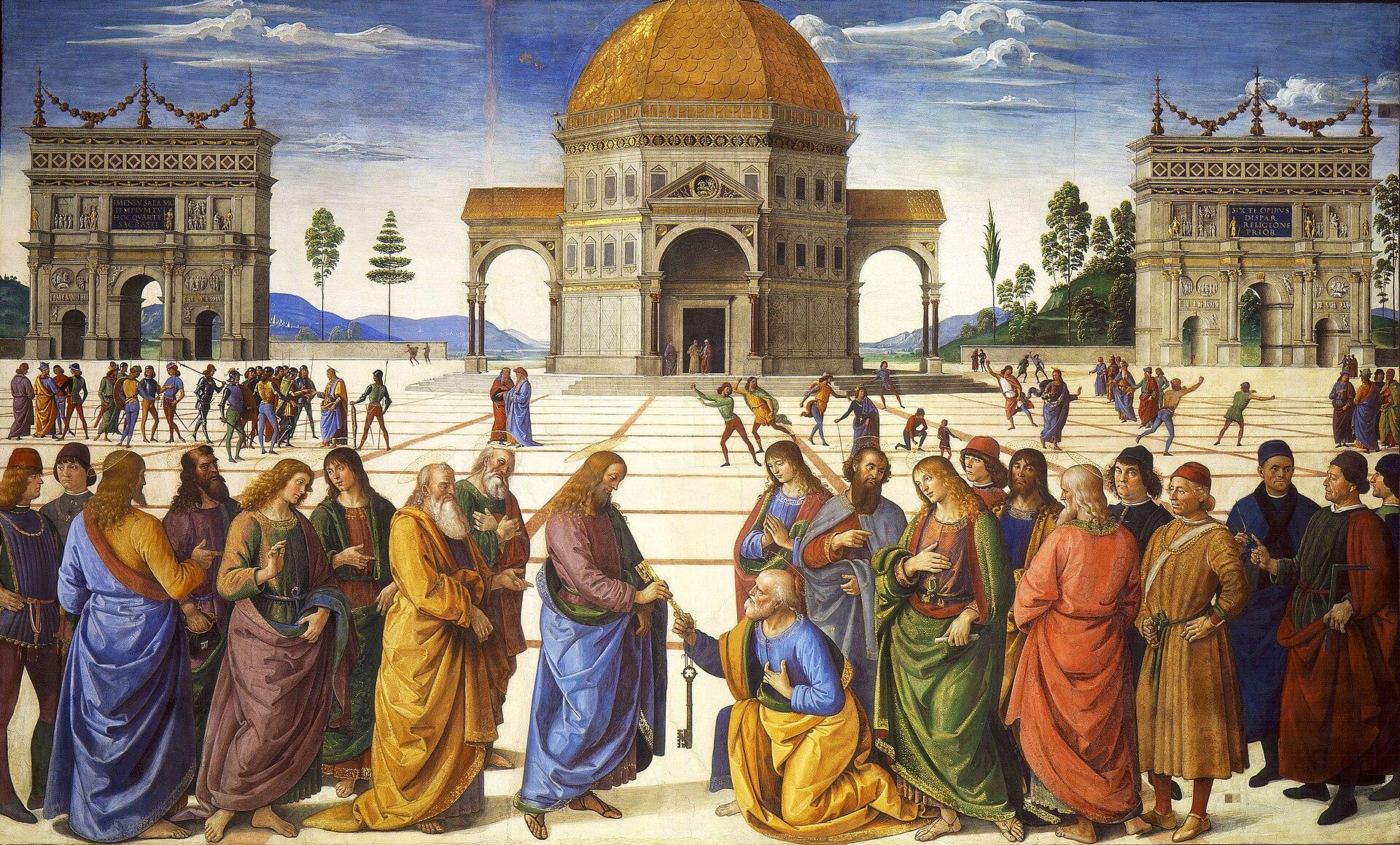
- He named Peter the rock and gave him the keys of the Kingdom of heaven (Mt 16:18-19). He then told Peter he would deny him three times, which tells you the office outranks the man.
- He ate with them the night before he died, took bread, said "This is my body," and told them to repeat it (CCC 1337-1340, Luke 22:19).
- He died, and the Church's own tradition says she was born from his pierced side, the way Eve came from Adam's side, with blood and water running out (CCC 766).
- He rose and appeared to the Twelve and to more than five hundred people (1 Cor 15:5-6).
- He told them to make disciples of every nation, baptizing them and teaching them (Mt 28:19-20, CCC 849).
- He ascended, and the Spirit fell on the gathered community at Pentecost. The Catechism says that on that day the Church was "openly displayed to the crowds" and the mission to the nations began (CCC 767).
Peter preached the first sermon in Jerusalem that morning, and about three thousand people were baptized that day (Acts 2:41). This is the moment a movement becomes a public body with a structure.
The first hundred years
You can trace the community inside one generation, and the documents still exist.
- AD 49: a council in Jerusalem decides that Gentile converts do not have to be circumcised, and writes the decision out with the phrase "it seems good to the Holy Spirit and to us" (Acts 15:28). The Church already treats collective discernment as binding.
- c. AD 64: Nero blames Rome's Christians for the fire. Tradition says Peter and Paul are executed in Rome in this period.
- c. AD 96: the bishop of Rome writes to the church in Corinth to stop a rebellion against its presbyters. We call it 1 Clement, and the letter's authority in the Roman church is remarkable for a community ninety years from Christ. The apostles, it says, appointed bishops and deacons and arranged for the ministry to continue after their deaths.
- c. AD 107: Ignatius, bishop of Antioch, on his way to being eaten by wild beasts in Rome, writes seven letters. He is the first person recorded using the phrase "catholic Church," in the eighth chapter of his letter to the Smyrnaeans, and he insists that nobody baptizes or shares communion without the bishop's consent. He calls obedience to the bishop a figure of obedience to Christ.
- c. AD 160-180: Hegesippus walks through Italy and collects the succession of bishops from the apostles up to his own time. Irenaeus, bishop of Lyon, then publishes a list of Rome's bishops: Linus, Clement, Anacletus, Evaristus, and onward, with the note that each received the office by succession. He writes this to refute teachers who claimed secret apostolic teaching, and his argument is public and checkable: here are the names, and the churches they inherited kept the same faith.
Three things already stand in the year 180: bishops with a succession, a Roman see whose letters carry weight, and a rule of faith repeated in baptism across many churches.
Apostolic succession, the mechanism
Catholics believe the ministry of the apostles did not die out. The Catechism says the divine mission the apostles received "will continue to the end of time," and that they appointed collaborators and arranged for others to take their place (CCC 860-861). Bishops therefore "have by divine institution taken the place of the apostles, as pastors of the Church" (CCC 862). Canon law puts the claim in legal form: bishops succeed the apostles by the Holy Spirit and are at once teachers of doctrine, priests of worship, and ministers of government (canon 375).
The handoff is a physical act. An existing bishop lays hands on a man during ordination, and that gesture carries the office (CCC 1539, 1555-1558). The line has to run from a bishop who received it. This is why the Church says you cannot invent a ministry, and why she says her own priests act with someone else's authority. The Catechism even names the stakes for the Church as a whole: holy orders belongs to the constitution of the Church, and Lumen Gentium says that without the apostolic ministry "one cannot speak of the Church" (CCC 1554).
Peter's case makes the claim concrete. The Church teaches that the office Christ gave to Peter alone is "destined to be transmitted to his successors," and that this office endures (CCC 862). Every Catholic pope is therefore the bishop of Rome, and the bishop of Rome is the successor of Peter by an unbroken chain of ordinations.
What succession guarantees, and what it does not
People assume succession means an unbroken chain of good men. It does not, and the Church has never taught that.
The guarantee attaches to the message and the sacraments. The Church teaches that Christ gave her the fullness of the means of salvation, and that he built her on the apostles to last until his return (CCC 765, 769, 830). The ministry keeps teaching the same faith, and the Eucharist is the same Eucharist, no matter the worthiness of the man at the altar. The Catechism settles this directly: a sacrament is valid even when an unworthy minister celebrates it, because Christ himself acts in it (CCC 1584).
The human being stays a problem. The Church calls this her constant need of purification, and she speaks of the gap between the message she preaches and the weakness of the people entrusted with it (CCC 827, 853). Peter denied Christ three times. Alexander VI, pope from 1492 to 1503, kept children with a Roman mistress and advanced them with church money. Some popes were murdered, some resigned, some were not sure who the real pope was at the time. A Catholic answers the shock with this distinction: the office carries the promise; the man carries his own conscience. That is not a dodge, it is the position the Church has held since she wrote it down.
Whose lines other churches accept
The claim about valid orders is narrow but not lonely. The Catholic Church recognizes the apostolic succession of the Eastern Orthodox, the Oriental Orthodox, and the Church of the East, and she says their Eucharist is a true sacrament even while they are not in communion with Rome (CCC 1399). She also recognizes the orders of Old Catholic and Polish National Catholic communities. Baptism runs by a different rule: anyone baptized with water in the name of the Father, and of the Son, and of the Holy Spirit is baptized once, and the mark stays whether or not the person ever comes back (CCC 1213, 1272).
She does not recognize Anglican orders. Leo XIII gave the reason in 1896 in Apostolicae curae, and the judgment has held, which is why a married Anglican priest who becomes Catholic is ordained again, and why the two communities cannot exchange celebrants. Methodist, Presbyterian, Baptist, and Pentecostal communities are treated differently again: the Church calls their baptisms valid when water is used with the Trinitarian formula, and calls their ministers presbyters without sacramental ordination.
The honest summary: Catholics think their line is the full one, and that some other churches hold real parts of it.
Her shape today, with the numbers
The Vatican publishes its own statistics each year in a book called the Annuario Pontificio. The 2023 edition, which reports 2021 data, gives the following figures.
- 1.406 billion baptized Catholics, about 17.4 percent of the world's people.
- 5,430 bishops.
- 406,996 priests, of which a large share serve in the Latin Church's dioceses.
- 51,433 deacons, most of them permanent deacons in the Latin Church.
- Nearly 3,500 dioceses and equivalent jurisdictions across the world.
- 24 churches in full communion with Rome: the Latin Church plus 23 Eastern Catholic churches, which keep their own liturgies, their own canon law, and married clergy where their tradition allows it.
- 95,200 primary schools, 43,800 secondary schools, 5,500 hospitals, 18,000 clinics, and 16,000 homes for the aged. The Church is the largest non-government provider of education and health care in the world.
The governing shape comes from canon law. The bishop of Rome is head of the college of bishops, Vicar of Christ, and pastor of the whole Church on earth, holding "supreme, full, immediate, and universal" power he can always use freely (canon 331). The college of bishops, never without its head, shares supreme authority over the universal Church (canon 336). Ecumenical councils bind only when the pope approves, confirms, and promulgates their decrees (canon 341). The cardinals form a special college whose defining job is electing the next pope (canon 349). A diocesan bishop holds ordinary, proper, and immediate power in his own diocese (canon 381), and he must be ordained a bishop within three months of his appointment before taking office (canon 379).
The papal conclave elected Robert Francis Prevost, an Augustinian from Chicago and a former Vatican bishop, on 8 May 2025, as Leo XIV. The Annuario counts him as the 267th pope. It also dropped the numbering of popes altogether, because the list of legitimate successors is not always clear, and about two hundred names were corrected in 2001 alone.
How teaching authority works
Three things carry Catholic teaching, and Catholics are told they are one source with three carriers.
- Sacred Scripture: the books the Church recognized as inspired, a list she says she discerned by apostolic Tradition rather than by scholars working alone (CCC 120).
- Sacred Tradition: the living handing-on of what the apostles received from Jesus' teaching, example, and the Spirit, and the first Christians did not yet have a New Testament (CCC 83).
- The Magisterium: the pope and bishops in communion with him, whose task is to interpret the word of God authentically, and who "are not superior to the Word of God, but are its servants" (CCC 85-86, Dei Verbum 10).
The Catechism draws the practical consequence: the Church "does not derive her certainty about all revealed truths from the holy Scriptures alone," and both Scripture and Tradition are to be held with equal devotion (CCC 82). This is the point where Catholic and Protestant readings of authority genuinely split. Protestants take Scripture as the sole final court. Catholics read Scripture inside the living Tradition of the whole Church, and accept the authority that produced the list of books as the authority that interprets them (CCC 113).
Canon law states the duty of the believer. You are bound to believe all that is proposed as divinely revealed, whether by solemn judgment or by the ordinary and universal teaching of the Church, and to embrace firmly everything proposed definitively on faith or morals (canon 750). For non-definitive teaching, the required attitude is "religious submission of intellect and will" (canon 752, CCC 892), which is real assent and falls short of faith.
Infallibility, stated precisely
This is the most caricatured doctrine in Catholicism, so read the actual law.
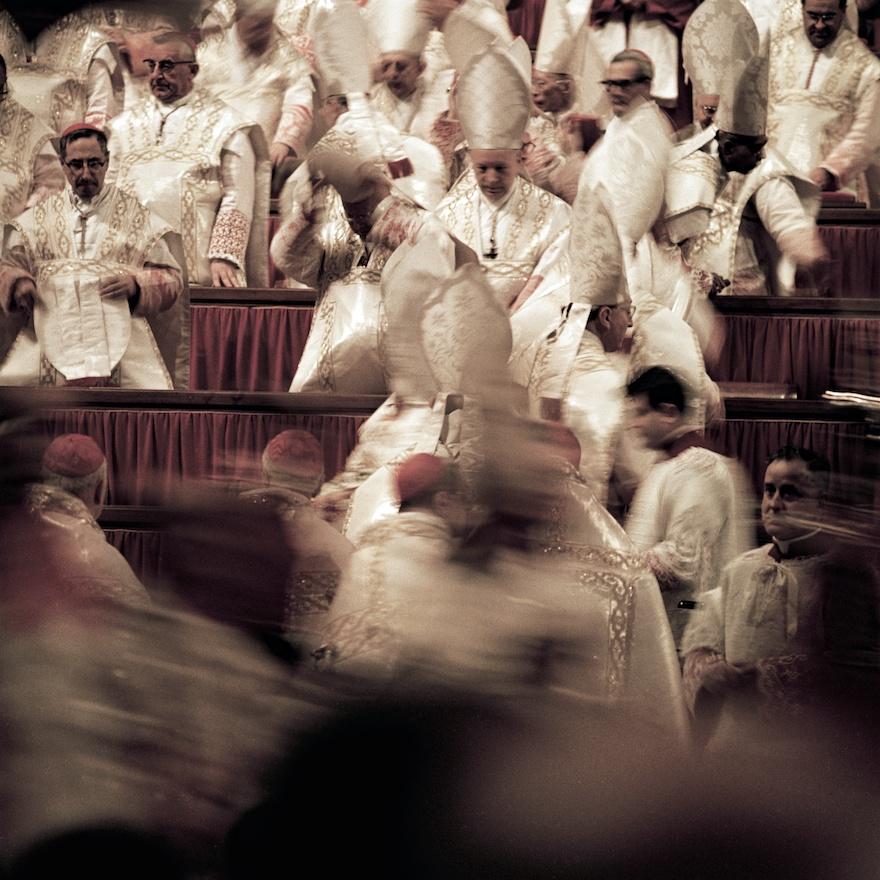
Infallibility belongs to the pope when, as the supreme pastor of all the faithful, "he proclaims by definitive act that a doctrine of faith or morals is to be held" (canon 749 §1, CCC 891). It belongs to the bishops gathered in an ecumenical council with the pope, or to the bishops scattered through the world who keep communion with Rome and agree that something is to be held definitively (canon 749 §2, CCC 891). And the law adds the guardrail: "No doctrine is understood as defined infallibly unless this is manifestly evident" (canon 749 §3).
Three practical notes. First, the pope is not the subject of the gift at all times; he is infallible only in that one mode of speech, which is why papal encyclicals, homilies, interviews, and tweets are not infallible. Second, definitions are rare. Vatican I (1870) defined the doctrine of papal infallibility itself. The only other uncontested ex cathedra definition is Pius XII's assumption of Mary in 1950 (Munificentissimus Deus). Third, infallibility covers faith and morals, which is why it never becomes a science office or an economics office. The Council also insists that created things and human disciplines keep their own lawful autonomy, so the Church does not settle questions of natural science on behalf of believers (Gaudium et Spes 36).
The seven sacraments
The Catechism calls the Church God's "universal sacrament of salvation," the visible plan of God's love for humanity (CCC 776), and calls the seven sacraments the signs and instruments by which the Spirit spreads Christ's grace through her body (CCC 774, 1117-1118). She holds that the sacraments "contain the grace which they signify," so they are not merely reminders (CCC 1127).
- Baptism: water plus the Trinitarian formula. It forgives original and personal sin, makes you a member of Christ, and imprints a mark that cannot be removed (CCC 1213, 1272). This is why the Church does not re-baptize converts from most other churches.
- Confirmation: the bishop anoints and lays hands, and the baptized person is sealed with the Holy Spirit for witness (CCC 1285, 1302-1305).
- Eucharist: bread and wine become the body, blood, soul, and divinity of Christ, and the Mass re-presents the one sacrifice of Calvary. The Church calls the change "transubstantiation" (CCC 1374-1376, 1324-1327). Belief in the real presence is the sharpest dividing line from most other Christians, and it is the reason Catholic churches keep a lit red lamp.
- Penance and Reconciliation: you confess sins to a priest, who acts in the person of Christ, and gives absolution. Confession of grave sins at least once a year is a precept (CCC 1446, 1456, 2042).
- Anointing of the Sick: priests anoint the seriously ill or dying with blessed oil for healing of soul and, if God wills, body (CCC 1499-1513).
- Holy Orders: ordination configures a man to Christ as head, and stamps a character that never leaves him. Priests and bishops cannot cease being priests (CCC 1581-1583).
- Matrimony: a baptized couple makes the marriage themselves, and the bond between two baptized people is a sign of Christ's union with the Church. The Church holds the marriage bond to be indivisible until death (CCC 1601, 1638-1642).
The sacraments need matter: water, oil, bread, wine, hands, words. Catholic holiness is therefore physical in a way that surprises people. You get marked with oil, you eat, you are washed, you are anointed on the forehead and hands.
“The Church is the universal sacrament of salvation.
”
The communion of saints, purgatory, and indulgences
Catholics do not treat death as the end of the Church's membership. The one Church runs across three states: the living on pilgrimage, the dead being purified, and the saints in glory, and all of them are joined in charity (CCC 953-959). The Church holds up the saints as models and asks them to pray for you, the way you ask your parish to pray for your sick friend (CCC 956, 958).
Purgatory is the state of the dead who die in God's grace and still need purification before they see him. The Church bases it on 2 Maccabees 12:46, where Judas Maccabeus offers sacrifice for dead soldiers, on Christ's word about sins not forgiven in the age to come (Mt 12:32), and on the practice of praying for the dead since the first centuries (CCC 1030-1032). Your suffrages, Masses, and alms genuinely help these people, because the Church treats them as members of the same communion (CCC 958, 1479), which is a strange and consoling claim if you have ever lost someone.
An indulgence is not a permission slip to sin. It removes the temporal consequence that remains after guilt is forgiven, drawn from the Church's treasury of Christ's and the saints' merits, and applied to a living person by her own disposed prayer, works, and sacramental life, or to a soul in purgatory as a suffrage (CCC 1471-1479). The sloppy fundraising around indulgences in the sixteenth century helped start the Protestant Reformation, and the Church reformed the practice hard: Paul VI revised the norms in 1967, and selling was already flatly condemned at Trent.
Mary
The Church gives Mary more space than any other creature and less honor than God. Four claims carry the weight.
- Mother of God. Ephesus in 431 confirmed that Mary bears the divine person, not a human person who later became God, and the Greek title is Theotokos.
- Immaculately conceived. The Church teaches Mary was preserved from original sin from the first moment of her existence, by a grace applied in advance from Christ's merit (CCC 493). Pius IX defined this in 1854.
- Perpetual virginity. Mary remained a virgin in the conceiving, the birth, and after it (CCC 499-500).
- Assumed body and soul into heaven. Pius XII defined this in 1950, and the Catechism quotes the definition directly (CCC 966).
Mary is inside the Church, not above her and not beside Christ. The Catechism puts the point plainly: Christ is the one mediator, and Mary's influence on people "is a reflection of the overflowing of the merits of Christ" and draws all its power from his (CCC 969, 970). Lumen Gentium ends its last chapter by refusing to teach any opinion about Mary that would diverge from Christ. Apparitions are a separate category. The Church does not require belief in any private revelation, and she has approved only a small number after long investigation (Hebrews 1:1-2 and the Catechism's note at 67 on private revelation).
Four marks
The Creed calls the Church one, holy, catholic, and apostolic. The Catechism says she does not own these four traits; Christ, through the Spirit, makes her what the Creed says she is (CCC 811).
- One. Christ divided? No. The Church's unity is a gift she must keep praying for and repairing, and the Catechism says Christ's prayer at the Last Supper for unity is a hidden law of the whole Church's life (CCC 820-822). Roughly half a billion non-Catholic Christians exist, and the Church calls their existence a wound and an ecumenical duty (CCC 819-821).
- Holy. The Church is unfailingly holy because Christ gave himself up to make her holy; and the same Church holds sinners, including every one of her ministers, and is "at once holy and always in need of purification" (CCC 823, 827). Her holiness shows in the saints and in the ordinary heroic virtue of ordinary families (CCC 825, 828).
- Catholic. The word means universal, in two senses. Where Christ is present, the fullness is present (CCC 830). And the Church is sent to the whole human race, which is why she exists in every country and in more than one hundred languages (CCC 831). She is not a federation of national churches; she takes on different external expressions in each culture while holding one faith (CCC 835).
- Apostolic. Built on the Twelve, keeping the apostles' teaching, and governed by bishops who succeed them (CCC 857). The section on succession above carries the detail.
Who belongs to her
Canon law answers with a formula. Baptized people who are joined to the structure of the Church by three bonds, the profession of faith, the sacraments, and ecclesiastical governance, are "fully in the communion of the Catholic Church" (canon 205, CCC 837). So belonging is measurable and public, and this is the part other Christians find offensive: the Church thinks visible communion with Rome is not optional decoration.
That test rests on a prior claim, and canon law states it in one sentence. The Church of Christ, "constituted and organized in this world as a society, subsists in the Catholic Church governed by the successor of Peter and the bishops in communion with him" (canon 204 §2, quoted at CCC 816). The Council picked the verb subsistit on purpose, and the Catechism reads it as a claim about where things reside: the unity Christ bestowed subsists in her "as something she can never lose" (CCC 820), and through her alone, "which is the universal help toward salvation, the fullness of the means of salvation can be obtained" (CCC 816). Her whole approach to other bodies of Christians runs downstream from that sentence.
Catechumens, adults asking for baptism, are joined to the Church "in a special way" by that very request, and the Church already treats them as her own (canon 206). Baptized non-Catholics are in "a certain, although imperfect, communion" with her, with the Eastern Orthodox closest of all (CCC 838). Jews hold a different place again, "the first to hear the Word of God," and Nostra Aetate calls the dialogue with them a matter of the Gospel itself (CCC 839-840). Muslims, Hindus, Buddhists, and everyone else of good will are "related to the People of God in various ways," because they seek the hidden God (CCC 841-845, Nostra Aetate 2-3).
Then the sentence people quote at Catholics. "Outside the Church there is no salvation" goes back to the third century and Cyprian, and the Church reads it with the Catechism's gloss: all salvation comes from Christ through his Body, and people who through no fault of their own do not know Christ or his Church, yet sincerely seek God and follow conscience, "may achieve eternal salvation" (CCC 846-847). The Catechism adds that God can lead such people to faith "in ways known to himself" (CCC 848). Two claims hold at once: the Church is necessary, and the judges of individual hearts are not you or me. The same Catechism also insists the Church keeps the duty and the right to tell everyone (CCC 848).
How the Church is governed
Catholics do not keep belief and government apart, because the same apostolic office carries both. Canon law names who holds which power, so you can check the chart yourself.
The bishop of Rome is "the perpetual and visible source and foundation" of the unity of the bishops and of the whole company of the faithful (CCC 882). Canon law gives him the titles vicar of Christ, pastor of the whole Church on earth, supreme pontiff, and head of the college of bishops, and it hands him "supreme, full, immediate, and universal" power, which he can always exercise freely (canon 331). He takes that power the moment he accepts a valid election, and he holds it until death or a resignation that is free and properly manifested. The law adds that such a resignation "does not need to be accepted by anyone" (canon 332 §1-2). Benedict XVI used that clause in February 2013, and it is why his resignation needed no party, court, or vote to stand.
The cardinals have two jobs. They elect the pope, and they assist him. Canon 349 calls their body a "special college which provides for the election of the Roman Pontiff," and says they help the pope "either collegially when they are convoked to deal with questions of major importance, or individually when they help the Roman Pontiff through the various offices they perform, especially in the daily care of the universal Church". The pope creates them, and he alone judges whether it is needed (canon 338 §1). In a conclave only cardinals under eighty vote, the number of electors stays near one hundred and twenty, the man elected needs two thirds of the ballots, and the senior cardinal deacon announces his name to the crowd (canon 355 §2). When the see falls vacant the law's first word is that nothing is to be altered in the governance of the universal Church, and the cardinals keep only the power that special law gives them (canon 335, 359).
The pope's standing offices are the Roman Curia. "The Supreme Pontiff usually conducts the affairs of the universal Church through the Roman Curia which performs its function in his name and by his authority for the good and service of the churches" (canon 360), and the Code uses the term "Apostolic See" for the pope together with those offices (canon 361). John Paul II gave the Curia its shape with the constitution Pastor Bonus in 1988, and Francis redrew it in 2022, putting the dicastery for evangelization first.
Two bodies share the pope's authority without replacing him. The college of bishops exercises supreme and full power over the whole Church in an ecumenical council, and the pope alone convokes the council, presides over it personally or through others, transfers, suspends, or dissolves it, and approves its decrees (canon 337 §1, 338 §1, 341 §1). The synod of bishops is "a group of bishops who have been chosen from different regions of the world and meet together at fixed times" to strengthen the bond between pope and bishops and to counsel him on faith, morals, discipline, and the Church's work in the world (canon 342). It discusses and expresses wishes; it settles nothing unless the pope gives it deliberative power and ratifies the result (canon 343).
Every country gets a conference of bishops, "a permanent institution" whose members exercise shared pastoral functions for their own people (canon 447). Only the supreme authority of the Church erects or changes a conference (canon 449 §1), each conference elects its own president and general secretary (canon 452 §1), and a conference may issue general decrees only where universal law or an apostolic mandate allows, by a two thirds vote and after review by the Apostolic See (canon 455 §1-2). Neighbouring dioceses also form provinces, and a provincial council meets when the majority of that province's bishops judge it opportune (canon 431 §1, 440 §1). A particular council, provincial or plenary, has real legislative power for its own territory, and it decides what helps the increase of faith, the ordering of common pastoral work, and the regulation of morals and discipline (canon 445).
The diocese, and the bishop who runs it
The one Church exists "in and from" particular churches, and a diocese is the first of them (canon 368). Canon 369 defines one exactly: "a portion of the people of God which is entrusted to a bishop for him to shepherd with the cooperation of the presbyterium, so that, adhering to its pastor and gathered by him in the Holy Spirit through the gospel and the Eucharist, it constitutes a particular church in which the one, holy, catholic, and apostolic Church of Christ is truly present and operative". That sentence is why a diocese is not a branch office. The bishop holds the offices of teacher, priest, and minister of governance (canon 375 §1), by "ordinary, proper, and immediate power" in his own diocese (canon 381 §1), and he is "the visible source and foundation of unity in his own particular Church" (CCC 886). Preaching the gospel to all people is his first task (CCC 888).
The law then sets the mechanics, and they are concrete. A man appointed to a see must be consecrated a bishop within three months and before he takes office (canon 379), and first he makes the profession of faith and swears fidelity to the Apostolic See (canon 380). He lives in the diocese, may not be absent beyond a month, and is not to leave at Christmas, Holy Week, Easter, Pentecost, or the Solemnity of the Body and Blood of Christ except for a grave and urgent cause (canon 395 §1-3). He visits the whole diocese at least every five years, in person or through a deputy (canon 396 §1). He presides at the Eucharist often, especially on holy days (canon 389), and he must offer Mass for the people entrusted to him every Sunday and holy day of obligation (canon 388 §1). He preaches in person and explains the truths of faith, protects their integrity, and allows a just freedom in investigating them (canon 386 §1-2). He promotes the holiness of each state of life, and as "the principal dispenser of the mysteries of God" he works so that his people grow in grace through the sacraments (canon 387). He watches so that no abuses creep into preaching, the sacraments, the worship of God, the veneration of the saints, or the administration of goods (canon 392 §2). He looks after his priests as assistants and counsellors, defends their rights, and sees that they are supported (canon 384). He fosters vocations to the ministries and to consecrated life, with special care for priestly and missionary ones (canon 385). At seventy-five he is asked to offer his resignation, and a bishop weakened by illness or some other grave cause is asked the same (canon 401 §1-2).
The governance comes with councils whose votes are real but consultative. A diocesan bishop must have a presbyteral council of priests "like a senate of the bishop", which assists him in governing the diocese (canon 495 §1); he calls it, sets its questions, hears it in weighty matters, and publishes what it settles (canon 500 §1-3). Where pastoral circumstances suggest it, he constitutes a diocesan pastoral council of clergy, religious, and lay people chosen to reflect the whole diocese in its areas, social conditions, and work, and it has only a consultative vote and meets at least once a year (canon 511, 512 §1-3, 514 §1-2). A diocesan synod is a group of priests and other faithful who assist the bishop for the good of the whole diocese (canon 460); he alone convokes it, and he alone is its legislator (canon 461 §1, 466). He appoints a vicar general, and auxiliaries are to be vicars general or episcopal vicars (canon 406 §1-2). His curia keeps its acts through a chancellor who is a notary by office (canon 482 §1, §3), and it has a finance council of at least three lay people expert in finance and civil law and outstanding in integrity (canon 492 §1).
Vacancy is ruled too, in detail that mostly protects the diocese from its next bishop. Nothing is to be altered, and nobody may remove or destroy curia documents (canon 428 §1-2). The college of consultors, six to twelve priests the bishop names for five years (canon 502 §1), elects a diocesan administrator within eight days: a priest at least thirty-five, not already elected for that see, outstanding in doctrine and prudence (canon 421 §1, 425 §1-2). Once elected, the administrator holds the obligations and the power of a diocesan bishop except for what the nature of the case or the law reserves (canon 427 §1). Above the local tribunals sit the Roman Rota and the supreme tribunal of the Apostolic Signatura, which hears recourses, conflicts of competence, and administrative controversies, and watches over the correct administration of justice (canon 1445 §1-3). A layperson or a cleric may press his rights in a church court and may not be punished except according to law (canon 221 §1-3).
What a parish is, and what a parish priest does
A parish is "a certain community of the Christian faithful stably constituted in a particular church, whose pastoral care is entrusted to a pastor as its proper pastor under the authority of the diocesan bishop" (canon 515 §1), and a legitimately erected parish is a legal person by the law itself (canon 515 §3). Only the diocesan bishop erects, suppresses, or alters parishes, and not without hearing his presbyteral council (canon 515 §2). As a rule a parish is territorial and gathers all the faithful of its ground; where rite, language, or nationality calls for it, the bishop sets up a personal parish instead (canon 518). This is the level at which most people actually meet the Church.
The pastor is the proper pastor of that community, sharing the bishop's ministry of Christ, and he carries the offices of teaching, sanctifying, and governing for it, with other priests, deacons, and lay people helping (canon 519). He is appointed for an indefinite period, because the law wants him stable (canon 522), and he represents the parish in juridic affairs and administers its goods (canon 532). Canon 530 names the work in plain verbs: baptism, confirmation for those in danger of death, viaticum and the anointing of the sick with the apostolic blessing, assistance at marriages and the nuptial blessing, funeral rites, the blessing of the baptismal font at Easter, the processions and solemn blessings outside the church, and the more solemn eucharistic celebration on Sundays and holy days. Canon 528 adds the shape of the whole job. He provides that the word of God is proclaimed in its entirety to everyone living in the parish, instructs the faithful in the truths of the faith, preaches the homily on Sundays and holy days, gives catechetical instruction, fosters works that promote social justice, cares particularly for the Catholic education of children and youth, and reaches out to people who have stopped practising (canon 528 §1). He sees that the Most Holy Eucharist is the centre of the parish assembly, that the faithful receive the sacraments frequently, that families pray together, and that they take part consciously and actively in the liturgy, and he watches for abuses (canon 528 §2). Canon 529 §1 tells him to learn who these people are: to know the faithful, visit families, share their cares and anxieties and griefs, strengthen them in the Lord, correct them prudently, help the sick and the dying with the sacraments, and seek out with particular diligence the poor, the afflicted, the lonely, and those exiled from their country. He also recognizes and promotes the lay people's own part in the Church's mission, and he works with his bishop and the diocese's presbyterium (canon 529 §2). He offers Mass for his people every Sunday and holy day (canon 534 §1), and at seventy-five he is asked to submit his resignation to the bishop, who decides whether to accept or defer it and must then provide him suitable support and housing (canon 538 §3).
Around the pastor sits machinery most visitors never notice. Every parish keeps registers of baptisms, marriages, and deaths, and the baptismal register carries the notes that follow a Catholic's whole life, including confirmation, marriage, adoption, orders, and perpetual profession, and those notes appear on the baptismal certificate (canon 535 §1-2). Each parish has its own seal, its archive, and rules that keep records of canonical status out of outside hands (canon 535 §3-4). Where the bishop judges it useful after hearing the presbyteral council, a parish pastoral council of the faithful assists the pastor with a consultative vote only (canon 536 §1-2), and every parish must have a finance council assisting in the administration of its goods (canon 537). Where priests are short, the bishop may entrust a parish to several priests in solidum with one of them as moderator, or associate a deacon, another person, or a community with the pastoral care while appointing a priest furnished with a pastor's powers to direct it (canon 517 §1-2).
Her law, and what it gives you
The Catholic Church runs on her own legal system, and the current Code for the Latin Church is the one John Paul II promulgated as universal law on 25 January 1983, in the constitution Sacrae Disciplinae Leges, to take effect on the First Sunday of Advent that year. Its last canon is number 1752, and the first canon of Book I sets the tone: the Code abrogates the 1917 Code, the universal and particular laws contrary to it, and every universal penal law of the Apostolic See outside it, while canons that repeat former law are to be read in light of the canonical tradition (canon 6 §1-2). The 23 Eastern Catholic churches live under their own Code. The rules of the game are stated up front. Universal law is promulgated in the Acta Apostolicae Sedis and binds three months after that issue unless the text says otherwise (canon 8 §1). Laws look forward, not backward (canon 9). Only a law that expressly says so makes an act null or disqualifies a person (canon 10). Laws that punish, restrict the free exercise of rights, or except from the law get a strict interpretation (canon 18). When a case falls between the texts, the judge works from parallel laws, the general principles of law applied with canonical equity, the jurisprudence and practice of the Roman Curia, and the common and constant opinion of learned persons (canon 19).
The section on the Christian faithful reads like a bill of rights, and it opens by asserting "a true equality regarding dignity and action" among all the baptized, each cooperating in the building of the Body of Christ according to their own condition and function (canon 208). The Code then gives you assistance from the pastors out of the spiritual goods of the Church, "especially the word of God and the sacraments" (canon 213); worship in your own approved rite and your own form of spiritual life, so long as it fits Church doctrine (canon 214); liberty to found and direct associations of charity, piety, and Christian vocation, and to meet for them (canon 215); a Christian education aimed at the maturity of the person and at knowing and living the mystery of salvation (canon 217); protection of your good reputation and your privacy (canon 220); and a forum to press your rights in (canon 221 §1). You are free to tell your pastors your needs, especially spiritual ones (canon 212 §2), and you have "the right and even at times the duty" to make your opinion known to them and to the other faithful on matters touching the good of the Church, keeping faith and morals intact and respecting persons (canon 212 §3). Those who teach the sacred disciplines hold "a just freedom of inquiry" and of expressing prudent opinion, with the submission due to the magisterium (canon 218). The lay faithful can be admitted to ecclesiastical offices and functions they are able to exercise (canon 228 §1), can serve as experts and advisers to pastors even in councils (canon 228 §2), and can be installed for a stable term as lectors and acolytes by the liturgical rite (canon 230 §1). John Paul II in 1994 and Francis in 2021 opened those two ministries to women as well as men by changing the canon's wording. When ministers are lacking, lay people may exercise the ministry of the word, preside over liturgical prayers, confer baptism, and distribute Holy Communion according to the prescripts of law (canon 230 §3). Parents have the most grave obligation and right of educating their children in the faith by word and example (canon 226 §2), and the faithful as a body are bound to take account of the common good of the Church, the rights of others, and their own duties when they exercise their rights, and ecclesiastical authority can direct that exercise for the common good (canon 223 §1-2).
How her clergy live
Ordination in Catholic law is a way of life with a daily schedule, not a job description. Clerics are "bound in a special way to pursue holiness", since the reception of orders consecrates them to God by a new title as dispensers of the mysteries for the people's service (canon 276 §1). Then the list: they fulfil the duties of the pastoral ministry faithfully and tirelessly; they nourish their life from "the two-fold table of sacred scripture and the Eucharist", with priests earnestly invited to offer the eucharistic sacrifice daily and deacons to take part in it daily; they pray the Liturgy of the Hours daily according to the approved books, permanent deacons to the extent their bishops' conference defines; they make time for spiritual retreats; and they are urged to mental prayer, frequent confession, the particular veneration of Mary, and other means of sanctification (canon 276 §2, n. 1-5). They owe a special reverence and obedience to the Supreme Pontiff and to their own ordinary (canon 273).
Celibacy sits inside that list as a discipline with a theology attached. "Clerics are obliged to observe perfect and perpetual continence for the sake of the kingdom of heaven and therefore are bound to celibacy", which the law calls a special gift of God by which ministers adhere to Christ with an undivided heart and give themselves more freely to God and to people (canon 277 §1). The Catechism describes the practice: the Latin Church normally chooses her ordained ministers from men of faith who live celibately and intend to remain so, while the Eastern churches for centuries have chosen bishops from celibates and ordained married men as deacons and priests, a discipline the Church has long judged legitimate and fruitful (CCC 1579-1580). Clerics are to behave with due prudence toward people whose company could endanger that obligation or give scandal (canon 277 §2), and the diocesan bishop sets the more specific norms and judges the particular cases (canon 277 §3).
The rest of the rule of clerical life is unglamorous and deliberate. They wear suitable ecclesiastical garb as the bishops' conference determines (canon 284). They refrain from what is unbecoming and from what, without being unbecoming, is foreign to their state; they may not take public office that involves civil power, and they may not manage lay goods or secular offices requiring accounts, stand as surety, or sign promissory notes without their ordinary's permission (canon 285 §1-4). They foster simplicity of life and avoid every appearance of vanity, and they hand over what remains of their income after their own decent support for the good of the Church and works of charity (canon 282 §1-2). The Church pays them: clerics "deserve remuneration which is consistent with their condition", and provision must be made for their social assistance in illness, incapacity, and old age, including married deacons who give themselves fully to ecclesiastical ministry (canon 281 §1-3).
Two doctrinal notes close the file. Ordination leaves a mark that nothing removes, configuring the man to Christ as head, priest, prophet, and king, so it cannot be repeated and the man cannot become a layman again in the strict sense even when he is discharged from the obligations and functions of the office (CCC 1581-1583). The clerical state is lost only by a sentence or decree declaring the ordination invalid, by a legitimately imposed dismissal, or by a rescript of the Apostolic See, granted to deacons for grave causes and to priests only for most grave ones (canon 290). And because Christ is the one who acts through the minister, the priest's unworthiness does not stop the sacrament from working (CCC 1584).
Consecrated life: the orders, the hermits, and the virgins
Beyond the diocesan clergy the Church keeps forms of life that give up everything, and she insists they belong to her core. "The life consecrated through the profession of the evangelical counsels is a stable form of living by which the faithful, following Christ more closely under the action of the Holy Spirit, are totally dedicated to God who is loved most of all", set apart for Christ's honour, the building up of the Church, and the salvation of the world, "made an outstanding sign in the Church" and foretelling heavenly glory (canon 573 §1). Members assume this freely, in institutes canonically erected by the Church, and profess chastity, poverty, and obedience by vows or other sacred bonds (canon 573 §2). The law then says the state "belongs to the life and holiness of the Church and must be fostered and promoted by all in the Church" (canon 574 §1), and the Catechism dates it: religious life "was born in the East during the first centuries of Christianity", marked off by its liturgical character, public profession of the counsels, fraternal life in common, and witness to the union of Christ and his Church (CCC 925). It is "a gift she has received from her Lord" and a way of signifying the very charity of God in the language of the present time (CCC 926).
The forms are plural, and the Code enumerates them. Communities of men and women who profess the counsels and live in common. Hermits, who give themselves "to the praise of God and the salvation of the world through a stricter withdrawal from the world, the silence of solitude, and assiduous prayer and penance", recognized in law when they profess the three counsels publicly in the hands of the diocesan bishop (canon 603 §1-2), and who, the Catechism says, manifest the interior aspect of the mystery of the Church, a "silent preaching of the Lord" hidden from human eyes (CCC 920-921). Virgins consecrated by the diocesan bishop according to the approved rite, "mystically betrothed to Christ, the Son of God, and... dedicated to the service of the Church" (canon 604 §1). Societies of apostolic life, which resemble religious institutes but pursue the society's own apostolic work without religious vows, living in common as brothers or sisters and striving for charity by observing their constitutions (canon 731 §1). New forms are reserved to the Apostolic See alone, while bishops are to discern the new gifts of consecrated life the Spirit gives and help their promoters draft statutes (canon 605), and Francis confirmed in 2020 that only the Apostolic See, not a local bishop, may erect a new institute.
Their place in the mission is not decorative. Because consecration dedicates them to the service of the Church, the consecrated "are obliged to engage in missionary action in a special way and in a manner proper to their institute" (canon 783). The Catechism adds that the first mission of those who profess the counsels is to contemplate God's riches in Christ and to make that contemplation fruitful in the world (CCC 931), and that whether their witness is public, less public, or secret, "Christ's coming remains for all those consecrated both the origin and rising sun of their life" (CCC 933). If you have ever met a parish run by religious, a hospital founded by a congregation of sisters, or a contemplative house that prays all day for a diocese you have never heard of, you have met this state of life.
The liturgical year she builds around you
The Church does not leave your calendar to chance. "Holy Mother Church believes that she should celebrate the saving work of her divine Spouse in a sacred commemoration on certain days throughout the course of the year", keeping the memory of the Resurrection every week on the day she has called the Lord's Day, and celebrating it once a year together with his Passion at Easter, "that most solemn of all feasts" (CCC 1163, from Sacrosanctum Concilium 102). In the course of the year she "unfolds the whole mystery of Christ", from the Incarnation and the hidden years through the Passion, the Resurrection, the Ascension, Pentecost, and the expectation of his return (CCC 1163).
Sunday is the spine. By a tradition handed down from the apostles that took its origin from the very day of Christ's Resurrection, the Church keeps the seventh day as the Lord's Day, both the first day of the week and the eighth day, and it is the pre-eminent day for the assembly, where the faithful gather to listen to the word of God and take part in the Eucharist (CCC 1166-1167). Canon law calls Sunday "the primordial holy day of obligation" and then names the rest: the Nativity of Christ, the Epiphany, the Ascension, the Body and Blood of Christ, Holy Mary the Mother of God, her Immaculate Conception, her Assumption, Saint Joseph, Saints Peter and Paul, and All Saints (canon 1246 §1). With prior approval of the Apostolic See, a bishops' conference can suppress some of them or transfer them to a Sunday (canon 1246 §2), which is why your country's list differs from Rome's. On these days you are obliged to participate in Mass and to abstain from works and business that hinder the worship owed to God, the joy proper to the Lord's Day, or the suitable relaxation of mind and body (canon 1247, CCC 2185). The obligation is satisfied by Mass celebrated anywhere in a Catholic rite on the day itself or in the evening before (canon 1248 §1, CCC 2180). Missing it deliberately is treated as grave, because "the Sunday Eucharist is the foundation and confirmation of all Christian practice", and the excused cases are illness, the care of infants, or a dispensation from your own pastor (CCC 2181). Those who take part testify to belonging and to hope, and the assembly together testifies to God's holiness (CCC 2182).
Easter is the hinge. From the Triduum as its source of light the new age of the Resurrection fills the whole liturgical year, so that the year is transfigured and Easter is not one feast among others but "the Feast of feasts," the "Solemnity of solemnities," as the Eucharist is the sacrament of sacraments; Athanasius called it the Great Sunday (CCC 1168-1169). At Nicaea in 325 all the churches agreed that Easter falls on the Sunday following the first full moon after the vernal equinox, and the Gregorian reform of the Western calendar under Gregory XIII in 1582 put the Western and Eastern computations out of step, so the churches still work toward celebrating the Lord's Resurrection on a common day (CCC 1170). Around the spring centre the year runs the incarnation cycle of Annunciation, Christmas, and Epiphany, which "commemorate the beginning of our salvation and communicate to us the first fruits of the Paschal mystery" (CCC 1171).
The penitential rhythm is law too. All the faithful are bound by divine law to do penance each in their own way, and to unite them in a common observance the Church prescribes penitential days marked by prayer, works of piety and charity, and self-denial (canon 1249). Those days are every Friday of the whole year and the season of Lent (canon 1250). Abstinence from meat, or from whatever food the conference designates, binds all Fridays unless a solemnity falls on a Friday, and both abstinence and fasting bind Ash Wednesday and Good Friday (canon 1251). Abstinence binds those who have completed their fourteenth year, fasting those who have attained majority until the beginning of their sixtieth year, and pastors and parents are to teach the true meaning of penance to children below that age (canon 1252). A conference of bishops can define the observance more precisely and can substitute other forms of penance, especially works of charity and exercises of piety, in whole or in part (canon 1253).
The Church's daily prayer, and her blessings
Between the Sunday assemblies the Church keeps a public prayer of her own, said at fixed hours. "Fulfilling the priestly function of Christ, the Church celebrates the liturgy of the hours. In the liturgy of the hours, the Church, hearing God speaking to his people and recalling the mystery of salvation, praises him without ceasing by song and prayer and intercedes for the salvation of the whole world" (canon 1173). Clerics are bound to say it daily (canon 1174 §1, 276 §2, n. 3), members of religious institutes and societies by the norm of their constitutions, and the rest of the faithful "are also earnestly invited to participate in the liturgy of the hours as an action of the Church" (canon 1174 §2). The hours are to be said at the true time of day so far as possible (canon 1175). The Catechism calls this the divine office, "so devised that the whole course of the day and night is made holy by the praise of God", the public prayer of the Church in which Christ continues his priestly work through her (CCC 1174). It is intended to become the prayer of the whole people of God: priests, religious, and the faithful each according to their place and their life (CCC 1175). Its material is the Psalter, with a reading from the Word of God at each hour and readings from the Fathers and spiritual masters at certain hours, and its hymns and litanies mark the time of day and the season being kept (CCC 1177). The Catechism is honest about the effort it asks: the hours demand not only a tuned voice but "a deeper understanding of the liturgy and of the Bible, especially of the Psalms" (CCC 1176). Lay people who try it usually find the shape first and the meaning later, and the practice of saying it is not a test of piety.
The Hours sit above a second layer, the sacramentals. "Sacramentals are sacred signs by which effects, especially spiritual effects, are signified in some imitation of the sacraments and are obtained through the intercession of the Church" (canon 1166, quoted at CCC 1667). They sanctify the ministries and states of the Church and "the use of many things helpful to man", and they can be adapted to the needs, culture, and history of a region (CCC 1668). They do not confer grace the way the sacraments do; they dispose you to receive it and make almost every moment of life holy when you are well disposed (CCC 1670). Blessings come first among them, and the Church imparts them by invoking the name of Jesus, usually with the sign of his cross (CCC 1671). Only the Apostolic See can establish a new sacramental, interpret the approved ones authentically, or change them, and the rites and formulas must be observed carefully (canon 1167 §1-2). The ordinary minister is a cleric with the requisite power, though lay people with the right qualities may administer some of them by the judgment of the local ordinary (canon 1168), and blessings, imparted first of all to Catholics, may also be given to catechumens and even to non-Catholics unless the Church prohibits it (canon 1170). Sacred objects dedicated or blessed for divine worship "are to be treated reverently and are not to be employed for profane or inappropriate use even if they are owned by private persons" (canon 1171). Exorcism belongs to this order of the Church's intercession: when the Church asks publicly and authoritatively in the name of Christ that a person or object be protected from the power of the Evil One, that is exorcism, and the solemn form requires express permission from the local ordinary, given only to a priest remarkable for piety, knowledge, prudence, and integrity of life (CCC 1673, canon 1172 §1-2).
Then there is the piety ordinary Catholics actually carry. The Catechism lists it: the veneration of relics, visits to sanctuaries, pilgrimages, processions, the stations of the cross, religious medals, and the rosary (CCC 1674). These practices "extend the liturgical life of the Church, but do not replace it", and they are to harmonize with the liturgical seasons, be derived from the liturgy, and lead people back to it, since the liturgy "by its very nature is far superior to any of them" (CCC 1675). Western medieval piety developed the rosary as a popular substitute for the Hours, while the East kept the litanies called the Akathistos and the Paraclesis closer to its choral office (CCC 2678). The liturgy of the hours, the rosary, and a Friday of abstinence are the same Church praying the one mystery through the weeks and the years, which is why canon law puts bishops in charge of watching over the veneration of the saints and the exercise of piety in their dioceses (canon 392 §2).
Her schools, and her universities
The Church's claim to teach is written into her law in blunt terms. Parents hold "the obligation and the right of educating their offspring", Catholic parents have the duty and right to choose the means and institutions that best suit a Catholic education for their children, and they are entitled to the help civil society must supply for that (canon 793 §1-2). The Church claims "the right to establish and direct schools of any discipline, type, and level", and the faithful are told to foster Catholic schools and assist in founding and maintaining them (canon 800 §1-2). A school is a Catholic school when competent ecclesiastical authority or a public ecclesiastical juridic person directs it, or when ecclesiastical authority recognises it as such in writing, its instruction and education "must be grounded in the principles of Catholic doctrine", and its teachers "are to be outstanding in correct doctrine and integrity of life"; no school may keep the name Catholic without that consent (canon 803 §1-3). Catholic religious instruction in any school, and in the media, is subject to the Church's authority, with general norms from the bishops' conference and regulation by the diocesan bishop, who is also to see that teachers of religion, even in non-Catholic schools, are outstanding in doctrine, life, and teaching skill (canon 804 §1-2). The local ordinary may appoint or approve teachers of religion and have them removed for a reason of religion or morals (canon 805). He watches over and visits the Catholic schools in his territory, "even those which members of religious institutes have founded or direct", and issues general norms for them (canon 806 §1), while their directors must see that the instruction given is at least as academically distinguished as in the other schools of the area (canon 806 §2). The purpose is stated as formation of the whole person: children and youth are to develop their physical, moral, and intellectual talents harmoniously, gain a truer sense of responsibility, learn the right use of freedom, and be formed to take part actively in social life (canon 795). The Council's declaration Gravissimum Educationis puts the same point in the school's own voice: a Catholic school pursues cultural goals and human formation like any other school, and its proper function is to create a school community "animated by the Gospel spirit of freedom and charity" (Gravissimum Educationis 8).
The same logic runs to the top of the ladder. "The Church has the right to erect and direct universities, which contribute to a more profound human culture, the fuller development of the human person, and the fulfillment of the teaching function of the Church" (canon 807). In a Catholic university the competent authority must appoint teachers who hold scientific and pedagogical qualifications and are also outstanding "in integrity of doctrine and probity of life", and remove them when they lack those requirements (canon 810 §1), while conferences of bishops and diocesan bishops have the duty and right to be watchful that Catholic principles are observed faithfully there (canon 810 §2). Whatever is set for universities applies equally to other institutes of higher learning (canon 814), and the bishop owes pastoral care to students even at non-Catholic universities, by Catholic university centres that give help, especially spiritual help, to young people (canon 813).
The reason the law is this specific is the length of the record. The Church kept cathedral and monastic schools through the early Middle Ages, out of which the first European universities grew, and she still runs the largest non-government school network on earth: the Annuario Pontificio counts tens of thousands of Catholic primary and secondary schools and thousands of institutes of higher education on every continent. Lay people are not merely customers of this system. They have the obligation and right to acquire a knowledge of Christian doctrine suited to each person's capacity, so that they can live it, announce it, and defend it (canon 229 §1), the right to a fuller knowledge of the sacred sciences at ecclesiastical universities and institutes, attending classes and pursuing degrees (canon 229 §2), and, if suitably prepared, the right to receive a mandate to teach the sacred sciences from legitimate authority (canon 229 §3).
Why there are Catholics in every country
"Since the whole Church is by its nature missionary and the work of evangelization must be held as a fundamental duty of the people of God, all the Christian faithful, conscious of their responsibility, are to assume their part in missionary work" (canon 781). The Catechism gives the same rule its theological reason: the Church's mandate rests on the eternal love of the Trinity, because "The Church on earth is by her nature missionary since, according to the plan of the Father, she has as her origin the mission of the Son and the Holy Spirit" (CCC 850). The motive is not institutional expansion but God's will that all be saved, and the love of Christ pressing the Church, "for the love of Christ urges us on" (CCC 851). The mandate itself is the risen Christ's sentence "Go therefore...", and the Church reads it as obedience and as her own universality (CCC 849).
The law says how the sending works. Missionaries are those sent by competent ecclesiastical authority, and they may be native or foreign, secular clerics, members of religious institutes or societies of apostolic life, or lay faithful (canon 784). The properly missionary action, the work that implants the Church where it has not yet taken root, happens chiefly by sending heralds of the gospel until the young churches have their own resources and can carry out evangelization themselves (canon 786). In mission territories the diocesan bishop promotes, directs, and coordinates the works that belong to missionary action and sees that proper agreements are made with the moderators of the institutes that come, and all missionaries in his territory, religious included, are subject to those norms (canon 790 §1-2). The consecrated are bound to missionary action in a special way in the manner proper to their institute (canon 783), and lay people carry it by their own condition, since in many circumstances people can only hear the gospel through them (canon 225 §1). Every bishop is to show an apostolic spirit to those whose way of life keeps them from ordinary pastoral care, and to treat the unbaptized as committed to him in the Lord, since a bishop must be a witness of Christ's charity before everyone (canon 383 §1, §4).
The manner is specified too, and it rules out coercion. Mission "implies a respectful dialogue with those who do not yet accept the Gospel", because believers themselves profit from it, learning to value "those elements of truth and grace which are found among peoples, and which are, as it were, a secret presence of God" (CCC 856). The Church's missionary work also drives her toward Christian unity, since divisions prevent the fullness of her catholicity from being worked out in those baptized people who are separated from her communion (CCC 855). That is why the Church keeps the right and the obligation to tell everyone about Christ (CCC 848) while insisting that the judgment of individual hearts is hers to leave to God (CCC 847).
Her money, and what it is for
The Church owns property, and she says her title to it is not borrowed from the state: "To pursue its proper purposes, the Catholic Church by innate right is able to acquire, retain, administer, and alienate temporal goods independently from civil power" (canon 1254 §1). The purposes come next, and they are short: ordering divine worship, the decent support of the clergy and other ministers, and the works of the sacred apostolate and of charity, "especially toward the needy" (canon 1254 §2). The universal Church, the Apostolic See, the particular churches, and every other juridic person are capable of owning and administering goods in their own right (canon 1255). No civil power names the man answerable for those goods. The bishop of the Roman Church "is the head of the college of bishops, the Vicar of Christ, and the pastor of the universal Church on earth", and by virtue of his office he holds "supreme, full, immediate, and universal ordinary power in the Church, which he is always able to exercise freely" (canon 331), with no appeal permitted against his sentence or decree (canon 333 §3).
Your part is in the same book of law. "The Christian faithful are obliged to assist with the needs of the Church so that the Church has what is necessary for divine worship, for the works of the apostolate and of charity, and for the decent support of ministers", and they are "also obliged to promote social justice and, mindful of the precept of the Lord, to assist the poor from their own resources" (canon 222 §1-2). The dioceses must actually build the machinery rather than improvise: a special institute in every diocese to collect goods or offerings for the support of the clerics who serve it (canon 1274 §1), an institute at conference level for clerics' social security where civil provision is lacking (canon 1274 §2), and a common fund by which bishops meet their obligations to the other people who serve the Church, cover the diocese's various needs, and let richer dioceses assist poorer ones (canon 1274 §3), with these bodies to be set up so that they also have recognition in civil law where possible (canon 1274 §5).
Accountability is written into the office of administrator. Everyone who administers Church goods is bound to "the diligence of a good householder": vigilance so nothing is lost or damaged, with insurance where needed; ownership protected by methods valid in civil law; observance of canon and civil law, "especially be on guard so that no damage comes to the Church from the non-observance of civil laws"; income collected accurately and on time; debts and interest paid when due; surplus invested with the ordinary's consent; orderly books of receipts and expenditures; a report of the administration drawn up at the end of each year; and the title documents kept in a proper archive with authenticated copies in the curia (canon 1284 §1-2). Preparing an annual budget is strongly recommended, and particular law can require it (canon 1284 §3). The pastor represents his parish in juridic affairs and must see that its goods are administered by those norms (canon 532, pointing to cann. 1281-1288), and the bishop's vigilance over the administration of goods is a duty of his own state (canon 392 §2).
The moral doctrine behind the book of property is a claim about the whole earth. Private ownership, "acquired by work or received from others by inheritance or gift", does not cancel "the original gift of the earth to the whole of mankind", and the universal destination of goods remains primordial even when the common good requires the right to property (CCC 2403). Economic activity and growth exist to provide for human needs, because "Economic life is not meant solely to multiply goods produced and increase profit or power; it is ordered first of all to the service of persons", of the whole person and of the entire human community (CCC 2426). "A just wage is the legitimate fruit of work. To refuse or withhold it can be a grave injustice", and pay must let a person provide a dignified livelihood for himself and his family (CCC 2434). Almsgiving is not a surplus virtue: God blesses those who come to the aid of the poor and rebukes those who turn away, and Christ recognises his own by what was done for them (CCC 2443). The Church's pastors do not run the political order on that account: direct intervention in the structuring and organization of social life "is part of the vocation of the lay faithful, acting on their own initiative with their fellow citizens" (CCC 2442), which is why canon law leaves the temporal order to the laity as their own responsibility, charged with imbuing it with the spirit of the gospel (canon 225 §2).
Twenty-one centuries, in order
This is the short list of the moments that changed what you walk into at Mass.
- c. 33: crucifixion, resurrection, Pentecost.
- 49: Council of Jerusalem frees Gentile converts from circumcision.
- 64: Nero's persecution; Peter and Paul tradition in Rome.
- 107: Ignatius uses "catholic Church" and ties valid communion to the bishop.
- 250 and 303: the empire-wide persecutions under Decius and Diocletian. The Church survived both and grew fast.
- 313: the Edict of Milan ends the persecutions.
- 325: Nicaea affirms that the Son is of one being with the Father. The word is homoousios.
- 380 and 381: Theodosius makes Nicene Christianity the religion of the empire, and Constantinople completes the Creed you still pray on Sundays.
- 431 and 451: Ephesus on Christ's mother, Chalcedon on his two natures. The Chalcedon settlement leaves the Oriental Orthodox outside, and the split is still unhealed.
- 476 and after: the Church becomes the organizing structure of post-Roman Western Europe, and monasteries preserve literacy.
- 590-604: Gregory the Great reorganizes the papacy, worship, and mission to England.
- 787: Nicaea II settles the icon question and is the last council the whole undivided Church accepts.
- 1054: Rome and Constantinople exchange excommunications on 17 July. In 1965 Paul VI and Patriarch Athenagoras I withdraw those sentences together, and communion is still not restored.
- c. 1140: Gratian's concord of discordant canons turns the surviving canons into one teachable book, and canon law becomes a university subject.
- 1179 and 1215: Lateran councils III and IV set the shape of Church discipline for a century, and Lateran IV takes over the word transubstantiation for the Eucharist.
- 1234: the Decretals of Gregory IX complete the Corpus Iuris Canonici, the accumulated law the Latin Church lives under until 1918.
- 1274: the Second Council of Lyon attempts reunion with the East, and it does not hold.
- 1309-1376: seven popes sit in Avignon under French pressure; Boniface VIII dies months after agents of Philip IV seize him.
- 1378-1417: the Western Schism, two claimants then three, ended by the Council of Constance, which elected Martin V in 1417.
- 1438-1445: the Council of Ferrara-Florence tries reunion again, and over the centuries that followed some Eastern communities do enter full communion with Rome, keeping their own liturgies and their own law. They are today's 23 Eastern Catholic churches.
- 1517: Luther posts his ninety-five theses on indulgences, and the Reformation starts.
- 1534: Henry VIII breaks with Rome over his marriage, and the Church of England begins.
- 1537: Paul III forbids the enslavement of indigenous Americans in Sublimis Deus and declares them capable of the Christian faith.
- 1545-1563: the Council of Trent settles scripture lists, the sacraments, justification, and the priesthood, and then produces a catechism (1566), a revised breviary (1568) and missal (1570), and a seminary in every diocese.
- 1741, 1839, 1888: Benedict XIV, Gregory XVI, and Leo XIII each condemn the enslavement of people in explicit terms.
- 1870: Italian troops take Rome and the Papal States end; Vatican I defines papal infallibility the same year and then stops because of the war.
- 1891: Leo XIII's encyclical Rerum Novarum on the condition of the workers opens the Church's modern social teaching, the line that runs into the Catechism on the just wage (CCC 2426-2434).
- 1904-1918: Pius X orders the first codification of Latin canon law, Pietro Gasparri carries it through, and Benedict XV promulgates the Code in 1917, in force from 1918.
- 1917: six reported apparitions at Fatima, Portugal, begin that May. The Church later approves them as worthy of belief, not required for anyone.
- 1962-1965: Vatican II, the largest council in Church history with more than 2,500 bishops. It renews the liturgy, redefines the Church as the people of God, affirms religious freedom, and opens the Bible to lay reading.
- 1978 and 1992: John Paul II becomes pope and promulgates the Catechism of the Catholic Church, drafted under Cardinal Ratzinger on authority of Fidei Depositum.
- 1983: John Paul II promulgates the Code of Canon Law you are reading citations from, and in 1988 Pastor Bonus reorganizes the Roman Curia around the bishoprics and congregations that serve the pope.
- 1991: the Code of Canons of the Eastern Churches gives the 23 Eastern Catholic churches their own codified law, so they keep their own disciplines under one pope.
- 2013: Francis becomes the first Jesuit pope, and the first from the Americas.
- 2022: Praedicate evangelium, drafted over nine years by the Council of Cardinals, replaces Pastor Bonus on 5 June and is the fifth full reform of the Roman Curia.
- 2025: Leo XIV.
What the Church holds firm
Here is what she teaches about the shape of a human life, stated in her own words with the paragraph numbers attached, so you can check her against herself. She does not claim to have invented any of it. She claims to hand it on and to interpret it with the authority she says Christ gave (canon 750, canon 752, CCC 85-86 and 888-892).
Life. "Human life must be respected and protected absolutely from the moment of conception", and from the first moment of existence a human being "must be recognized as having the rights of a person", among them the inviolable right of every innocent being to life (CCC 2270). Her sentence on abortion is that the teaching "has not changed and remains unchangeable", and that direct abortion, willed as an end or as a means, "is gravely contrary to the moral law" (CCC 2271). Formal cooperation in one "constitutes a grave offense", and the crime carries excommunication latae sententiae, incurred by the very commission of the act (CCC 2272). Read what she says the penalty is for, because it is not what the summaries say: she "does not thereby intend to restrict the scope of mercy", and the point of the penalty is to make clear the gravity of what was done, "the irreparable harm done to the innocent who is put to death, as well as to the parents and the whole of society" (CCC 2272).
At the other end of the same course, "those whose lives are diminished or weakened deserve special respect", and sick or disabled people "should be helped to lead lives as normal as possible" (CCC 2276). Direct euthanasia, "whatever its motives and means", is ruled out (CCC 2277). Stopping treatment that has become "burdensome, dangerous, extraordinary, or disproportionate to the expected outcome" can be legitimate, since what is refused there is "over-zealous" treatment (CCC 2278). Ordinary care owed to a dying person "cannot be legitimately interrupted" (CCC 2279).
Marriage. The Catechism opens with a definition: "The matrimonial covenant, by which a man and a woman establish between themselves a partnership of the whole of life, is by its nature ordered toward the good of the spouses and the procreation and education of offspring", and between baptized persons this covenant "has been raised by Christ the Lord to the dignity of a sacrament" (CCC 1601). Spousal love requires "the unity and indissolubility of the spouses' community of persons", on the strength of the line "so they are no longer two, but one flesh" (CCC 1644). This is where her hardest position sits: a marriage "concluded and consummated between baptized persons can never be dissolved", the bond is "a reality, henceforth irrevocable", and she says plainly that she has no authority here, "the Church does not have the power to contravene this disposition of divine wisdom" (CCC 1640). She calls divorce "a grave offense against the natural law" because it claims to break a contract freely made till death, and she counts its casualties by name: the deserted spouse, and children "traumatized by the separation of their parents and often torn between them" (CCC 2384-2385). What she offers instead of a dissolution is a judgment. A diocesan tribunal hears the case, and Francis shortened the route to that judgment in 2015 with the motu proprio Mitis Iudex Dominus Iesus. Where a marriage never came into being, the tribunal says so, and both people are free to marry.
Sexual ethics. God "inscribed in the humanity of man and woman the vocation, and thus the capacity and responsibility, of love and communion" (CCC 2331). She treats sexuality as a fact about the whole person, since it "affects all aspects of the human person in the unity of his body and soul" and especially the capacity to love, to procreate, and to form bonds of communion with others (CCC 2332). Inside marriage "the physical intimacy of the spouses becomes a sign and pledge of spiritual communion", and the bonds of baptized people "are sanctified by the sacrament" (CCC 2360). On homosexual acts her judgment is that tradition, basing itself on scripture, has always declared them "intrinsically disordered", that they "close the sexual act to the gift of life", and that "under no circumstances can they be approved" (CCC 2357). On homosexual people her judgment is a different sentence and most summaries drop it: their number "is not negligible", the condition "constitutes for most of them a trial", they "must be accepted with respect, compassion, and sensitivity", and "every sign of unjust discrimination in their regard should be avoided" (CCC 2358). Then the positive ask, which is the same ask she makes of everyone: they "are called to chastity", and by self-mastery, disinterested friendship, prayer, and sacramental grace they "can and should gradually and resolutely approach Christian perfection" (CCC 2359).
The ministry. "Only a baptized man validly receives sacred ordination", and the reason she gives is that Jesus chose men to form the twelve, the apostles did the same with their collaborators, and the college of bishops with their priests makes that college "an ever-present and ever-active reality until Christ's return". Then the sentence people call unfair and expect her to apologize for: "The Church recognizes herself to be bound by this choice made by the Lord himself. For this reason, the ordination of women is not possible" (CCC 1577). Celibacy of the Latin clergy is discipline, and she argues for it as a gift: priests are "called to consecrate themselves with undivided heart to the Lord", and "accepted with a joyous heart celibacy radiantly proclaims the Reign of God" (CCC 1579). The Eastern Catholic churches have ordained married men for centuries, choosing their bishops from celibates, and many of their priests chose celibacy anyway; in East and West alike a man who is already ordained cannot marry afterwards (CCC 1580). Lay people hold real offices in her liturgy, not standby roles: reader and acolyte are conferred by a formal installation and are open to men and women since Francis changed the law in 2021 with the motu proprio Spiritus Domini (canon 230 §1), while the homily at Mass stays with an ordained minister (canon 767 §1).
What can change, and what she says cannot. Part of what you just read is discipline, and she treats discipline as something her own authority can bend: a diocesan bishop "is able to dispense the faithful from universal and particular disciplinary laws" whenever he judges it contributes to their spiritual good, excepting penal and procedural law and whatever Rome has reserved to itself (canon 87 §1). The days of penance and the list of holy days are law of exactly that kind, and a bishops' conference can reshape both (canons 1246 §2, 1253). Priests' celibacy in the Latin Church is discipline as well, and the Eastern Catholic churches never took it up (CCC 1579-1580). The rest she presents as something she holds rather than something she makes, and her sentence on marriage is the template for the whole category: she has no power to contravene a disposition of divine wisdom (CCC 1640). The Catechism states what the difference is for: the magisterium's task is "to preserve God's people from deviations and defections and to guarantee them the objective possibility of professing the true faith without error" (CCC 890). When someone tells you a Catholic teaching has changed, check which of the two kinds it was.
Holy, and always in need of purification
Her own text refuses to let anyone idealize her. "Christ, holy, innocent, and undefiled, knew nothing of sin, but came only to expiate the sins of the people. The Church, however, clasping sinners to her bosom, at once holy and always in need of purification, follows constantly the path of penance and renewal." Then: "All members of the Church, including her ministers, must acknowledge that they are sinners", and "in everyone, the weeds of sin will still be mixed with the good wheat of the Gospel until the end of time" (CCC 827). She names the gap between her message and her messengers as a fact of her pilgrim life, the "discrepancy existing between the message she proclaims and the human weakness of those to whom the Gospel has been entrusted" (CCC 853). Her answer to her own record is not a press office. She says she suffers and does penance for those offenses, and that she has the power to free her children from them "through the blood of Christ and the gift of the Holy Spirit" (CCC 827), which is why the confessional is down the hall and open before Mass.
So test the claim, not the staffing. The holiness she points to sits in what she says she was given: the scriptures she compiled, the sacraments she has kept in the same shape for twenty-one centuries, the saints she can name by the thousand, and a law that tells you the minimum instead of pretending you will meet a maximum (CCC 2041).
What the Church asks of you
Catholics do not carry a list of a hundred obligations. The Catechism names five precepts and says why the number is that small: these are positive laws decreed by the pastoral authorities, and their binding force exists "to guarantee to the faithful the indispensable minimum in the spirit of prayer and moral effort, in the growth in love of God and neighbor" (CCC 2041).
- "You shall attend Mass on Sundays and holy days of obligation." (CCC 2042)
- "You shall confess your sins at least once a year." (CCC 2042)
- "You shall humbly receive your Creator in Holy Communion at least during the Easter season." (CCC 2042)
- "You shall keep holy the holy days of obligation." (CCC 2043)
- "You shall observe the prescribed days of fasting and abstinence." (CCC 2043)
The first three are the pulse of a Catholic's year: Sunday, confession once a year, Communion at Easter. The Catechism explains each in one sentence, and the sentences are worth reading: the first precept asks you to take part when "the Christian community gathers together on the day commemorating the Resurrection of the Lord", the second "ensures preparation for the Eucharist" by the sacrament of reconciliation, and the third guarantees, as a minimum, the reception of Christ's Body and Blood "in connection with the Paschal feasts, the origin and center of the Christian liturgy" (CCC 2042).
Canon law then specifies the first one, and this is where the Saturday evening Mass comes from. "On Sundays and other holy days of obligation the faithful are bound to participate in the Mass", and the precept is satisfied by a Mass "celebrated anywhere in a Catholic rite either on the holy day or on the evening of the preceding day" (CCC 2180, canon 1248 §1). Deliberately missing Sunday, with no illness, no infant to care for, no grave reason and no dispensation from your pastor, the Catechism calls a grave sin, because the Sunday Eucharist "is the foundation and confirmation of all Christian practice" (CCC 2181). The list of holy days is fixed by law: the Nativity, the Epiphany, the Ascension, the Body and Blood of Christ, Holy Mary the Mother of God, her Immaculate Conception, her Assumption, Saint Joseph, Saints Peter and Paul, and All Saints, and a bishops' conference can suppress some of them or move them to a Sunday, but only with the prior approval of the Apostolic See (canon 1246 §1-2). On those days you are also to stop the works and affairs that "hinder the worship to be rendered to God, the joy proper to the Lord's day, or the suitable relaxation of mind and body" (canon 1247), and family need or a real service to others can legitimately excuse the rest (CCC 2185).
The fifth precept is the one people assume was abolished. It was not. Every Friday of the whole year and the season of Lent are the penitential days of the universal Church (canon 1250). Abstinence from meat, or from whatever food your bishops' conference chooses instead, binds every Friday unless a solemnity falls on one, and both abstinence and fasting bind Ash Wednesday and Good Friday (canon 1251). Abstinence obliges a person who has completed the fourteenth year; fasting obliges from the age of majority "until the beginning of the sixtieth year", and pastors and parents are still to teach children who are exempt what penance is for (canon 1252). A conference may define the observance more precisely and may put other forms of penance, "especially works of charity and exercises of piety", in place of fast and abstinence, wholly or partly (canon 1253). Where that substitution exists, the local rule is the rule that binds you. The reason for the whole arrangement is in canon 1249: God's law already obliges every Christian to do penance in his own way, and these common days exist so that the faithful are united in it by prayer, works of piety and charity, and self-denial.
One duty sits outside the five and is easy to miss, because the Catechism appends it to the precepts instead of numbering it: "The faithful also have the duty of providing for the material needs of the Church, each according to his abilities" (CCC 2043, on canon 222 §1). Canon 222 adds the other half in the same breath, that the faithful are "also obliged to promote social justice and, mindful of the precept of the Lord, to assist the poor from their own resources" (canon 222 §2).
Everything above that floor is freedom. The Church sets the floor, not the ceiling.
Why this Church, and where to go next
Three things are worth weighing before you decide anything about all of this, and only you can weigh them.
Continuity. An organization that has held the same core sentence, the same four marks, and the same shape of ministry for twenty-one centuries, across Roman persecution, barbarian settlement, schism, plague, reformations, revolutions, and two world wars, is either what it says it is or the strangest accident in history. The Church is the oldest continuous institution in the West and the oldest multinational one, and her canon law is the oldest continuous legal system in the Western tradition.
Range. The Church teaches uneducated farmers and PhDs with the same Creed, and her school and hospital network reaches people no government reaches. She is the largest non-government provider of education and medical care on earth, and she keeps doing that work in countries where being Christian costs money and safety.
Coherence of her claims. Everything on this page hangs from one assertion: that God acted definitively in a particular man, in a particular province, under a particular prefect, and handed the memory and the medicine of that act to witnesses, with arrangements to keep it. Deny that and the rest becomes culture, which is fine and smaller. Affirm it and the pope, the Eucharist, apostolic succession, the sacraments, and her moral teaching all come as a package, because the package is the mechanism.
Then do something with it, in this order.
- Read the Gospel of Mark, straight through, in one sitting. Then Matthew.
- Read the Catechism's first section on revelation and the four parts' openings, and skip nothing at the beginning of part two on the sacraments.
- Go to a Saturday evening Mass, arrive fifteen minutes early, sit where you can see, and stay for the announcement afterwards.
- Talk to the parish priest. Say the sentence you came here with: "I should be Catholic but I'm not." Ask about the RCIA, the parish program that walks adults to baptism and reception, which now runs as the Rite of Christian Initiation of Adults.
- Pray one Our Father tonight. The Church's whole prayer life starts there (CCC 2759-2760).