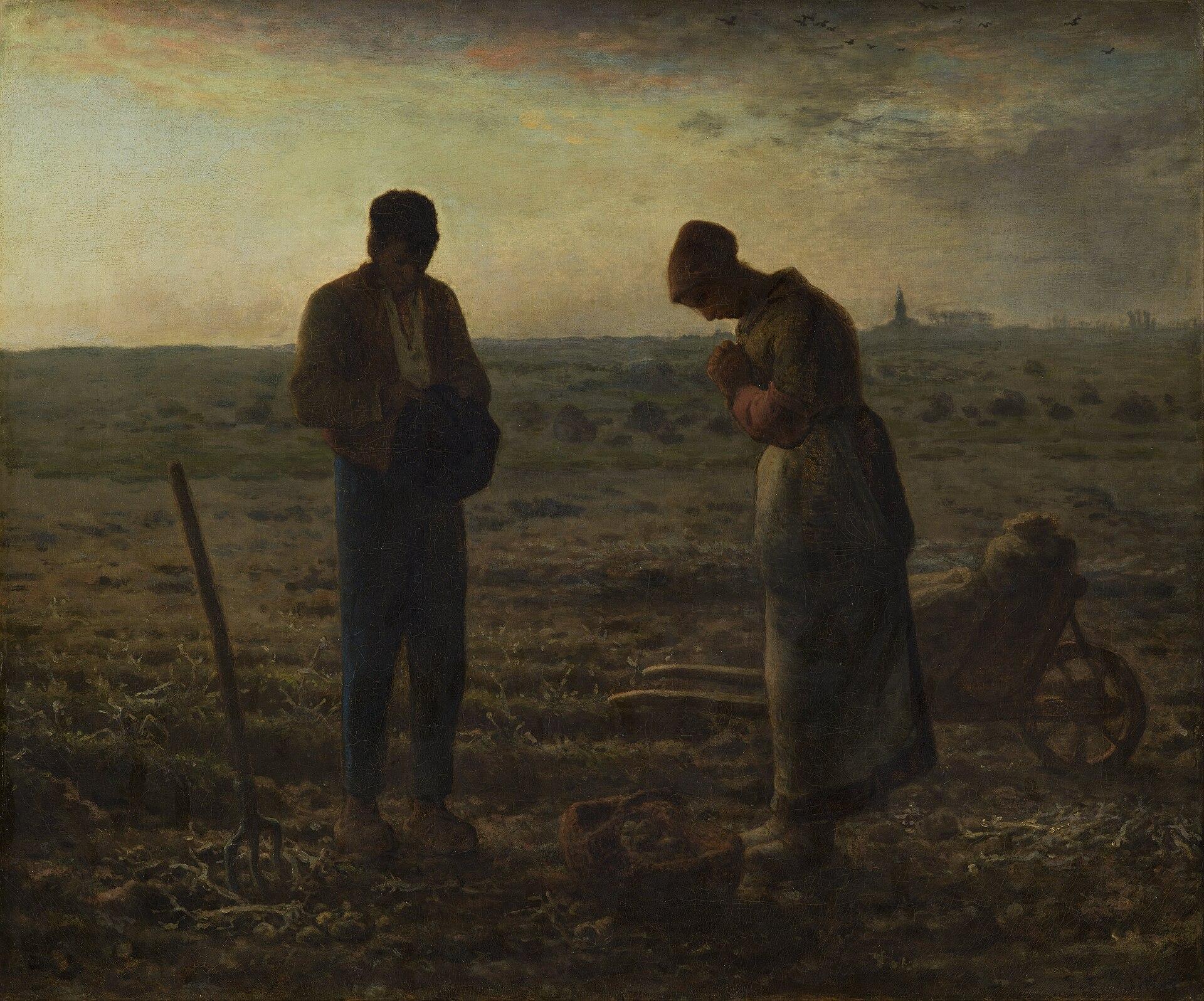
The Catechism counts three ways to pray: "vocal prayer, meditation, and contemplative prayer", and it says all three have one thing in common, which is "the recollection of the heart" (CCC 2721). Around those three the Church arranges everything a person can do with a body and a calendar. You stand, sit, kneel, genuflect, bow, or lie face down. You pray in a church, in a corner of your own house, in a shrine, in a queue. You pray at morning and evening, at noon, on Sunday, in Lent. You use water, oil, a cross, a medal, a candle, a book, or nothing at all.
None of these are decorations. The Church teaches that the body belongs in prayer because a human being is one thing rather than two: "We are body and spirit, and we experience the need to translate our feelings externally" (CCC 2702), and God "wants the external expression that associates the body with interior prayer" (CCC 2703). The Catechism's summary of vocal prayer says the same in one clause: it "associates the body with the interior prayer of the heart" (CCC 2722).
The three ways, and the one trait they share
Every Catholic who learns to pray is being taught inside a set of three. The Catechism puts it plainly: "Christian Tradition has retained three major expressions of prayer" (CCC 2699). The Latin typical edition's summary is tidier: "The Christian tradition comprises three major expressions of the life of prayer: vocal prayer, meditation, and contemplative prayer. They have in common the recollection of the heart" (CCC 2721).
Recollection means gathering. A person who prays while thinking about a debt has not collected his attention, and the Church says that attention is the thing itself, since "it is most important that the heart should be present to him to whom we are speaking in prayer" (CCC 2700). The Catechism then quotes St. John Chrysostom: "Whether or not our prayer is heard depends not on the number of words, but on the fervor of our souls" (CCC 2700).
The three ways are not three separate religions of prayer. They are one road with three stretches. Vocal prayer "becomes an initial form of contemplative prayer" when it internalizes and pays attention (CCC 2704). Meditation is a prayerful quest that "engages thought, imagination, emotion, and desire" (CCC 2708), and it usually prepares the simpler thing that follows it. Contemplation is "the simplest expression of the mystery of prayer", a gift and a grace that "can be accepted only in humility and poverty" (CCC 2713).
Under all three sits the reason any of it works. The Catechism asks where prayer comes from and answers with the heart: "According to Scripture, it is the heart that prays. If our heart is far from God, the words of prayer are in vain" (CCC 2562). Then it describes that heart as "the dwelling-place where I am, where I live" and "the place of encounter" (CCC 2563). Humility comes first, because prayer is received before it is produced. The Catechism calls humility "the foundation of prayer", and says that only when we acknowledge that "we do not know how to pray as we ought" are we "ready to receive freely the gift of prayer" (CCC 2559).
“Prayer is the raising of one's mind and heart to God.
”
Why the body is in on it
The Church's teaching on posture starts from anthropology rather than etiquette. A human is a unity of body and soul, so the body's acts are not a distraction from spiritual prayer but a participation in it (CCC 2702). God asks for worship "in Spirit and in Truth", and the same paragraph adds that he also wants "the external expression that associates the body with interior prayer, for it renders him that perfect homage which is his due" (CCC 2703).
The older Catholic writers put the same point while listing what the early Christians actually did. Standing with hands extended was the posture of the orans, and "prostration, kneeling, genuflection, and such gestures as striking the breast are all outward signs of the reverence proper for prayer, whether in public or private" (Catholic Encyclopedia, "Prayer"). The same article argues that "prayer must be the action of the entire man, body as well as soul", and that when the two act together "they help instead of interfering with one another's activities".
Popular piety has its own inventory, and the Church's official Directory on Popular Piety and the Liturgy lists it: "kissing or touching images, places, relics and sacred objects; pilgrimages, processions; going bare-footed or on one's knees; kneeling and prostrating; wearing medals and badges" (DPP 15). It calls these "direct and simple ways of giving external expression to the heart". It also attaches the warning that keeps the whole subject honest: "Without this interior aspect, symbolic gesture runs the risk of degenerating into empty customs or mere superstitions, in the worst cases" (DPP 15).
Repentance uses the body for the same reason. Interior conversion "urges expression in visible signs, gestures and works of penance" (CCC 1430), and the Catechism names the classic three: "fasting, prayer, and almsgiving", which express conversion toward oneself, toward God, and toward other people (CCC 1434).
Postures, and what each one says
Standing
Standing is the posture of the resurrection, and it is the default at Mass. The faithful stand from the beginning of the Entrance chant until the end of the collect, and again while the Gospel is proclaimed, during the Creed, and during the Prayer of the Faithful (GIRM 43). The 1911 encyclopedia notes that the earliest Christian posture of prayer as depicted in the catacombs is standing with the hands extended, which Tertullian compares to Christ on the Cross (Catholic Encyclopedia, "Prayer").
Sitting
Sitting is for listening. The Roman Missal's instruction tells the congregation to sit while the readings before the Gospel and the responsorial Psalm are proclaimed, and for the homily (GIRM 43). After Communion the same paragraph permits sitting or kneeling during the period of silence, "as circumstances allow". A Catholic who sits through a reading is not being casual. The rubrics put him in the posture of a hearer.
Kneeling
Kneeling is the Church's posture of adoration and of penance. At Mass the faithful kneel beginning after the Sanctus until after the Amen of the Eucharistic Prayer, and they kneel after the Lamb of God unless the diocesan bishop decides otherwise (GIRM 43). The theological ground is in the Creed's own subject: the Catechism says that no one can approach God in this life "except by kneeling before the manger at Bethlehem and adoring him hidden in the weakness of a new-born child" (CCC 563). The practice has Scripture behind it, since the Epistle read at Palm Sunday takes Philippians 2:10 as a liturgical cue for bending the knee at the name of Jesus (Wikipedia, "Genuflection"; the verse is Philippians 2:9-10).
Certain days change the rule. On the solemnities of the Annunciation and the Nativity of the Lord, all genuflect at the words in the Creed about the Incarnation (GIRM 137).
Genuflection
A genuflection is defined by the Missal's instruction: "A genuflection, made by bending the right knee to the ground, signifies adoration, and therefore it is reserved for the Most Blessed Sacrament, as well as for the Holy Cross" (GIRM 274). Everyone who passes before the Blessed Sacrament genuflects, unless they are moving in a procession (GIRM 274). The Western practice of doing it on one knee dates from a rule introduced in 1973; the older Latin word meant kneeling on both knees, and the two-knee form is still what the word genuflection first meant (Wikipedia, "Genuflection").
The habit most Catholics learn as children, of genuflecting when entering or leaving a chapel where the Blessed Sacrament is reserved in the tabernacle, is the same act applied to a real presence believed to be there (Wikipedia, "Genuflection").
Bowing
Bows carry honor rather than adoration, and the instruction says so: "A bow signifies reverence and honor shown to the persons themselves or to the signs that represent them" (GIRM 275). There are two kinds, a bow of the head and a bow of the body, that is, a profound bow (GIRM 275). The head is bowed when the three Divine Persons are named together and at the names of Jesus and of Mary; the profound bow is made to the altar (GIRM 275, 49). A communicant bows his head before the Sacrament as a gesture of reverence when receiving Holy Communion (GIRM 160).
Prostration
Lying flat on the ground is the most extreme thing a body can do in Christian prayer, and the Church keeps it for the biggest moments. Catholic, Lutheran, and Anglican churches use full prostrations during the imposition of Holy Orders, religious profession, and the consecration of virgins, and the priest and deacon prostrate themselves before the altar at the start of the Good Friday liturgy (Wikipedia, "Prostration"). The Directory lists prostrating among the bodily expressions of popular piety, and "going bare-footed" with it (DPP 15).
Striking the breast
Beating the chest is the gesture of the tax collector in the parable, whose prayer is one line: "God, be merciful to me a sinner!" (CCC 2631). The Catechism calls that cry "the first movement of the prayer of petition", and says asking forgiveness is the prerequisite for both the Mass and private prayer (CCC 2631). The 1911 article lists the gesture with kneeling and genuflection as an outward sign of the reverence prayer is owed.
If your knees are the problem
The rule already answers this. Kneeling at Mass is expected "except when prevented on occasion by reasons of health, lack of space, the large number of people present, or some other good reason", and those who do not kneel "ought to make a profound bow when the priest genuflects after the consecration" (GIRM 43). Partial prostrations, the profound bows, can be used in place of genuflections by people who cannot genuflect (Wikipedia, "Prostration"). No one is required to injure himself to show reverence, and a posture the body cannot hold is not a prayer the Church demands.
The Sign of the Cross
This one posture is not optional equipment. "The Christian begins his day, his prayers, and his activities with the Sign of the Cross", and by it the baptized person "dedicates the day to the glory of God and calls on the Savior's grace", and it "strengthens us in temptations and difficulties" (CCC 2157; repeated at CCC 2166). The Church herself blesses people, meals, objects, and places "by invoking the name of Jesus, usually while making the holy sign of the cross of Christ" (CCC 1671).
Places: the church, the corner at home, and the street
The Catechism has a section titled "Places favorable for prayer", and it opens with a sentence that surprises people who think location is a private matter: "the choice of a favorable place is not a matter of indifference for true prayer" (CCC 2691).
The church building
"The church, the house of God, is the proper place for the liturgical prayer of the parish community", and it is "the privileged place for adoration of the real presence of Christ in the Blessed Sacrament" (CCC 2691). Canon law backs the description with definitions. Sacred places are those "designated for divine worship or for the burial of the faithful by a dedication or a blessing" (can. 1205). A church is "a sacred building designated for divine worship" (can. 1214), and its doors must stand open without charge "during the time of sacred celebrations" (can. 1221). Oratories and chapels, once blessed, must be "reserved for divine worship alone and free from all domestic uses" (can. 1229).
The practical result of these laws is the habit many Catholics have of dropping into a church at noon, or on the way home. A shrine is "a church or other sacred place to which numerous members of the faithful make pilgrimage for a special reason of piety" (can. 1230), and at shrines the bishop is to foster "the cultivation of approved forms of popular piety" (can. 1234 §1).
Visiting the Blessed Sacrament
The Directory describes the short version of this devotion as "a brief encounter with Christ inspired by faith in the real presence and characterized by silent prayer", set beside longer adoration of the Sacrament exposed in a monstrance (DPP 165). It is one of the few Catholic practices that requires no book, no company, and no time you have to explain.
The home
The family is "the first place of education in prayer", and the Catechism calls it the "domestic church" where children "learn to pray 'as the Church' and to persevere in prayer" (CCC 2685). The home is "the place where children receive the first proclamation of the faith", and for that reason "is rightly called 'the domestic church,' a community of grace and prayer" (CCC 1666).
For personal prayer the Catechism recommends "a 'prayer corner' with the Sacred Scriptures and icons, in order to be there, in secret, before our Father", and it notes that in a Christian family this kind of little oratory "fosters prayer in common" (CCC 2691). The homes of Christians have historically had a piece of furniture for exactly this purpose, the prie-dieu, used for Bible reading and for the breviary (Wikipedia, "Kneeling"). The Directory names the same places the Catechism assumes: alongside churches, there are places of prayer "often not less important: e.g. homes, places of life and work" (DPP 19).
Two home practices are official enough to be listed as exercises to encourage. Grace before and after meals is "a daily habit in many Christian families that should be encouraged", and the head of the household or another member blesses the festive meal with Easter water on Easter Sunday (DPP 150). Many dioceses run an annual blessing of families in their own homes during Eastertide, and the Directory says its purpose is "to exhort parents and children to preserve and promote the mystery of being 'a domestic church'" (DPP 152). Sacred images, too, are for the home as much as the church: the Directory states that "the faithful pray before sacred images, both in churches and in their homes" (DPP 239).
Monasteries, shrines, and the road
Where monasteries exist, "the vocation of these communities is to further the participation of the faithful in the Liturgy of the Hours and to provide necessary solitude for more intense personal prayer" (CCC 2691). Pilgrimages, the same paragraph says, "evoke our earthly journey toward heaven and are traditionally very special occasions for renewal in prayer", and shrines are "special places for living the forms of Christian prayer 'in Church'" (CCC 2691). The Directory defines a shrine in nearly the same words as canon law: "a church or other sacred place to which the faithful make pilgrimages for a particular pious reason" (DPP 264).
A procession turns the street itself into a place of prayer, and the Directory reads it as a sign of what the Church is: "a procession is a sign of the Church's condition, the pilgrimage of the People of God, with Christ and after Christ" (DPP 247). It tells organizers to begin such processions with a moment of prayer and a proclamation of the Word of God (DPP 247).
Prayer in a crowd
You do not need a building. The Catechism quotes St. John Chrysostom on the possibility of praying anywhere: "It is possible to offer fervent prayer even while walking in public or strolling alone, or seated in your shop, . . . while buying or selling, . . . or even while cooking" (CCC 2743). The Church's instruction about privacy runs the other way and holds both halves together: "The Christian is indeed called to pray with his brethren, but he must also enter into his chamber to pray to the Father, in secret" (Sacrosanctum Concilium 12).
Even the secret prayer is not a private religion. Prayer done "in secret" is "always prayer of the Church", because it is communion with the Father through Christ in the Spirit (CCC 2655), and liturgical prayers "are not private actions but celebrations of the Church itself which is the sacrament of unity" (can. 837 §1).
Times: the shape of a Catholic day
The Catechism states the logic of fixed hours in one sentence, and it is worth reading twice. "We cannot pray 'at all times' if we do not pray at specific times, consciously willing it," it says, and those specific times are "the special times of Christian prayer, both in intensity and duration" (CCC 2697). The impulse to pray always is real, and it needs anchor points to survive contact with a working day.
The list of anchors is short: "Some are daily, such as morning and evening prayer, grace before and after meals, the Liturgy of the Hours. Sundays, centered on the Eucharist, are kept holy primarily by prayer. The cycle of the liturgical year and its great feasts are also basic rhythms of the Christian's life of prayer" (CCC 2698). The Council's liturgy constitution gives the same instruction a legal shape when it says the Hours "are devised so that the whole course of the day and night is made holy by the praises of God" (Sacrosanctum Concilium 84), and the purpose of keeping them at their proper times is stated outright: "That the day may be truly sanctified" (Sacrosanctum Concilium 94).
Morning
"The Christian begins his day, his prayers, and his activities with the Sign of the Cross" (CCC 2157). The Church also asks for a daily call on the Holy Spirit, "especially at the beginning and the end of every important action" (CCC 2670). Lauds is the Hour designed for dawn, and Paul VI's constitution on the revised Hours states that "the most important Hours are Lauds as morning prayer and Vespers as evening prayer", and that these two "become the two hinges, as it were, of the daily Office" (Laudis Canticum 2). At Lauds, intercessions were added specifically "to consecrate the day in order to prepare for the work of the day" (Laudis Canticum 8).
Midday
The Angelus is the noon prayer in the West, and the Directory records its schedule: "It is used three times daily: at dawn, mid-day and at dusk" (DPP 195). What it does is recall the moment when the Word became flesh in the womb of the Virgin Mary. In the Easter season "the Angelus is replaced with the antiphon Regina Coeli" (DPP 196). The bells that carried this schedule are old, and they came with a posture: at Lérida in Spain in 1308, the bishop ordered the bell rung three times with pauses as night fell, and told the faithful "on hearing the bell to fall on their knees and recite the Ave Maria" (Catholic Encyclopedia, "Angelus Bell"). The fifteenth-century constitutions of Syon monastery even fixed the pacing, telling the lay brother to toll nine strokes at three times and to keep "the space of one Pater and Ave between each three tollings".
Evening and night
Vespers grew up as the hour "at the lighting of the lamps", around six in the evening (Wikipedia, "Liturgy of the Hours"), and the oldest Christian hymn still in use outside the Bible belongs to that moment. The Phos Hilaron, known in English as "O Gladsome Light", is first recorded in the Apostolic Constitutions and is sung at the lighting of evening lamps (Wikipedia, "Phos Hilaron"). Compline is the Church's last prayer before sleep, and its name comes from the Latin completorium, since it is "the completion of the waking day" (Wikipedia, "Compline").
The week and the year
Friday and Lent are the universal penitential days, and canon law prescribes them as days on which "the Christian faithful devote themselves in a special way to prayer" (can. 1249-1250). Abstinence from meat on Fridays, and fasting on Ash Wednesday and Good Friday, are the current discipline, with the ages set at fourteen for abstinence and the age of majority for fasting (can. 1251-1252). Bishops' conferences may determine the observance more precisely, and may substitute other forms of penance, "especially works of charity and exercises of piety" (can. 1253). The Catechism lists the fifth commandment of the Church as the observance of these days, which "help us acquire mastery over our instincts and freedom of heart" (CCC 2043).
Sunday holds the first place. The Directory says the "Lord's day" is "the 'primordial feast' and 'basis and centre of the liturgical year'", and that other devotions are not to be pushed in front of it (DPP 95). The rest of the year has its own rhythm, which the Directory describes as the rhythm "associated with the change from day to night, from one month to another, or of the seasons" (DPP 20).
How the hours got their number
The fixed hours are a Jewish inheritance that the first Christians kept. "In the Psalms are found expressions like 'in the morning I offer you my prayer'; 'At midnight I rise and thank you'; 'Evening, morning and at noon I will cry and lament'; 'Seven times a day I praise you'," and the Apostles kept the custom of praying at the third, sixth, and ninth hours and at midnight (Wikipedia, "Liturgy of the Hours", citing Acts 10:3, 9 and Acts 16:25). The fourth-century Apostolic Constitutions exhorted believers to pray at morning, third, sixth, ninth, evening, and cockcrow (Catholic Encyclopedia, "Canonical Hours"). Hippolytus is reported to have taught seven fixed times: on rising, at the lighting of the evening lamp, at bedtime, at midnight, and at the third, sixth, and ninth hours, which are the hours associated with Christ's Passion (Wikipedia, "Liturgy of the Hours").
The word "canonical" in "canonical hours" is the Church's own legal vocabulary applied to time. The term, the 1911 article explains, was "borrowed from the custom of the Jews", and in the Acts of the Apostles prayer is designated by the hour at which it was said; the Rule of St. Benedict uses the phrase (Wikipedia and Catholic Encyclopedia, "Canonical Hours"). The Didache told Christians to pray the Lord's Prayer three times a day, and that practice entered the hours as well (Wikipedia, "Liturgy of the Hours").
The 1970 revision changed the schedule and the reason for it. Prime was abolished, and the constitution that promulgated the revised Hours said the change was made so that the Hours "can be fitted into the actual hours of people's daily lives" (Laudis Canticum 2). The Council had already asked that the hours "be genuinely related to the time of the day when they are prayed" (Sacrosanctum Concilium 88), and canon law now states the rule for anyone who keeps them: "In carrying out the liturgy of the hours, the true time for each hour is to be observed insofar as possible" (can. 1175).
Lay people are not expected to be silent about this. Clerics are obliged to carry out the Hours, and "members of institutes of consecrated life and societies of apostolic life, however, are bound according to the norm of their constitutions" (can. 1174 §1). Everyone else is included in an invitation rather than an obligation: "Other members of the Christian faithful, according to circumstances, are also earnestly invited to participate in the liturgy of the hours as an action of the Church" (can. 1174 §2). The reason the invitation exists is in the same law's description of what the Hours do: the Church, "fulfilling the priestly function of Christ", is "hearing God speaking to his people" and "praises him without ceasing by song and prayer and intercedes for the salvation of the whole world" (can. 1173).
Vocal prayer: saying the words
Vocal prayer is prayer with a form you can repeat out loud, and the Church calls it "an essential element of the Christian life" (CCC 2701). Its defense is Christological. Jesus taught a vocal prayer, the Our Father, to disciples who had watched his silent prayer. He "not only prayed aloud the liturgical prayers of the synagogue" but "he raised his voice to express his own personal prayer", from his blessing of the Father to the agony in the garden (CCC 2701).
The Catechism's argument for set forms is realistic about human beings. Because vocal prayer "is external and so thoroughly human", it "is the form of prayer most readily accessible to groups" (CCC 2704). It is also the vulnerable one, since words can be said without the heart being present, and the same paragraph insists that "Even interior prayer, however, cannot neglect vocal prayer". The balance is attention: prayer is internalized "to the extent that we become aware of him 'to whom we speak'", and then "vocal prayer becomes an initial form of contemplative prayer" (CCC 2704).
Repetition is not the problem it is sometimes accused of being. The Catechism says of the Our Father that "Jesus does not give us a formula to repeat mechanically", and that "it is through the Word of God that the Holy Spirit teaches the children of God to pray to their Father" (CCC 2766). The old writers prescribed a way of saying familiar prayers that keeps them from becoming mechanical: recite the Lord's Prayer, the Hail Mary, the Creed, or the Confiteor "slowly enough to admit the interval of a breath between the principal words or sentences, so as to have time to think of their meaning, and to feel in one's heart the appropriate emotions" (Catholic Encyclopedia, "Prayer", on the practice recommended in the Spiritual Exercises of St. Ignatius).
Memorization has a place in this. "The memorization of basic prayers offers an essential support to the life of prayer," the Catechism says of the catechesis of children and adults, and it then adds the condition: "but it is important to help learners savor their meaning" (CCC 2688). The Church's stock of learned texts is large and ancient, and the 1911 article lists the familiar ones as evidence of Catholic usage: "the Our Father, Hail Mary, Apostles' Creed, Confiteor, Acts of Faith, Hope, and Charity" (Catholic Encyclopedia, "Prayer").
For the actual texts, the bead-by-bead instructions for the Rosary, the chaplets, the litanies, and the novenas, see How do Catholics pray?.
Meditation: thinking with God
The Catechism's first line on meditation is a definition by verb: "Meditation is above all a quest" (CCC 2705). The mind tries to understand the why and how of the Christian life in order to do what is being asked of it, and the text admits the practical difficulty immediately: "the required attentiveness is difficult to sustain".
So the Church recommends props, and lists them. "We are usually helped by books, and Christians do not want for them: the Sacred Scriptures, particularly the Gospels, holy icons, liturgical texts of the day or season, writings of the spiritual fathers, works of spirituality, the great book of creation, and that of history" (CCC 2705). Icons and the liturgical calendar are here for the same reason Scripture is: they give the mind something to work on that it did not invent.
The turn from reading to living is the point of the exercise. "To meditate on what we read helps us to make it our own by confronting it with ourselves. Here, another book is opened: the book of life. We pass from thoughts to reality" (CCC 2706). The paragraph ends with the question that makes a meditation different from study: "Lord, what do you want me to do?" (CCC 2706).
Method is allowed and method is demoted. "There are as many and varied methods of meditation as there are spiritual masters," the Catechism says, and Christians owe it to themselves to meditate regularly so as not to end up like the seed on the path in the parable of the sower. Then the limit: "But a method is only a guide; the important thing is to advance, with the Holy Spirit, along the one way of prayer: Christ Jesus" (CCC 2707).
What a meditation involves is the whole inner weather report. It "engages thought, imagination, emotion, and desire", and this mobilization deepens conviction, prompts conversion, and strengthens the will (CCC 2708). The Catechism names two practices by which Catholics do this by the million: Christian prayer "tries above all to meditate on the mysteries of Christ, as in lectio divina or the rosary". It then says that this kind of reflection is of great value, and that prayer "should go further".
Scripture is the special case, and the Church's law and her Directory push it hard. "The Church exhorts the faithful to frequent personal and community reading of the Word of God" (DPP 130), and the Directory states the aim: "the Christian faithful should acquire a familiarity with Sacred Scripture and be imbued with its spirit" (DPP 87). Reading and prayer are meant to close a loop: "Prayer should accompany the reading of Sacred Scripture, so that a dialogue takes place between God and man" (DPP 88). The spiritual writers, paraphrasing Matthew 7:7, put the sequence in one line: "Seek in reading and you will find in meditating; knock in mental prayer and it will be opened to you by contemplation" (CCC 2654).
Silent prayer, and what contemplation is
The Catechism answers its own question about contemplative prayer with a quotation from a Spanish nun of the sixteenth century: "Contemplative prayer [oracion mental] in my opinion is nothing else than a close sharing between friends; it means taking time frequently to be alone with him who we know loves us" (CCC 2709, quoting St. Teresa of Jesus). The paragraph continues by naming the object of the exercise: contemplation seeks him "whom my soul loves", which is Jesus, and in him the Father.
The practical instruction comes next, and it is the opposite of waiting for a mood. "The choice of the time and duration of the prayer arises from a determined will, revealing the secrets of the heart. One does not undertake contemplative prayer only when one has the time: one makes time for the Lord, with the firm determination not to give up, no matter what trials and dryness one may encounter" (CCC 2710). The same paragraph is the reason this page puts silence in the section a busy person reads last: "One cannot always meditate, but one can always enter into inner prayer, independently of the conditions of health, work, or emotional state."
Silence has a technique, such as it is. "Entering into contemplative prayer is like entering into the Eucharistic liturgy: we 'gather up' the heart, recollect our whole being under the prompting of the Holy Spirit, abide in the dwelling place of the Lord which we are, awaken our faith in order to enter into the presence of him who awaits us," the Catechism says, and it adds the part about honesty: "We let our masks fall and turn our hearts back to the Lord" (CCC 2711).
The gaze is the thing. "Contemplation is a gaze of faith, fixed on Jesus", and to illustrate it the Catechism reports what a peasant of Ars told his parish priest about praying before the tabernacle: "I look at him and he looks at me" (CCC 2715). Hearing the Word is the other half, and the paragraph insists this is not passivity but "the obedience of faith" (CCC 2716). Then the sentence people misread: "Contemplative prayer is silence", "the 'symbol of the world to come'" or "silent love", and words in this kind of prayer "are not speeches; they are like kindling that feeds the fire of love" (CCC 2717). It is the silence the Spirit uses, since "in this silence the Spirit of adoption enables us to share in the prayer of Jesus" (CCC 2717).
Why silence is not self-generated is a doctrine about the Holy Spirit rather than about psychology. The New Testament rarely repeats the Old Testament's prayers of lament, and Christian petition rises from the depth where the Spirit "helps us in our weakness", since "we do not know how to pray as we ought, but the Spirit himself intercedes for us with sighs too deep for words" (CCC 2630). Contemplation itself, the Catechism says, "is a gift, a grace; it can be accepted only in humility and poverty" (CCC 2713).
The word the tradition uses for quiet
The older Catholic textbooks divide the prayer of the heart into degrees, and they name the difference carefully. "As the name implies the prayer of quiet is that in which the soul experiences an extraordinary peace and rest, accompanied by delight or pleasure in contemplating God as present", and this gift "cannot be acquired, because it is supernatural" (Catholic Encyclopedia, "Prayer of Quiet"). The same tradition distinguishes acquired from infused contemplation: meditation, after a time, "produces what is called acquired contemplation, which consists in seeing at a simple glance the truths which could previously be discovered only through prolonged discourse" (Catholic Encyclopedia, "Contemplation", quoting St. Alphonsus Liguori).
The boundary is worth knowing, because people drift toward a wrong version of quiet. The Church's writers say that if a person "feels the facility for certain acts" during prayer, "one should yield to this inclination instead of obstinately striving to remain immovable like the Quietists", and they add that "even the full use of our faculties is not superfluous in helping us to reach God" (Catholic Encyclopedia, "Contemplation"). The lower degrees of mental prayer go by many names: the 1911 article lists "the prayer of the heart, active recollection, and by the paradoxical phrases, active repose, active quietude, active silence", and adds that "St. Francis de Sales called it the prayer of simple committal" to God, "not in the sense of doing nothing or of remaining inert in His sight" (Catholic Encyclopedia, "Prayer"). The same article supplies the caution: "it is important not to confuse them with any of the modes of Quietism".
The silence inside the liturgy
A Catholic does not have to invent this discipline on his own, since the Mass builds in the pauses. "Sacred silence also, as part of the celebration, is to be observed at the designated times", the Missal's instruction says: after the readings or the homily, when "all meditate briefly on what they have heard", and after Communion, when "they praise and pray to God in their hearts" (GIRM 45). Before the collect, "all, together with the priest, observe a brief silence so that they may be conscious of the fact that they are in God's presence" (GIRM 54). Even the revised Hours were arranged with "optional periods of silence" built into them so that "voice and mind can be more in harmony" (Laudis Canticum 3).
Silence with a name in it
If a bare silence will not hold, the tradition supplies a sentence to carry it. The Church's own text on the subject is direct: "the simplest way of praying always" is the invocation of the name of Jesus, and when that name "is repeated often by a humbly attentive heart", the prayer "holds fast to the word and 'brings forth fruit with patience'" (CCC 2668). The reason given is not efficiency but love: this prayer is possible at all times because it is "not one occupation among others but the only occupation".
The usual form of that prayer, transmitted by the writers of Sinai, Syria, and Mount Athos, is "Lord Jesus Christ, Son of God, have mercy on us sinners" (CCC 2667), and elsewhere the Catechism gives the singular version: "Lord Jesus Christ, Son of God, have mercy on me, a sinner!" (CCC 2616). Both combine the hymn from Philippians 2 with the cry of the blind men and of the tax collector (CCC 2667). The desert practice behind it could be shorter still, since the prayer "can be from as short as 'Lord, have mercy'... or even 'Jesus'" (Wikipedia, "Jesus Prayer"). The monks who shaped it tied it to the breath rather than to a word count: Ammonas of Egypt advised another monk to "always keep in your heart the words of the Publican", and Macarius of Egypt taught Evagrius Ponticus to say "Lord Jesus, have mercy on me" with each breath (Wikipedia, "Jesus Prayer").
Praying with things
This is the part of Catholic practice that outsiders find strangest and Catholics most often take for granted, so the definitions matter.
A sacramental is defined in the Catechism by quoting the Second Vatican Council: they are "sacred signs which bear a resemblance to the sacraments", they "signify effects, particularly of a spiritual nature, which are obtained through the intercession of the Church", and by them "men are disposed to receive the chief effect of the sacraments, and various occasions in life are rendered holy" (CCC 1667, quoting Sacrosanctum Concilium 60; the canon law text is can. 1166).
Two features govern everything you would actually do with them. First, a sacramental "always include[s] a prayer, often accompanied by a specific sign, such as the laying on of hands, the sign of the cross, or the sprinkling of holy water (which recalls Baptism)" (CCC 1668). A blessed object is not a battery. It comes with a prayer attached, and the prayer is the part that does the work. Second, sacramentals "do not confer the grace of the Holy Spirit in the way that the sacraments do, but by the Church's prayer, they prepare us to receive grace and dispose us to cooperate with it" (CCC 1670). The Council's line, quoted at the same place, is the optimistic one: "There is scarcely any proper use of material things which cannot be thus directed toward the sanctification of men and the praise of God" (CCC 1670, quoting Sacrosanctum Concilium 61).
Blessings come first among sacramentals, and they are not reserved to clergy in every case. "Every blessing praises God and prays for his gifts" (CCC 1671). Sacramentals "derive from the baptismal priesthood: every baptized person is called to be a 'blessing,' and to bless", so lay people "may preside at certain blessings", while blessings that concern the Church's liturgical life are reserved to the ordained (CCC 1669; can. 1168, which says a minister of sacramentals is a cleric with the requisite power and that "lay persons who possess the appropriate qualities can also administer some sacramentals"). Any priest can impart blessings except those reserved to the pope or a bishop (can. 1169 §2), and blessings can be given even to catechumens and non-Catholics (can. 1170).
The objects themselves
- Holy water recalls Baptism and is the sign used in blessings (CCC 1668).
- A crucifix or cross, a rosary, a scapular, a medal: these are the four objects Paul VI names when he grants an indulgence to a person who uses one devoutly, provided the object has been "properly blessed by any priest", and with a further indulgence if a pope or bishop blessed it (Indulgentiarum Doctrina, Norm 17). Rosaries and medals are blessed "in the belief that they help to remind the faithful of the love of God" (DPP 206), and the scapular most commonly worn is that of Our Lady of Mount Carmel (DPP 205).
- Candles, ashes, palm, oil fall under the general rule that the Church sanctifies "a great variety of circumstances in Christian life, and the use of many things helpful to man" (CCC 1668), and that they can be adapted "to the needs, culture, and special history" of a people (CCC 1668).
- Images and icons: the faithful pray before them "both in churches and in their homes" (DPP 239), and the theology is one line: "The image is not venerated in itself. Rather, that which it represents is venerated" (DPP 241). The Council of Nicaea II's ruling, which the Directory is quoting, excludes the idea that images "contain some divinity or power justifying such cult... as the pagans used to do with idols" (DPP 241). Sacred images "belong to the realm of sacred signs and to the realm of art" (DPP 243), and a bishop is to see that "inappropriate images or those leading to error or superstition, are not exposed for the veneration of the faithful" (DPP 244).
- Relics: venerated as part of the "forms of piety" the Church lists (CCC 1674), and regulated, since the faithful are warned "to resist the temptation to form collections of relics" (DPP 237).
- Sacred places and objects used at home are governed by the same reverence law: things designated for divine worship by dedication or blessing "are to be treated reverently and are not to be employed for profane or inappropriate use even if they are owned by private persons" (can. 1171).
The limits, stated by the Church
Three rules keep this devotion short of something else.
Devotion may not absorb the liturgy. "The Sacred Liturgy, in virtue of its very nature, is by far superior to pious exercises" (DPP 73), and the Directory asks for "a real effort to harmonize, in so far as possible, pious exercises with the rhythm and demands of the Liturgy" (DPP 74). The bishop's job includes ensuring that devotions "do not substitute for the Liturgy nor become part of the liturgical celebrations" (DPP 21), and devotional formulae "should not be commingled with the liturgical actions" (DPP 13).
Devotion may not go pagan in its methods. Christian popular piety "may never incorporate rites permeated by magic, superstition, animism, vendettas or sexual connotations" (DPP 12). The same document forbids Catholic practice around the dead from sliding into spirit-speaking: it excludes "the invocation of the dead in practices involving divination" and "any suggestion of a belief in reincarnation" (DPP 258).
Devotion may not confuse the mediators. All pious exercises in honor of the Blessed Virgin, the angels, and the saints "have the Father as their final end" (DPP 158), because "the incarnate, dead and resurrected Son is the only mediator... apart from whom access to the Father is impossible" (DPP 158). A listed deviation to watch for is "a disproportionate interest between the Saints and the absolute sovereignty of Jesus Christ and his mysteries" (DPP 64).
The boundary case is exorcism, which is a prayer and not a sacramental you operate yourself. When the Church "asks publicly and authoritatively in the name of Jesus Christ that a person or object be protected against the power of the Evil One and withdrawn from his dominion, it is called exorcism" (CCC 1673). A simple form happens at Baptism; the solemn form "can be performed only by a priest and with the permission of the bishop", who must have "piety, knowledge, prudence, and integrity of life" (CCC 1673; can. 1172). The same paragraph insists that "Illness, especially psychological illness, is a very different matter". For what the Church teaches about the devil, temptation, and the seven capital sins, this site has a separate page: Sins and Spiritual Warfare.
Praying with other people
Nobody prays alone, and the Church means this literally rather than as a consolation. The saints already in heaven "contemplate God, praise him and constantly care for those whom they have left on earth", and their intercession is "their most exalted service to God's plan", so "We can and should ask them to intercede for us and for the whole world" (CCC 2683). The In Brief puts the same in one sentence: "In prayer, the pilgrim Church is associated with that of the saints, whose intercession she asks" (CCC 2692).
The company you keep on earth has assigned roles in this too. The family is the first school (CCC 2685), ordained ministers are responsible for "the formation in prayer of their brothers and sisters in Christ", and are ordained to lead the People of God "to the living waters of prayer: the Word of God, the liturgy, the theological life (the life of faith, hope, and charity), and the Today of God in concrete situations" (CCC 2686). Consecrated people have historically given their whole lives to this work: hermits, monks, and nuns "since the time of the desert fathers have devoted their time to praising God and interceding for his people" (CCC 2687).
Prayer groups are counted among the signs of renewal in the Church, with a test attached: they are "schools of prayer" provided "they drink from authentic wellsprings of Christian prayer", and "concern for ecclesial communion is a sign of true prayer in the Church" (CCC 2689). If you want a template for the smallest possible version of that, the pattern is in the Church's origin story: the first believers "devoted themselves to the apostles' teaching and fellowship, to the breaking of bread, and the prayers" (CCC 2624).
For a longer discipline, the tradition recommends a director. St. John of the Cross, quoted at length in the Catechism on this point, says a person trying to advance should "take care into whose hands he entrusts himself, for as the master is, so will the disciple be", and that a director should be "learned and discreet" and also experienced, since without experience he "will be incapable of leading into it the souls whom God is calling to it" (CCC 2690).
Short prayers for a day with no room in it
The demand "I have no time" is treated as a temptation rather than a fact. Many Christians "unconsciously regard prayer as an occupation that is incompatible with all the other things they have to do: they 'don't have the time'", the Catechism says, and it answers that prayer "comes also from the Holy Spirit and not from themselves alone" (CCC 2726). Then it states the possibility: "It is always possible to pray: the time of the Christian is that of the risen Christ who is with us always" (CCC 2743). And the necessity: "Prayer is a vital necessity" (CCC 2744). The one-line rule is the apostolic command, "Pray constantly" (CCC 2757, quoting 1 Thessalonians 5:17), which the Catechism glosses with the early monk Evagrius: "we have not been commanded to work, to keep watch and to fast constantly, but it has been laid down that we are to pray without ceasing" (CCC 2742).
The Church's own reconciliation of the impossible command with an impossible schedule is a sentence about mixing: "He 'prays without ceasing' who unites prayer to works and good works to prayer. Only in this way can we consider as realizable the principle of praying without ceasing" (CCC 2745).
What that looks like in practice, in ascending order of cost:
- A Sign of the Cross when you get up. One gesture, one formula, and the day is dedicated (CCC 2157).
- The name of Jesus, one breath at a time. The shortest complete Christian prayer in existence (CCC 2668, 2616).
- The tax collector's line. "God, be merciful to me a sinner!" (CCC 2631).
- A short aspiration at a temptation. The Sign of the Cross is said to strengthen us precisely there (CCC 2157).
- Grace before and after meals, which the Church lists among the daily rhythms and calls a habit worth encouraging in families (CCC 2698; DPP 150).
- The Angelus at noon, three short verses and a response, at the rhythm the old bells kept: "the space of one Pater and Ave between each three tollings" (Catholic Encyclopedia, "Angelus Bell"; DPP 195).
- One decade of the Rosary while walking, driving, or waiting. Medieval piety in the West "developed the prayer of the rosary as a popular substitute for the Liturgy of the Hours" (CCC 2678), and the Church calls the Rosary "one of the most excellent prayers to the Mother of God" (DPP 197).
- Lauds or Vespers, the two hinge Hours, which are shorter than most people fear and are written to fit real schedules (Laudis Canticum 2).
- A brief stop in a church on the way somewhere, which the Directory describes as "a brief encounter with Christ inspired by faith in the real presence and characterized by silent prayer" (DPP 165).
- Compline before sleep, the completion of the waking day (Wikipedia, "Compline"), often ending with the short prayer for the dead: "Eternal rest, grant unto him/her, O LORD... And let perpetual light shine upon him/her" (Wikipedia, "Eternal Rest").
Three short prayers memorized by heart are the traditional equipment here, and each has a documented history. The Anima Christi, "Soul of Christ, sanctify me", is a medieval prayer to the suffering Christ whose authorship is uncertain, sometimes attributed to Pope John XXII, and found in a manuscript from about 1370 (Wikipedia, "Anima Christi"). The Memorare begins "Remember, O most gracious Virgin Mary, that never was it known that anyone who fled to your protection, implored your help, or sought your intercession, was left unaided", and it is frequently and wrongly attributed to Bernard of Clairvaux; the modern form was popularized in the seventeenth century (Wikipedia, "Memorare"). The Sub tuum praesidium, "We fly to thy protection", is the oldest surviving prayer to Mary, recorded on a papyrus dated by some scholars to the third century and by others to the fourth, and found in a Coptic Christmas liturgy (Wikipedia, "Sub tuum praesidium"). Pope Francis asked in 2018 that this hymn be prayed with the Rosary and the prayer to Saint Michael during October (Wikipedia, "Sub tuum praesidium").
When it goes dry
The Church's writers expect this and have named it for a thousand years.
Distraction. It can affect the words in vocal prayer, or, more deeply, the person you are speaking to, in any of the three ways of praying. The instruction is counterintuitive: "To set about hunting down distractions would be to fall into their trap, when all that is necessary is to turn back to our heart", because a distraction "reveals to us what we are attached to" (CCC 2729).
Dryness. This is the state where the heart is "separated from God, with no taste for thoughts, memories, and feelings, even spiritual ones", and the Catechism calls it "the moment of sheer faith clinging faithfully to Jesus in his agony and in his tomb" (CCC 2731). If the dryness turns out to come from shallowness rather than from testing, then what is required, it says, is conversion.
Acedia. The spiritual writers use the word for a kind of depression that follows from slack ascetic practice, decreasing vigilance, and carelessness of heart, and they attach the Lord's line about the willing spirit and the weak flesh to it (CCC 2733). Its remedy is not a bigger feeling. "The humble are not surprised by their distress; it leads them to trust more, to hold fast in constancy" (CCC 2733).
Lack of faith and discouragement are named as the two frequent temptations, and the answer to the feeling that prayer is useless is humility, trust, and perseverance (CCC 2753, 2755). The summary of the whole subject in the Catechism's own In Brief is worth keeping in a pocket: prayer "presupposes an effort, a fight against ourselves and the wiles of the Tempter", and "the battle of prayer is inseparable from the necessary 'spiritual battle' to act habitually according to the Spirit of Christ: we pray as we live, because we live as we pray" (CCC 2752, 2725).
A day, laid out
This is a single arrangement of the pieces above, in the order the Church's own lists give them.
- Wake, and make the Sign of the Cross over the day (CCC 2157).
- Ask for the Holy Spirit before the first real action (CCC 2670).
- Pray morning prayer: Lauds, or a short vocal prayer on your knees or standing (Laudis Canticum 2; CCC 2698).
- Work, and stitch the name of Jesus into it, since the day's labor is where praying without ceasing actually happens (CCC 2743, 2745).
- Stop at the midday bell for the Angelus, kneeling if you can (DPP 195; Catholic Encyclopedia, "Angelus Bell"). In Eastertide, say the Regina caeli instead (DPP 196).
- Eat with a grace said out loud (CCC 2698; DPP 150).
- If you pass a church with the door open, go in, genuflect, and sit for a few minutes of silent prayer (GIRM 274; DPP 165).
- Say a decade of the Rosary or a set of the Hours during the commute (CCC 2678, 2708).
- Pray evening prayer, Vespers, at the lighting of the lamps (Wikipedia, "Liturgy of the Hours").
- Review the day for what you did and what you were given, then ask forgiveness the way the parable teaches it (CCC 2631).
- Finish with Compline, and remember the dead by name (Wikipedia, "Compline"; Wikipedia, "Eternal Rest").
- Keep Friday as a day of prayer as well as of abstinence (can. 1249-1250).
None of this is a law imposed on lay people. It is a list of what the Church "invites the faithful to" when she names regular prayer: daily prayers, the Liturgy of the Hours, Sunday Eucharist, and the feasts of the liturgical year (CCC 2720).
Common mistakes about the ways of praying
Treating a posture as the prayer. Kneeling is a sign, and the Directory's warning covers exactly this failure: without the interior commitment, "symbolic gesture runs the risk of degenerating into empty customs or mere superstitions" (DPP 15). The Catechism lists people who "reduce prayer to ritual words and postures" among those with erroneous notions of prayer (CCC 2726).
Treating silence as a technique. Christian contemplation has a face in it, and the Catechism rejects "an effort of concentration to reach a mental void" by name (CCC 2726, 2715).
Waiting for the mood before making the time. Contemplative prayer is undertaken with "a determined will", not "only when one has the time" (CCC 2710).
Assuming private prayer is private. Prayer said "in secret" is "always prayer of the Church" (CCC 2655), and even devotions are regulated, since the bishop is responsible for popular piety in his diocese (DPP 21; can. 838 §4).
Ranking a devotion above the Mass. Devotions "extend the liturgical life of the Church, but do not replace it" (CCC 1675), and the liturgy "is by far superior to pious exercises" (DPP 73).
Expecting a blessed object to work by itself. Sacramentals "prepare us to receive grace and dispose us to cooperate with it" rather than conferring grace the way a sacrament does (CCC 1670), and an image is not venerated for what it is made of (DPP 241).
Turning the saints into the answer. Mary, the angels, and the saints are asked to pray, and the prayer they answer is Christ's, since he is "the only mediator" (DPP 158) and the deviations the Directory lists include an imbalance between the saints and "the absolute sovereignty of Jesus Christ" (DPP 64).
Confusing a psychological problem with a spiritual one. The Church's own rule about exorcism says illness, "especially psychological illness, is a very different matter", and that it is "the concern of medical science" (CCC 1673).