Sacramentals · last reviewed 2026-10-05
Church-approvedThe Divine Mercy Image: Venerated With Trust
Good for
At a glance
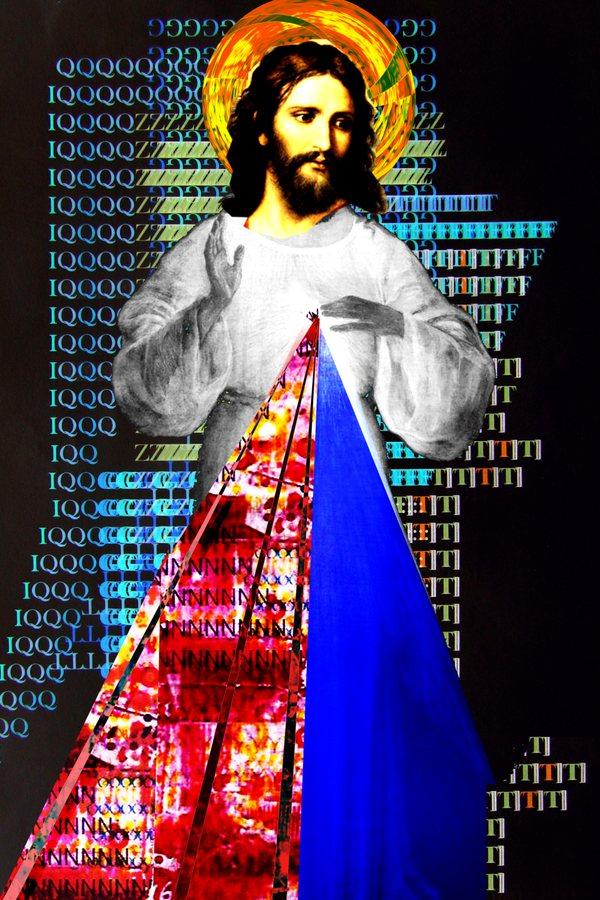
The Divine Mercy image shows the risen Christ with red and pale rays; Faustina was canonized on 30 April 2000 and John Paul II named the Second Sunday of Easter Divine Mercy Sunday.
- Category
- Blessed Objects
- Status
- Church Approved
- Sources
- 4 cited
- Last reviewed
- 2026-10-05
Primary source Directory on Popular Piety and the Liturgy 154
The Divine Mercy image shows Christ risen with red and pale rays and the prayer Jesus, I trust in you. The Church canonized Faustina in 2000 and keeps the Second Sunday of Easter as Divine Mercy Sunday.
What it is
You leave confession on a Sunday in April. Your sins feel heavy still. You see a pale Christ with two rays. You breathe. Mercy has a face.
St. Faustina Kowalska served in the Sisters of Our Lady of Mercy in Poland. In 1931 at Plock she reported that Jesus appeared in white, with red and pale rays from his Heart, and asked for an image with the words Jesus, I trust in you. Father Michael Sopocko, her confessor, tested the reports and commissioned the first painting at Vilnius in 1934.
The Church weighed the writings for decades. Karol Wojtyla, then Archbishop of Krakow, opened the informative process in 1965. Paul VI lifted the restriction in 1978. John Paul II beatified Faustina on 18 April 1993 and canonized her on 30 April 2000. At that Mass he declared the Second Sunday of Easter Divine Mercy Sunday for the universal Church. The Apostolic Penitentiary attached a plenary indulgence to its pious practice under the usual conditions.
The Directory teaches you to read the devotion through the Easter liturgy, where mercy pours from death and resurrection Directory 154 (tier 1 citation). John Paul II presented Faustina to the whole Church as a gift for our time.
How to use it
Place a blessed print in your prayer corner during Eastertide. Pray the words slowly: Jesus, I trust in you. Keep the feast: confession near the day, Communion on the Sunday, prayer for the pope, detachment from sin, plus works of mercy to a neighbor.
Pray the Chaplet at 3 p.m. when you can, the hour of mercy. Bring the dying to it. Read a page of the Diary with Scripture. Ask your parish about a Divine Mercy Holy Hour with exposition.
Where it gets misused
The image promises no automatic rescue. The Catechism warns that crediting efficacy to the external act apart from the interior disposition it demands is superstition CCC 2111 (tier 1 citation). A print hung while you refuse confession, skip Mass, and withhold mercy from your brother contradicts the rays it shows.
Trust him. Confess. Receive him. Show mercy. Then the image tells the truth about you.
FAQ
What does the image show?
The risen Christ with one hand raised in blessing and the other touching his breast, from which red and pale rays flow. Below stand the words Jesus, I trust in you. You venerate the Person, never the paint.
Where did the image come from?
St. Faustina Kowalska, a Sister of Our Lady of Mercy, reported the vision at Plock in 1931. Father Michael Sopocko helped commission the first painting at Vilnius in 1934. The original rests at the Vilnius sanctuary.
Did the Church approve the devotion?
Yes, with care. Karol Wojtyla opened the process in 1965. Paul VI lifted the ban in 1978. John Paul II beatified Faustina in 1993 and canonized her on 30 April 2000. At that Mass he named the Second Sunday of Easter Divine Mercy Sunday for the whole Church.
Must I use the image to keep the feast?
No. The Directory teaches you to understand the devotion in the light of the Easter liturgy (n. 154). The feast, confession, Communion, and works of mercy stand at the center. The image helps trust. It never replaces the sacraments.
Sources
Last reviewed: 2026-10-05