Sacramentals · last reviewed 2026-10-03
Church-approvedThe Crucifix: Why Catholics Hang a Cross With Christ's Body
Good for
At a glance
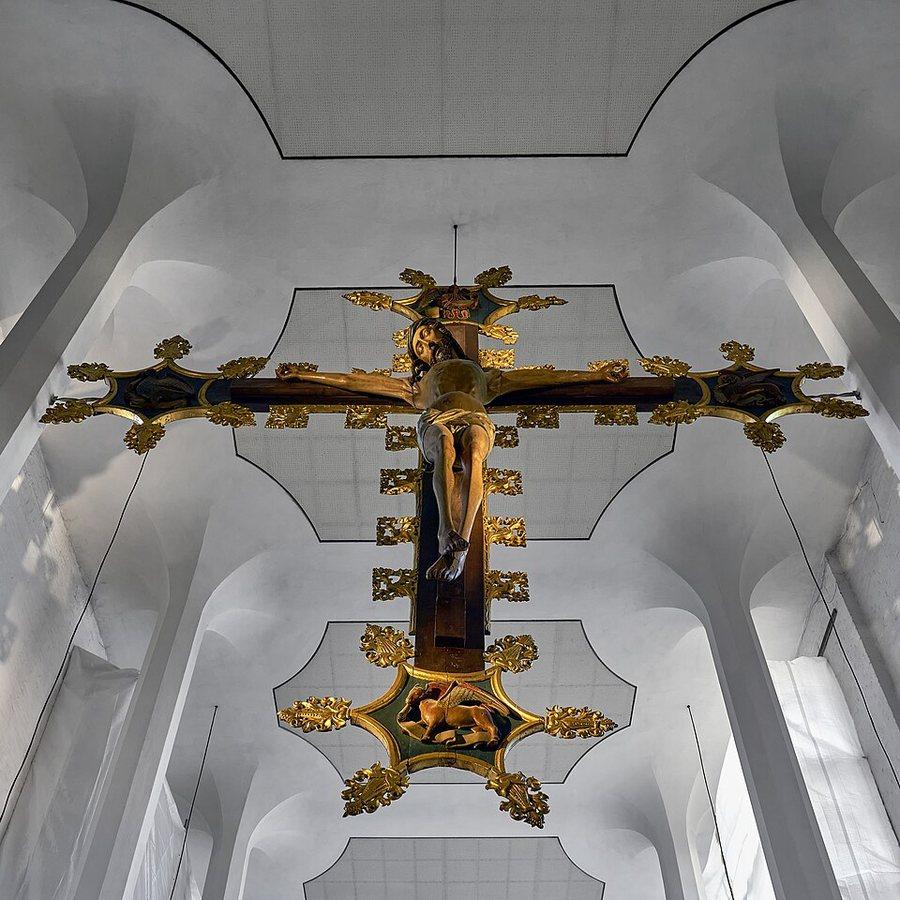
A crucifix is a cross bearing the body of Christ; the Church venerates it as an image of the crucified Lord, and when blessed it becomes a sacramental hung in a home to point at the source of the blessing being asked for.
- Category
- Blessed Objects
- Status
- Church Approved
- Sources
- 4 cited
- Last reviewed
- 2026-10-03
Primary source Catechism of the Catholic Church 1667, 1670, 1671
A crucifix is a cross with the body of Christ upon it. The Church venerates it as an image of the crucified Lord, and blessed it becomes a sacramental: a sign hung in a room to keep the one you are praying to in front of you.
What it is
The Catechism's treatment of sacred images answers the obvious objection. The divine injunction against representing God by human art was never a blanket ban: God himself ordained or permitted images that pointed symbolically toward salvation by the incarnate Word, and the seventh ecumenical council at Nicaea justified the veneration of images on the ground that by becoming incarnate the Son of God introduced a new economy of images (CCC 2130-2131). The honor given to an image, the Catechism says, passes to the prototype: whoever venerates an image venerates the person portrayed in it (CCC 2132).
That is precisely why the crucifix rather than the bare cross is the normal Catholic form. The image portrays Christ crucified, and the veneration passes to him. St. Paul gives the attitude in a line: he will boast in nothing except the cross of our Lord Jesus Christ (Gal 6:14).
Blessed, the crucifix is a sacramental in the canonical sense, a sacred sign by which spiritual effects are signified in imitation of the sacraments (can. 1166). Blessings of objects come first among the sacramentals (CCC 1671).
How to use it
Hang it where you will actually see it: the wall you face when you pray, the end of a hallway, a child's room. Have it blessed if it is new to the house, using the rite your priest has approved (can. 1167 §2). Then leave it alone.
Where it gets misused
Two dead ends sit on either side of the thing. On one side, the crucifix is treated as an object with a force of its own, when sacramentals confer no grace the way the sacraments do; by the Church's prayer they prepare us to receive grace and dispose us to cooperate with it (CCC 1670). On the other side, the crucifix is refused outright as an idol. The Catechism answers that directly: the Christian veneration of images is not contrary to the first commandment, which proscribes idols, because the honor rendered to an image passes to its prototype (CCC 2132).
FAQ
What is the difference between a cross and a crucifix?
A cross is the bare shape; a crucifix adds the body of Christ. That addition is deliberate. The Church venerates images of Christ because the honor given to the image passes to the person it portrays, and the person portrayed here is the crucified Lord (CCC 2131-2132).
Why do Catholics pray in front of a crucifix?
Because it puts the whole claim of the faith in front of you. St. Paul says he will boast in nothing but the cross of our Lord Jesus Christ (Gal 6:14), and an image is an ordinary, bodily way of keeping that in view while you pray.
Does a crucifix have to be blessed?
No, but a blessed crucifix is a sacramental: a sacred sign instituted by the Church, made through an approved rite (CCC 1667; can. 1166), and once blessed it is treated as a sacred object rather than as wall decor (can. 1171).
Sources
| Tier | Reference |
|---|---|
| Tier 1 | Catechism of the Catholic Church 1667, 1670, 1671 (opens in new tab) |
| Tier 1 | Catechism of the Catholic Church 2129-2132 (opens in new tab) |
| Tier 1 | Code of Canon Law can. 1166, can. 1167 §2, can. 1171 (opens in new tab) |
| Tier 1 | Galatians 6:14 (NABRE) (opens in new tab) |
Last reviewed: 2026-10-03