Sacramentals · last reviewed 2026-10-03
Pious tradition, not doctrineThe Christmas Crib: Blessing Your Nativity Scene at Home
Good for
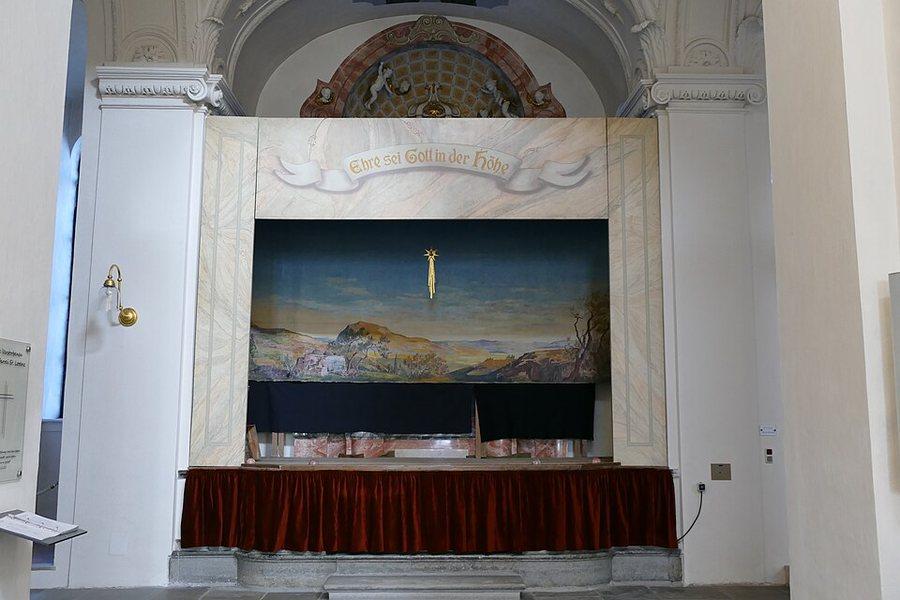
At a glance
The crib is the nativity scene; the Directory traces the home custom to the thirteenth century and St. Francis of Assisi, and treats setting it up as an occasion for the family to gather for prayer and the biblical account of Christ's birth.
- Category
- Home
- Status
- Pious Tradition
- Sources
- 3 cited
- Last reviewed
- 2026-10-03
Primary source Directory on Popular Piety and the Liturgy 104, 105, 109
The crib, or nativity scene, is a representation of the birth of Jesus. The Directory on Popular Piety says the home custom spread from the thirteenth century, under the influence of St. Francis of Assisi's crib at Greccio, and that preparing it draws families into the mystery of Christmas.
What it is
The Directory's account is short and concrete. Representations of the crib have been found in churches since antiquity, and the custom of building cribs in the home was widely promoted from the thirteenth century, influenced undoubtedly by St. Francis of Assisi's crib in Greccio (n. 104). Their preparation, in which children play a significant role, is an occasion for the members of the family to come into contact with the mystery of Christmas, gathering for a moment of prayer or to read the biblical accounts of the Lord's birth.
The crib is a scene meant to be read, out loud, by the people standing around it. The Catechism places such devotions under popular piety, which has always found expression in forms of piety surrounding the Church's sacramental life (CCC 1674-1675), and which extends the liturgical life of the Church rather than replacing it.
Blessed, the crib also becomes a sacramental in the canonical sense: a sacred sign by which spiritual effects are signified in imitation of the sacraments and obtained through the intercession of the Church (can. 1166).
How to use it
Set it up where the family passes it daily, then gather when you do. The Directory gives the pattern for Christmas Eve: read St. Luke's account of the birth of Christ, sing the typical Christmas carols, and add prayers of petition and praise (n. 109). Keep it brief enough that children stay with you.
Ask your priest to bless the crib. Treat it as an object for prayer rather than as a shelf ornament, and let the season it belongs to do the rest.
Where it gets misused
The risk with the crib is not superstition but drift. The Directory warns that popular piety perceives it as impossible to celebrate the Lord's birth except in an atmosphere of sobriety and joyous simplicity and of concern for the poor, and that many values of the season are threatened by the commercialization of Christmas (n. 105). A crib that costs a month's groceries and gets no prayer has missed its own point.
FAQ
Is the nativity scene a liturgical rite or a family custom?
It is popular piety with deep roots. The Directory notes that representations of the crib have existed in churches since antiquity and that building cribs at home was widely promoted from the thirteenth century (n. 104). The Catechism teaches that such devotions extend the liturgical life of the Church without replacing it (CCC 1675).
How does the Church suggest using the crib at home?
As a place to gather. The Directory proposes that the inauguration of the crib in homes be an opportunity for family prayer, including a reading of St. Luke's account of Christ's birth, Christmas carols, and prayers of petition and praise (n. 109).
Should the crib be blessed by a priest?
It may be. Blessings of objects come first among the sacramentals (CCC 1671), and a blessed crib then functions as a sacred sign instituted by the Church (can. 1166).
Sources
| Tier | Reference |
|---|---|
| Tier 1 | Directory on Popular Piety and the Liturgy 104, 105, 109 (opens in new tab) |
| Tier 1 | Catechism of the Catholic Church 1671, 1674-1675 (opens in new tab) |
| Tier 1 | Code of Canon Law can. 1166 (opens in new tab) |
Last reviewed: 2026-10-03