Sacramentals · last reviewed 2026-10-04
Pious tradition, not doctrineAgnus Dei: The Wax Lamb Blessed by the Pope
Good for
At a glance
The Agnus Dei is a disc of wax impressed with the Lamb, blessed by the Pope from Paschal-candle wax; among the oldest sacramentals, it is kept or worn as a sign of Christ's victory.
- Category
- Devotions
- Status
- Pious Tradition
- Sources
- 4 cited
- Last reviewed
- 2026-10-04
Primary source Catechism of the Catholic Church 1667, 1671
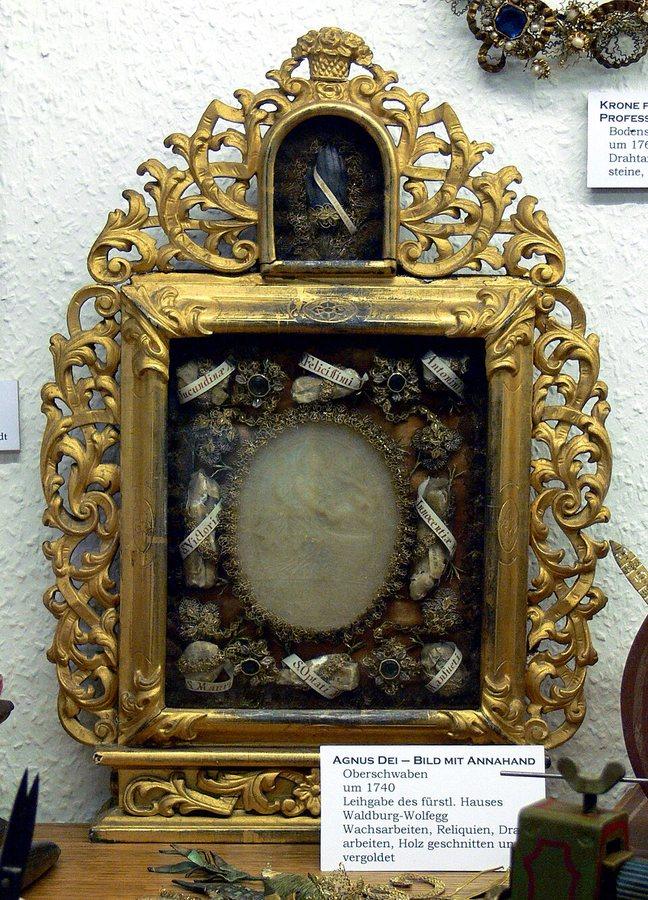
The Agnus Dei is a disc of wax stamped with the Lamb and blessed by the Pope. Made from Paschal-candle wax, it ranks among the oldest sacramentals of the Church.
What it is
The name means Lamb of God. The object is a small wax disc, round or oval, stamped with a lamb bearing a cross or flag. By its consecration the Church regards it as a sacramental, like holy water and blessed palms.
Its history reaches deep. The custom is traced to fifth-century Rome, though recent authorities stress the lack of hard evidence before the ninth. When the discs are first clearly heard of, around 820, they were made from the remnants of the preceding year's Paschal candle. The earliest certain surviving specimen belongs to the time of Gregory XI, around 1370.
The blessing belonged to the Pope alone, only in the first year of each pontificate and every seventh year after. On the Wednesday of Easter week he dipped the discs in water mixed with chrism and balsam, and on Saturday he placed a packet into the inverted mitre of each cardinal and bishop.
The meaning sits in the symbol. The wax typifies the virgin flesh of Christ. The cross with the lamb recalls a victim offered in sacrifice. As the blood of the Paschal Lamb protected each household, so these medallions serve to protect those who wear them. The Church counts them among her sacramentals CCC 1667 (tier 1 citation), and blessings of objects come first among them CCC 1671 (tier 1 citation).
How to use it
Old ones survive in treasuries, museums, and some families. If you keep one, treat it as the Church intends: a blessed object reserved for devotion.
Look at the Lamb when you pray. Let it remind you of Easter and of the household marked and spared. Keep it reverently, as canon law requires of blessed objects can. 1171 (tier 1 citation).
Where it gets misused
Two errors surround old holy things. The first credits the wax with magic while ignoring Christ. That is superstition when efficacy is credited to the external act apart from the interior disposition it demands CCC 2111 (tier 1 citation). The second treats the disc as an investment. Popes prohibited counterfeits outright. The Lamb points to the altar, never to a price.
FAQ
What exactly is an Agnus Dei?
It is a disc of wax impressed with the figure of a lamb, blessed at stated seasons by the Pope. The lamb usually bears a cross or flag. People wore it suspended round the neck or kept it as an object of devotion.
What is it made of?
When the custom is first clearly heard of, around 820, the discs were made from the remnants of the preceding year's Paschal candle. As in the Paschal candle, the wax typifies the virgin flesh of Christ.
How often did the Pope bless them?
The great consecration took place only in the first year of each pontificate and every seventh year afterwards. On the Wednesday of Easter week the Pope dipped the discs in water mixed with chrism and balsam, and distribution followed on the Saturday.
How old is this sacramental?
Its origin is obscure. Recent authorities stress the lack of evidence before the ninth century, though the custom is traced to fifth-century Rome. The earliest certain surviving specimen belongs to the time of Gregory XI, around 1370.
Does it protect the person who carries it?
Its purpose, like that of the Paschal Lamb whose blood protected each household, is to protect those who wear or possess it. But no sacramental works apart from faith. To credit the wax with power of its own is superstition (CCC 2111).
Sources
| Tier | Reference |
|---|---|
| Tier 1 | Catechism of the Catholic Church 1667, 1671 (opens in new tab) |
| Tier 1 | Code of Canon Law can. 1166, can. 1171 (opens in new tab) |
| Tier 1 | Catechism of the Catholic Church 2111 (opens in new tab) |
| Tier 2 | Catholic Encyclopedia, Agnus Dei (opens in new tab) |
Last reviewed: 2026-10-04