Sacramentals · last reviewed 2026-10-03
Church-approvedThe Miraculous Medal: Origin, Meaning, and How It Is Worn
Good for
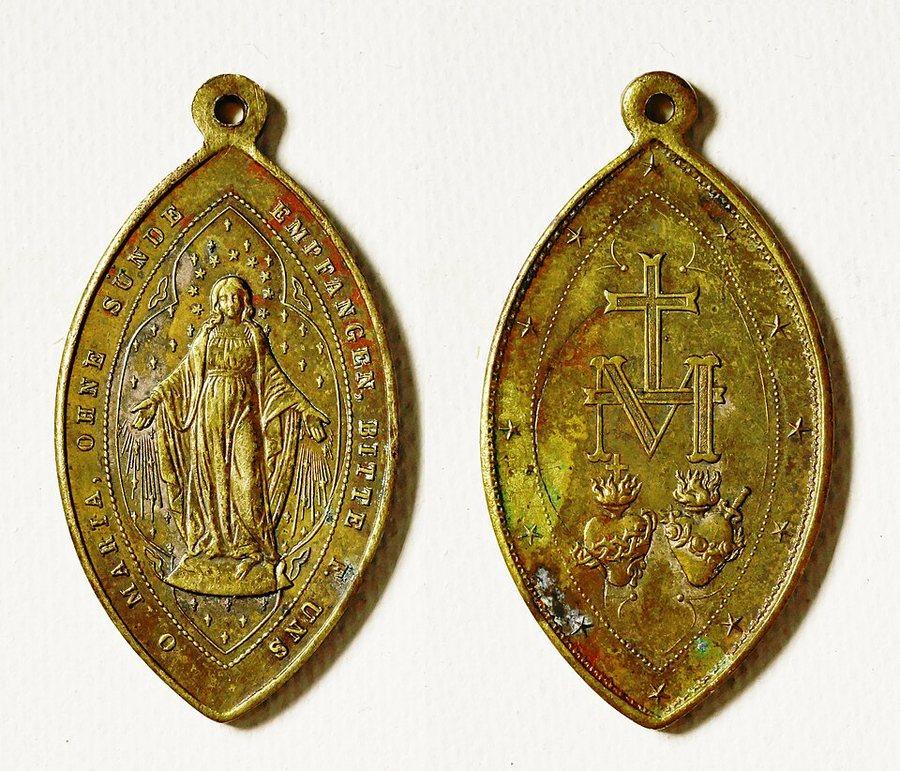
At a glance
The Miraculous Medal is a blessed medal of Mary that began with apparitions to St. Catherine Labouré in Paris in 1830; the Directory calls it the most widespread of Marian medals and says the Church blesses such objects to deepen trust in her.
- Category
- Medals
- Status
- Church Approved
- Sources
- 4 cited
- Last reviewed
- 2026-10-03
Primary source Directory on Popular Piety and the Liturgy 206
The Miraculous Medal is a small medal of the Blessed Virgin Mary that goes back to apparitions reported by St. Catherine Labouré, a novice of the Daughters of Charity in Paris, in 1830. The Directory calls it the most widespread of Marian medals.
What it is
The Directory's paragraph on Marian medals is unhurried. The faithful like to wear medals bearing the image of the Blessed Virgin; these are a witness of faith, a sign of veneration of the Mother of God, and an expression of trust in her maternal protection (n. 206). The Church blesses such objects in the belief that they help to remind the faithful of the love of God and increase trust in the Blessed Virgin Mary, and it adds at once that devotion to the Mother of Christ also requires a coherent witness of life.
Within that practice the Miraculous Medal is the standout. The Directory says that among the various medals of the Blessed Virgin the most diffuse must be the Miraculous Medal, that its origins go back to the apparitions of 1830 to St. Catherine Labouré in Paris, and that it was struck in accordance with the instructions given. It has been called a Marian microcosm because of the density of its symbolism, recalling the mystery of Redemption and the mediatory role of Mary.
The Catechism places medals squarely among the expressions of piety that have always surrounded the Church's sacramental life (CCC 1674). Blessed, the medal is a sacramental in the canonical sense of the word (can. 1166).
How to use it
Have it blessed by a priest with an approved rite, since the rites approved by the Church's authority are the ones to be observed (can. 1167 §2). Then wear it or keep it where you will see it during the day. The intended effect is memory: the medal interrupts a hard moment and sends you back to the person it depicts.
Where it gets misused
The Catechism's warning is precise. Attributing efficacy to an external act apart from the interior dispositions it demands is superstition (CCC 2111), so a medal worn as a guarantee of favors, or relied on instead of prayer and confession, has been turned into a charm. Keep the witness of life the Directory asks for, and the medal stays a sign of faith.
FAQ
Why is it called the Miraculous Medal?
The name stuck to the medal that spread after the apparitions of 1830. The Directory says the medal was struck in accordance with the instructions given to St. Catherine Labouré and has been described as a "Marian microcosm" because of its symbolism (n. 206).
Does the medal work miracles?
The Church's documents do not promise that. What the Directory says is that the Church blesses such objects in the belief that they help to remind the faithful of the love of God and increase trust in the Blessed Virgin Mary, and that devotion to her requires a coherent witness of life.
How should I wear it?
Wear it as a sign, not as a talisman. Medals count among the expressions of piety the Catechism lists (CCC 1674), and once blessed they are treated as blessed objects, used for prayer rather than for show (can. 1166).
Sources
| Tier | Reference |
|---|---|
| Tier 1 | Directory on Popular Piety and the Liturgy 206 (opens in new tab) |
| Tier 1 | Catechism of the Catholic Church 1674 (opens in new tab) |
| Tier 1 | Code of Canon Law can. 1166, can. 1167 §2 (opens in new tab) |
| Tier 1 | Catechism of the Catholic Church 2111 (opens in new tab) |
Last reviewed: 2026-10-03