Pray the Chaplet of Divine Mercy, at 3 p.m. if you can
H · Popular Patron and Devotional Saints
Saint Faustina Kowalska
A Polish nun told to paint Christ's mercy as red and pale rays. Her Diary carried Divine Mercy Sunday into the whole Church. Feast: October 5.
Optional Memorial · 10-05
Draft. Pending review. Not published yet.
 star
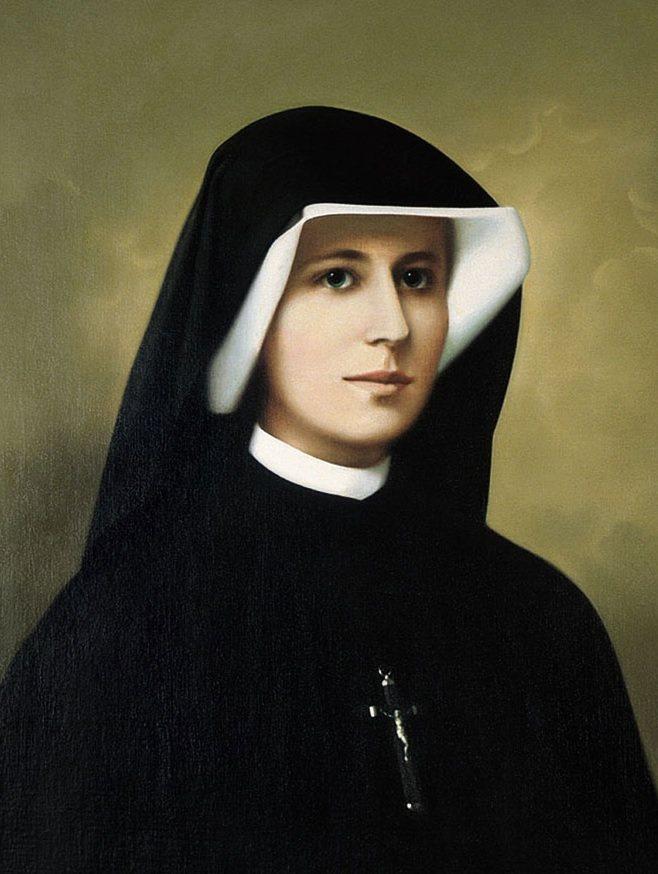
Maria Faustyna Kowalska Stanisław Sztama - Public domain, via Wikimedia Commons
- Feast
- 10-05 · Optional Memorial
- Patronage
- Divine Mercy, the dying, Poland
- Era
- 20th century
- Region
- Poland
The life
Helena Kowalska was a poor Polish girl with three years of schooling. As Sister Faustina she received messages of mercy that now hang in churches on every continent.
Who they were
She was born in 1905 in Russian-ruled Poland and worked as a housekeeper before entering the Sisters of Our Lady of Mercy in 1925. She cooked, cleaned, gardened, and filled notebooks with visions and conversations at her confessors' command. She died of tuberculosis in 1938 at 33. John Paul II, her fellow Pole, beatified her in 1993 and canonized her in 2000.
Why they matter
Her message answers the one fear that keeps people from confession: that their sin is too big. Christ told her the greater the sinner, the greater the right to his mercy. The saints carry this mercy to you, not despair CCC 957 (tier 1 citation). On October 5 the Church asks you to trust the absolution the way she trusted the visions.
What to do today
Pray the chaplet on October 5, at 3 p.m. if your day allows. Go to confession soon and believe the words, completely. Forgive one concrete debt or grudge and tell the person. Mercy received and refused is mercy wasted.
Why the Church remembers
Holiness is not a personality type. These saints became beloved because they stood near the ordinary places of human need: the road, the sickbed, the home, the storm, the poor. Their popularity is a school of prayer when it leads to Christ.
Pray with them
Go to confession and trust the absolution completely
Forgive one debt or one grudge, concretely
More in this family
Collections
Sources
| Tier | Reference |
|---|---|
| Tier 1 | Catechism of the Catholic Church 957 (opens in new tab) |
| Tier 2 | Vatican biography of Saint Maria Faustina Kowalska (opens in new tab) |
Last reviewed: 2026-10-04