Sacramentals · last reviewed 2026-10-04
Church-approvedThe Cord of St. Joseph: Seven Knots Worn for Purity
Good for
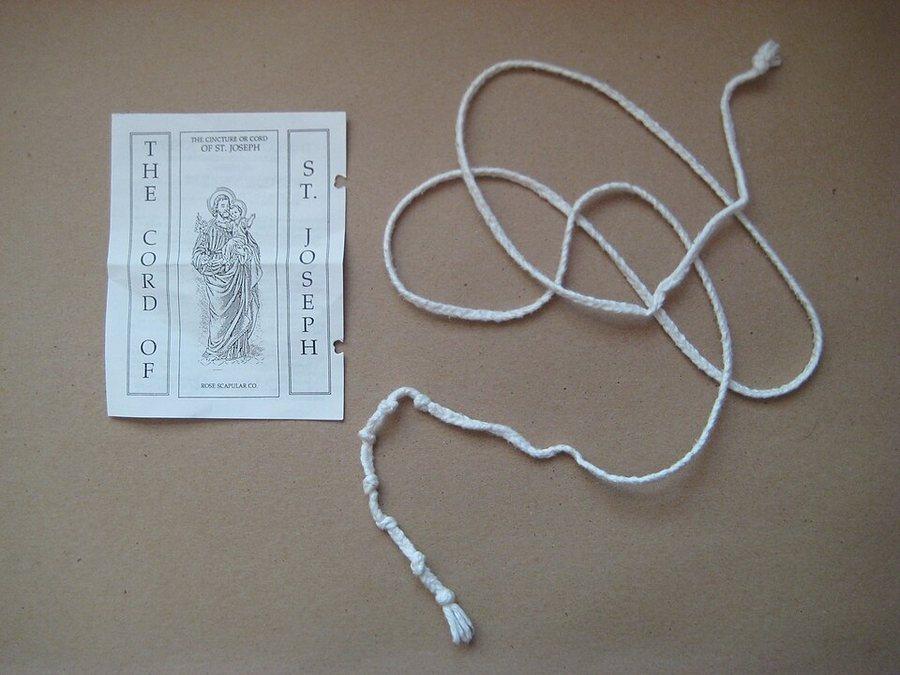
At a glance
The Cord of St. Joseph is a knotted cord worn for the grace of purity through his intercession; Pius IX approved its blessing in 1859 and raised its confraternity to an archconfraternity in 1862.
- Category
- Cords
- Status
- Church Approved
- Sources
- 4 cited
- Last reviewed
- 2026-10-04
Primary source Catechism of the Catholic Church 1667
The Cord of St. Joseph is a cord with seven knots, worn for the grace of purity through his intercession. Pius IX approved a blessing for it in 1859 and raised its confraternity to an archconfraternity in 1862.
What it is
Catholics have worn cords in honour of saints for a very long time. The Catholic Encyclopedia finds the first mention of the custom in the life of St. Monica. In the early Church, virgins wore a cincture as a sign of purity, and the cord has carried that meaning ever since: chastity, humility, and readiness to pray.
A cord confraternity is a pious association. Its members wear the cord to keep one grace in mind, hoped for through the saint's intercession. The Cord of St. Joseph began with a cure. In 1657 an Augustinian nun at Antwerp recovered from a grievous illness through wearing a cord in his honour. The devotion spread across Europe and was later revived at Rome in the church of San Rocco.
The Church gave the devotion a firm shape. Pius IX approved a special blessing formula in a rescript of 19 September 1859. By the brief Expositum nobis nuper of 14 March 1862 he enriched the confraternity with many indulgences, and by Universi Dominici gregis of 23 September 1862 he raised it to an archconfraternity. Members wear a cord with seven knots and are exhorted to recite seven Glorias in his honour each day.
In the Church's terms the cord is a sacramental, a sacred sign that disposes you to receive grace CCC 1667 (tier 1 citation). Its blessing follows a rite the Church approves can. 1167 §2 (tier 1 citation).
How to use it
Have the cord blessed with the approved formula, then wear it. The seven knots sit against you through the day as a reminder of the one thing you asked St. Joseph to obtain: purity of heart and life.
Add the short daily practice: seven Glorias in his honour, morning or night, slowly enough to mean them. If you want to join the confraternity, ask your parish priest. Confraternities aggregate to the archconfraternity at San Rocco in Rome, per its statutes.
Where it gets misused
The cord is a prompt, not a shield. The Catechism names the failure plainly: crediting power to the mere external performance apart from the interior disposition it demands is superstition CCC 2111 (tier 1 citation).
FAQ
What is the Cord of St. Joseph?
It is a cord with seven knots, worn in honour of St. Joseph to ask for the grace of purity through his intercession. A cord confraternity is a pious association whose members wear the cord to keep one hoped-for grace in mind.
Where did this devotion come from?
The Catholic Encyclopedia traces it to the miraculous cure of an Augustinian nun at Antwerp in 1657 from a grievous illness, through wearing a cord in honour of St. Joseph. The practice spread across Europe and was later revived at Rome in the church of San Rocco.
Did the Church approve it?
Yes. Pius IX approved a special formula for the blessing of the Cord of St. Joseph by rescript dated 19 September 1859. By the brief Expositum nobis nuper of 14 March 1862 he enriched the confraternity with indulgences, and by the brief Universi Dominici gregis of 23 September 1862 he raised it to an archconfraternity.
Does wearing the cord make me pure by itself?
No. The Catechism warns that crediting an external act with power apart from the interior disposition it demands is superstition (CCC 2111). The cord prompts prayer and a chaste life. It does not replace them.
Sources
Last reviewed: 2026-10-04