Sacramentals · last reviewed 2026-10-04
Church-approvedThe Cord of St. Francis: Three Knots, One Habit
Good for
At a glance
The Cord of St. Francis is the rough cord with three knots that belongs to the Franciscan habit; Sixtus V raised its archconfraternity at Assisi in 1585, and wearers seek chastity and humility through the saint.
- Category
- Cords
- Status
- Church Approved
- Sources
- 4 cited
- Last reviewed
- 2026-10-04
Primary source Catechism of the Catholic Church 1667
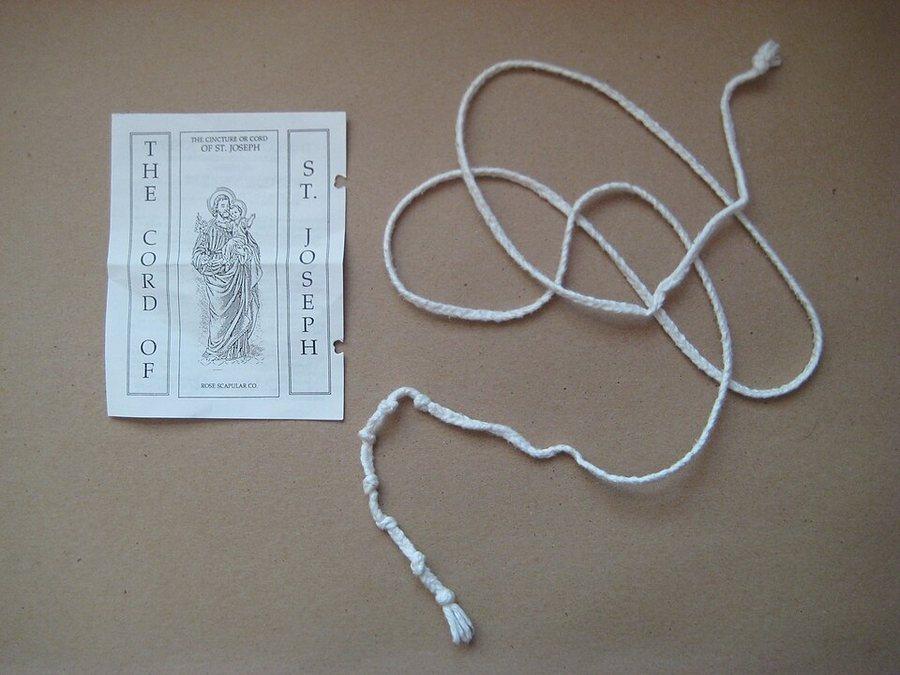
The Cord of St. Francis is the rough cord with three knots from the Franciscan habit, tied in memory of Christ bound in his Passion. Sixtus V raised its archconfraternity at Assisi in 1585.
What it is
After his conversion, Francis stripped off fine clothes and girded himself with a rough cord, in memory of the cords that bound Christ during his Passion. A white girdle with three knots became part of the Franciscan habit. In the early Church the cincture already stood as a symbol of chastity, mortification, and humility, and the cord keeps that meaning.
The devotion leapt from the friars to the people. According to Wadding, St. Dominic received the cord from St. Francis and always wore it under his habit, and many of the faithful followed him. A cord confraternity is a pious association of this kind: members wear the cord in honour of the saint to keep one hoped-for grace in mind.
By the bull Ex supernae dispositionis of 19 November 1585, Sixtus V, himself a Franciscan, erected the Archconfraternity of the Cord of St. Francis in the basilica at Assisi and enriched it with many indulgences. By Divinae caritatis of 29 August 1587 he granted new indulgences. Paul V granted new and ampler ones in March 1607, confirmed by Clement X in 1673, and Benedict XIII widened the power of erection in 1724.
In the Church's terms the cord is a sacramental, a sacred sign that disposes you to receive grace CCC 1667 (tier 1 citation). Its rites follow formulas the Church approves can. 1167 §2 (tier 1 citation).
How to use it
Wear the cord under your clothes, as Dominic did. Let the knots press three lessons into you: keep yourself chaste, hold things loosely, and stay small before God. Past popes attached indulgences to membership; those grants predate the 1968 reform, so ask a Franciscan friary what spiritual benefits attach to membership today.
Ask a Franciscan parish or friary about enrollment. Confraternities aggregate to Assisi, so your small cord ties you to the basilica there. When the cord frays, replace it and give the old one to your parish.
Where it gets misused
Francis wore rope to remember Christ bound. The Catechism names the failure of every devotion worn on autopilot: crediting power to the external act apart from the interior disposition it demands is superstition CCC 2111 (tier 1 citation).
FAQ
What is the Cord of St. Francis?
It is the rough cord Francis tied around himself after his conversion, in memory of the cords that bound Christ in his Passion. A white girdle with three knots became part of the Franciscan habit, and the faithful wear the cord in the saint's honour.
How did the confraternity start?
St. Dominic is said to have received the cord from St. Francis and worn it under his habit, and many of the faithful followed. Sixtus V erected the Archconfraternity of the Cord of St. Francis at Assisi by the bull Ex supernae dispositionis of 19 November 1585, enriching it with indulgences.
What did later popes add?
The same Sixtus granted new indulgences by Divinae caritatis of 29 August 1587. Paul V revoked the earlier favours and granted new and ampler indulgences in 1607, confirmed by Clement X in 1673. Benedict XIII extended the power of erection in 1724.
What must members do?
Wear the cord and have your name enrolled in the records of the archconfraternity. Those were the historical conditions; the indulgence grants cited above predate the 1968 reform, so ask a Franciscan friary what spiritual benefits attach to membership today.
Sources
Last reviewed: 2026-10-04