Sacramentals · last reviewed 2026-10-05
Church-approvedThe Scapular Medal: Pius X Permission in Metal
Good for
At a glance
The Scapular Medal is a single metal medal Pius X allowed in 1910 to stand for cloth scapulars; you enroll first with a priest, then wear the blessed medal with the same rule.
- Category
- Medals
- Status
- Church Approved
- Sources
- 4 cited
- Last reviewed
- 2026-10-05
Primary source Directory on Popular Piety and the Liturgy 205
The Scapular Medal is one metal disc that can stand for cloth scapulars. Pius X allowed it through the Holy Office on 16 December 1910 after you enroll with a priest.
What it is
You work in scrubs or uniform. Cloth cords chafe. Your parish priest suggests metal. The Church already thought of you in 1910.
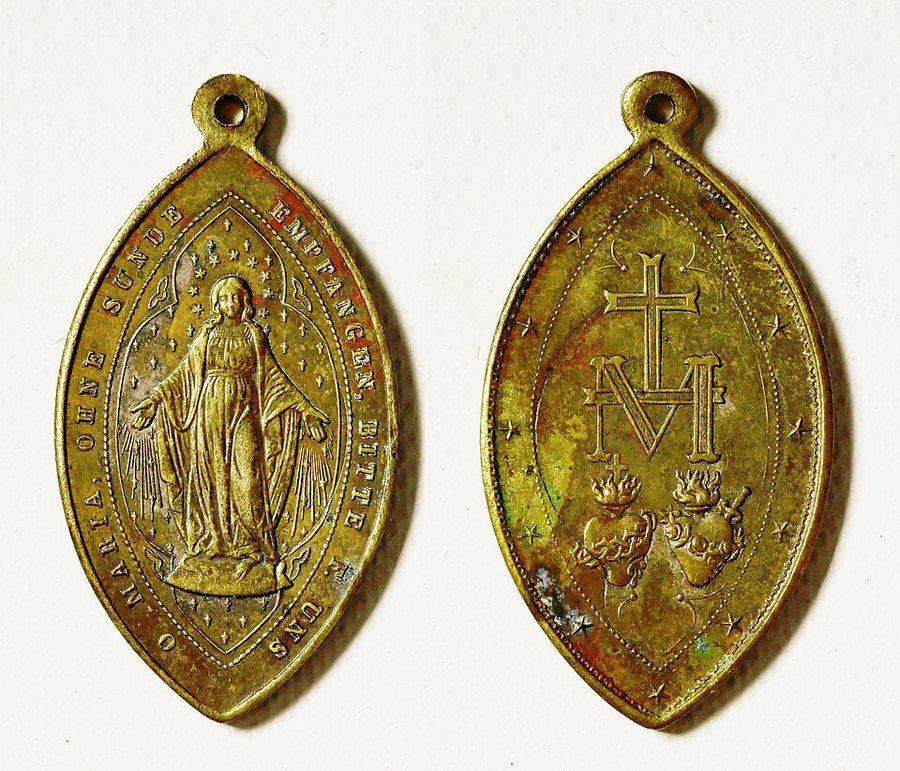
Missionaries in the Congo asked first. Cloth rotted in heat and sweat. Pius X answered for the missions, then for all who ask. On 16 December 1910 the Holy Office decreed that the faithful inscribed or later inscribed in real scapulars approved by the Holy See may wear instead of the cloth, one or several, a single medal of metal, worn on the person in a becoming manner. The right side shows Christ with his Sacred Heart. The obverse shows Mary. Each scapular needs its separate blessing, given by one sign of the cross, at enrollment or later, by a priest with faculty.
The Catholic Encyclopedia records the rule directly after its list of small scapulars. Its companion article on devotional medals notes that Pius X sanctioned a blessed medal to be worn in place of brown and other scapulars. The Directory keeps the theology: scapulars rank among the devotions the Magisterium recommended through the centuries Directory 205 (tier 1 citation). The medal is a sacramental, a sacred sign that disposes you to receive grace CCC 1667 (tier 1 citation).
How to use it
Enroll first. Tell the priest which scapulars you seek: Brown, Green, Red, Black, Blue, White. He invests you with cloth and blesses. Then he blesses the medal for each with one sign of the cross. Wear the medal daily on a chain.
Keep each rule. Brown asks prayer and chastity of state. Green asks the daily invocation for conversion. Red asks Friday honor of the Passion. Ask your priest to write your enrollment names and dates on a card. Keep the card with your baptism record.
Where it gets misused
Metal never shortcuts enrollment. A medal bought online and worn with no rite, no priest, and no rule gains no scapular favors. The Catechism warns that crediting power to the external act apart from the interior disposition it demands is superstition CCC 2111 (tier 1 citation).
Enroll. Get blessed. Wear it. Live each rule you signed.
FAQ
What does the medal show?
Christ with his Sacred Heart on one side, Mary on the other. The Holy Office decree of 16 December 1910 asks for those images. One medal can stand for one or several cloth scapulars in which you enrolled.
Did Pius X replace the cloth?
He allowed substitution, never casual replacement. On 16 December 1910 the Holy Office, under Pius X, permitted the faithful already or later enrolled in approved scapulars to wear a metal medal instead of the cloth, under the laws of each scapular. Third Order proper scapulars stay excepted.
Must a priest still enroll me?
Yes. Valid enrollment comes first, with the approved blessing for each scapular. The blessings may follow by one sign of the cross, at enrollment or later, by a priest with faculty. Ask your parish; do not self-enroll online.
Does the medal carry the Sabbatine Privilege?
The 1910 decree says wearers share favors of each scapular by keeping each rule. Whether and how that reaches the Carmelite Sabbatine conditions is disputed — ask your priest rather than assuming it. The privilege aids the faithful in purgatory through Mary's help. Live the rule and pray.
Sources
| Tier | Reference |
|---|---|
| Tier 1 | Directory on Popular Piety and the Liturgy 205 (opens in new tab) |
| Tier 1 | Catechism of the Catholic Church 1667 (opens in new tab) |
| Tier 1 | Catechism of the Catholic Church 2111 (opens in new tab) |
| Tier 2 | Catholic Encyclopedia, Scapular (opens in new tab) |
Last reviewed: 2026-10-05