Sacramentals · last reviewed 2026-10-03
Church-approvedIncense in Prayer: What It Means and How to Use It
Good for
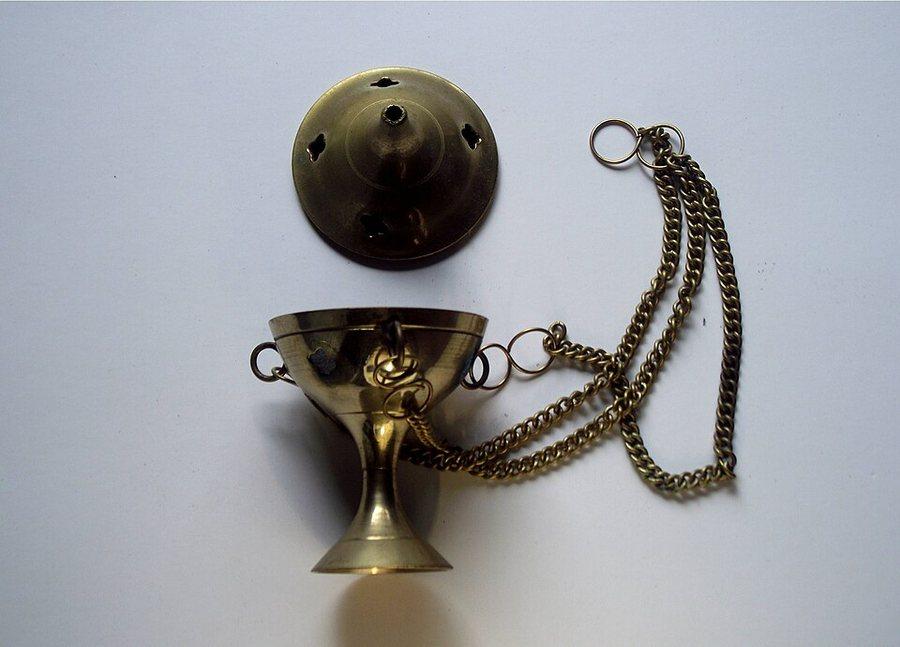
At a glance
Incense is fragrant smoke offered with prayer, a practice Scripture itself uses for the prayers of the saints, and the Church treats it as a bodily way of lifting the heart to God rather than as a cleanser of air or mood.
- Category
- Devotions
- Status
- Church Approved
- Sources
- 4 cited
- Last reviewed
- 2026-10-03
Primary source Psalm 141:2 (NABRE)
Incense is resin or powder burned so that its smoke rises with prayer. Scripture supplies its meaning: the psalmist asks that his prayer rise like incense, and Revelation pictures the prayers of the holy ones as smoke before the throne of God.
What it is
The psalm that gives incense its prayer language is Psalm 141: "Let my prayer be incense before you." The Book of Revelation works the same image from the other side: an angel stands at the altar with a censer, given a great quantity of incense to offer along with the prayers of all the holy ones, and the smoke of the incense goes up before God (Rev 8:3-4). Incense, in other words, is not decoration. It is a bodily way of saying what prayer says.
The Church has kept the practice and documented its place. The Directory on Popular Piety and the Liturgy notes that the use of incense can be expanded in the celebration of Vespers (n. 103) and lists incense among the liturgical signs used with propriety at funerals, alongside the cross, the paschal candle, and holy water (n. 253). Where the Church prays with incense, it prays with a sign it has never treated as optional or automatic.
How to use it
At home this is simple. Burn a small amount in a heatproof dish on a stable surface, open a window, and let the smoke rise while you say what you came to say. One intention is plenty. When the stick or resin is finished, pray the last line of your prayer and stop; there is no requirement to keep it going.
If the censer or the incense itself has been blessed, keep it clean and set it apart for prayer rather than putting it to ordinary household duty.
Where it gets misused
The failure mode is the same one the Catechism names for any religious practice: attributing efficacy to the external act apart from the interior disposition it demands (CCC 2111). Incense that is burned to rid a house of negative energy has been turned into an instrument whose power is located in the smoke.
FAQ
What does burning incense actually do in Catholic prayer?
It gives the prayer a body. The psalmist asks that his prayer rise like incense before the Lord (Ps 141:2), and Revelation shows the smoke of incense as the prayers of the holy ones going up before God's throne (Rev 8:3-4). The smoke is a sign, not the mechanism.
Is burning incense the same as burning sage to clear a room?
No. Sage is burned because the herb itself is credited with absorbing or repelling negative energy, while incense is offered together with prayer and pointed at God. The Catechism classifies practices that trust in a created thing's own power as superstition (CCC 2110-2111).
Do I need a church blessing to burn incense at home?
No. Burning incense while you pray is not a rite with rubrics to follow. If a censer or a particular stick has been blessed, keep it clean and use it for prayer rather than for ordinary household duty.
Sources
| Tier | Reference |
|---|---|
| Tier 1 | Psalm 141:2 (NABRE) (opens in new tab) |
| Tier 1 | Revelation 8:3-4 (NABRE) (opens in new tab) |
| Tier 1 | Directory on Popular Piety and the Liturgy 103, 253 (opens in new tab) |
| Tier 1 | Catechism of the Catholic Church 2110-2111 (opens in new tab) |
Last reviewed: 2026-10-03