Sacramentals · last reviewed 2026-10-05
Church-approvedForty Hours: Two Days of Unbroken Prayer Before the Host
Good for
At a glance
The Quarantore keeps forty hours of continuous prayer before the exposed Sacrament from church to church, opening and closing with Mass, procession, and the litany of the saints.
- Category
- Devotions
- Status
- Church Approved
- Sources
- 3 cited
- Last reviewed
- 2026-10-05
Primary source Directory on Popular Piety and the Liturgy 164-165 (Eucharistic Adoration)
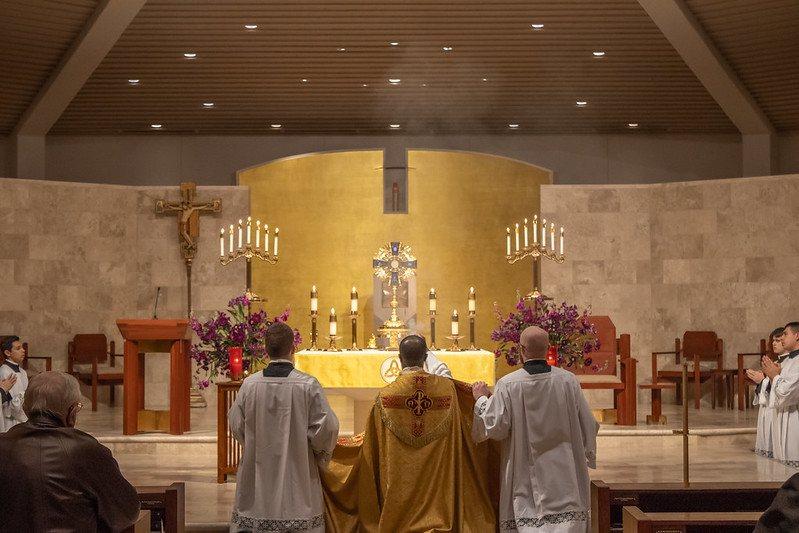
You sign for an hour in the night and take your place before the monstrance. Forty Hours keeps prayer unbroken for two days and nights, church after church, so the incense of prayer rises without pause before the Lord.
What it is
You find the high altar prepared with the Host exposed, statues nearby veiled or removed, curtains hung for silence, and candles burning in number. The Mass of Exposition opens the devotion with procession and the litany of the saints. Then relays begin. The faithful relieve each other hour by hour. Clerics tend the altar in surplice. A priest or cleric in higher orders kneels within the sanctuary where possible. No Mass is said at the altar of exposition, and no bells ring for private Masses nearby while it lasts.
History runs through Milan and Rome. The Milanese chronicler Burigozzo describes the citywide relay as a novelty in May 1537. Paul III answers the Milan petition by approving the round of day and night prayer before the Sacred Body and grants indulgences. Clement VIII in 1592 establishes the public Roman course across churches, so every hour of the year carries prayer. Clement XII in 1731 issues the minute Instructio Clementina that still grounds Benediction practice. Such expressions extend the liturgical life of the Church without replacing it CCC 1675 (tier 1 citation), and popular piety of this kind belongs to the people's storehouse of faith CCC 1674 (tier 1 citation).
Borromeo gave the devotion its Milanese order with elaborate instructions in the Acts of Milan. The Baltimore plenary of 1866 approved it for American dioceses.
How to use it
Take an hour, especially a night hour that needs watchers. Bring children in the day. Keep silence at the doors and phones off. Pray the litany of the saints at opening and close. Attend the middle Mass for peace and the closing Mass of Deposition. Confess during the devotion and receive Communion with the intention the Church asks.
Where it gets misused
Organizers sometimes stretch thin adorers across too many nights and leave the Sacrament thinly watched. The instruction allows dispensing with night hours when watchers cannot be found. Use that permission honestly rather than staging empty vigils. Others treat the forty hours as magic for civic causes. Paul III and Clement VIII asked prayer for peace and concord. Bring those intentions. Leave the outcome to God.
FAQ
Why forty hours?
St. Charles Borromeo refers the span to the forty hours Christ's body lay in the tomb, a vigil of watching and ardent prayer by the disciples. The Easter sepulchre devotion of the Middle Ages, sometimes called the prayer of the forty hours, likely gave the pattern that moved to other seasons.
How does a parish keep it?
A solemn Mass of Exposition opens with procession and litany of the saints, then relays of watchers continue by day and, where possible, by night. A Mass for peace is sung on the middle day. A Mass of Deposition with procession and litany closes about two mornings later. At least twenty candles burn day and night.
Who started it?
The exact founder is disputed: Joseph Piantanida's church to church relay at Milan, Antonio Bellotto's 1527 confraternity exposition, St. Philip Neri's Roman use, St. Ignatius at carnival, and Brother Buono at Cremona in 1529 all have claims. Milan in May 1537 is the first firmly dated civic round, and Paul III approved it within two years.
Does attending carry an indulgence?
Popes have attached indulgences to the devotion from the first concession, and interruption by night for lack of watchers does not forfeit them. The Church states the conditions each time. Ask your parish which grant applies and meet the usual conditions rather than assuming.
Sources
Last reviewed: 2026-10-05