Sacramentals · last reviewed 2026-10-05
Church-approvedBlessing of Students: Prayer for the Start of the School Year
Good for
At a glance
The Church blesses students and teachers together at the year's start, within Mass or a word celebration, with Sirach 6 on listening and learning; priest, deacon, or lay minister may preside.
- Category
- Blessings
- Status
- Church Approved
- Sources
- 3 cited
- Last reviewed
- 2026-10-05
Primary source Catechism of the Catholic Church 1668, 1671
You open the school year with a blessing on book bags and teachers together. The Church asks God, source of all wisdom, to fill students with understanding and teachers with patience for the months ahead.
What it is
You gather in church or school hall at the year's start. The celebrant preaches briefly on the readings for the place and people. Intercessions follow: for students beginning anew, for teachers sharing knowledge gently, for all seekers of worldly knowledge to pursue God's wisdom, and for parents whose faith and love set the first example. Then the prayer asks God who surrounds us with the mysteries of the universe, who sent prophets and finally his Son to teach by word and example, to send his Spirit on students and teachers for study and sharing.
The alternate prayer looks closer at the classroom. It asks God to let students enjoy learning and delight in discovery, persevere, and desire to learn all things well. It asks him to let teachers share with gentle patience and bring truth to eager minds. Sacramentals always include prayer, often with a sign CCC 1668 (tier 1 citation). Blessings of persons come first among them CCC 1671 (tier 1 citation).
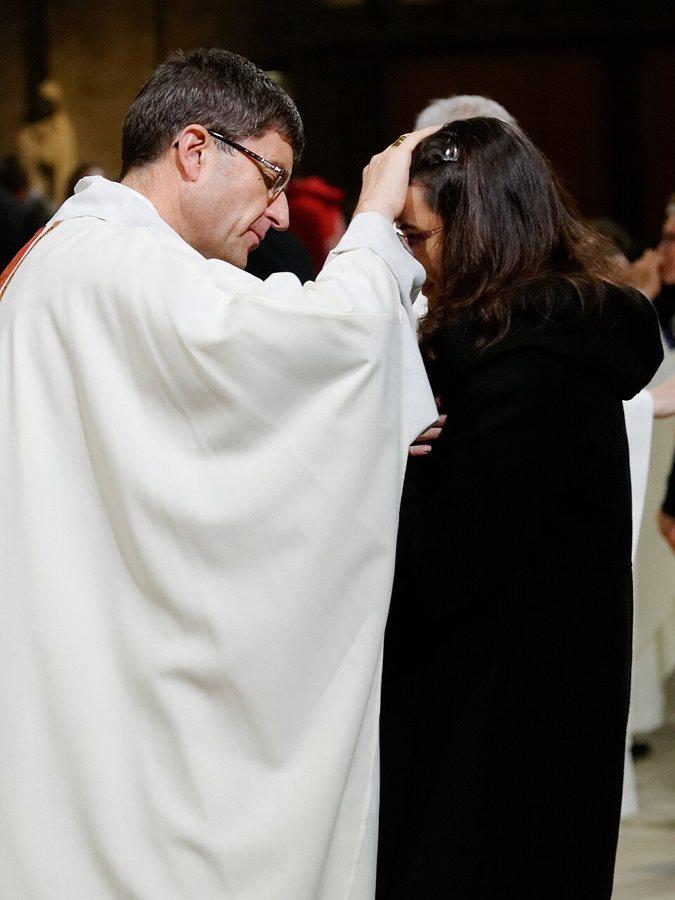
A priest or deacon says the prayer with hands outstretched over the assembly. A lay minister says it with hands joined. The books allow lay people with the right qualities to administer some sacramentals can. 1168 (tier 1 citation). Numbers 522 through 525 set all of this plainly: the occasion, the adaptation for students or teachers alone, the Mass or word setting, and the ministers.
How to use it
Bring classes, faculties, and families together in the first weeks. Use the Mass form on a school Mass day and the word form for an assembly. Let students read Sirach and the psalm. Let teachers voice the intercessions.
Study as the prayer describes. Listen willingly. Apply yourself. Frequent good teachers. The blessing asks God to enlighten minds. It expects you to bring yours to class.
Where it gets misused
Students sometimes treat the blessing as a substitute for work, as if prayer exempts preparation. The rite asks perseverance in studies by name. Teachers sometimes hear only the students' blessing and miss their own charge to patience. Both groups are blessed because both are called. Receive your part and do it.
FAQ
Who is blessed, students or teachers?
Both, usually together, since all wisdom has God as its source. The prayers are adapted when only students or only teachers are blessed. Parents are named in the intercessions as the first teachers of their children.
Can it happen during Sunday Mass?
Yes. Within Mass it follows the gospel and homily with general intercessions and a prayer of blessing, and on Sunday the Mass of the day is used. Outside Mass it takes the form of a celebration of the word with reading, intercessions, Our Father, and blessing.
Who may give it?
A priest, a deacon, or a lay minister. Within Mass the celebrant extends hands over students and teachers for the prayer. Outside Mass a lay minister follows the rites marked for a lay minister with hands joined.
Which reading fits students best?
Sirach 6:32-37 is the lead text: if willing to listen you will learn, frequent the elders, wear out their doorstep, meditate on the commandments, and God will grant the wisdom you desire. Wisdom 7, Sirach 4, and 1 Corinthians 15 are alternates, with Psalm 111 sung.
Sources
Last reviewed: 2026-10-05