Sacramentals · last reviewed 2026-10-05
Church-approvedBlessing of Animals: Francis in October, Anthony in January
Good for
At a glance
The Church blesses pets, farm animals, and working beasts, most often near October 4 for St. Francis and January 17 for St. Anthony Abbot, patron of domestic animals.
- Category
- Blessings
- Status
- Church Approved
- Sources
- 4 cited
- Last reviewed
- 2026-10-05
Primary source Catechism of the Catholic Church 1671, 1672
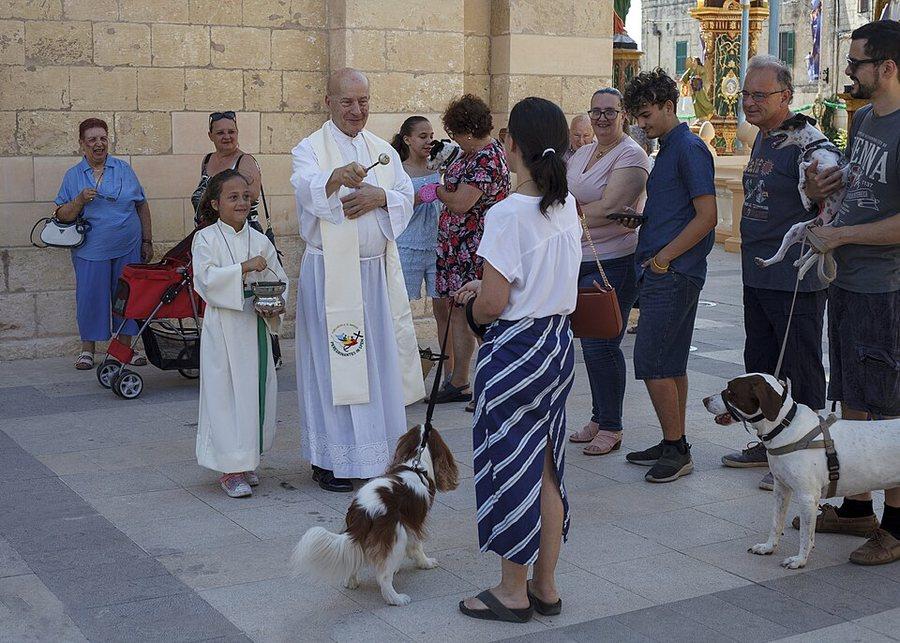
You bring your dog on a leash, your cat in a carrier, or your farm beasts to the churchyard, and the priest prays over them. The Church blesses animals because God made them good and gave you charge over them.
What it is
You gather where the animals can stand safely. The leader opens with praise for God's works. He recalls how Francis of Assisi recognized wild and tame creatures as his brothers and sisters. Then Genesis is read aloud: God creates sea monsters and birds, then cattle and wild things, and blesses them. After silence and intercessions, all pray the Our Father. The leader prays that these animals serve our needs and that God's bounty move us to seek eternal life more confidently.
January keeps the older farming custom. Anthony of the desert is often painted with a pig wearing a bell, because the Antonine hospitallers raised pigs whose fat anointed sufferers of ergotism. On his feast the stalls are blessed, along with any domestic animals brought forward. Rome still keeps this blessing each January 17. Blessings of objects and places belong among sacramentals CCC 1671 (tier 1 citation), and lasting blessings may reserve creatures and places for good use CCC 1672 (tier 1 citation).
Sacramentals obtain their effects through the intercession of the Church can. 1166 (tier 1 citation), using rites and formulas the Church approves can. 1167 §2 (tier 1 citation). The household may use the shorter form with a parent leading. The solemn parish blessing belongs to the priest.
How to use it
Come on October 4 or another suitable day for pets, and on January 17 for livestock where the custom lives. Keep animals secured and calm. Tell stories of Francis, such as the wolf of Gubbio, before the prayer when children are present. Hold your hands on your animal during the prayer if the leader invites it.
Care for them afterward. Feed them well. Shelter them in storms. Work them within their strength.
Where it gets misused
Some ask the blessing and neglect the animal all year. Others treat the sprinkling as a charm that keeps disease away without food, fences, or vets. The blessing asks God to protect and sustain us with the grace his blessing brings. It does not replace husbandry. Love the creature. Then bring it to be blessed.
FAQ
Why two dates for animal blessings?
October 4 is the feast of St. Francis, who called animals his brothers and sisters. January 17 is the feast of St. Anthony Abbot, patron of domestic animals, when stalls are blessed and livestock are brought forward. Parishes in warm countries often use October, farming towns often keep January too.
What Scripture does the household rite read?
Genesis 1:20-25, where God makes wild animals, cattle, and creeping things and sees that they are good, with Isaiah 11:6-10 as an alternate. Intercessions for animals and creatures follow, then the Our Father and a prayer over the animals present.
Do the animals get sprinkled?
The older Roman form for horses and farm beasts ends with sprinkling in holy water. The household form invites all to hold or place hands on their animals during the blessing prayer. Both forms conclude with the sign of the cross.
Does the blessing make the animal holy?
It asks God to protect the animal and to move us toward eternal life through his bounty in this life. Sacramentals dispose us to grace rather than conferring it as sacraments do. The blessing blesses the creature and forms the keeper.
Sources
Last reviewed: 2026-10-05