Sacramentals · last reviewed 2026-10-04
Church-approvedThe Blessing of Throats on St. Blaise Day
Good for
At a glance
On February 3 the Church blesses throats with two crossed candles through the intercession of St. Blaise, bishop and martyr; the fish-bone cure behind it comes down to us as legend.
- Category
- Blessings
- Status
- Church Approved
- Sources
- 3 cited
- Last reviewed
- 2026-10-04
Primary source Catechism of the Catholic Church 1671
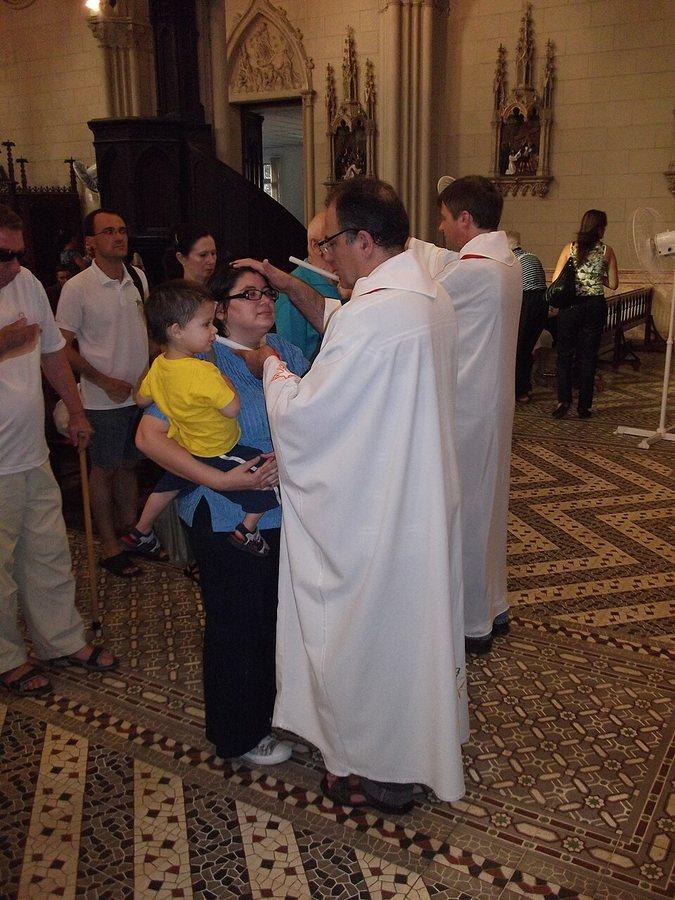
On February 3 a priest holds two crossed candles at your throat and blesses you through the intercession of St. Blaise. The Church asks God to deliver you from ailments of the throat and from every other illness.
What it is
St. Blaise lived in the fourth century in what is now Turkey and Armenia. Healer, then bishop, he hid in a cave during persecution. In 316 the governor arrested him for being a Christian. He would not renounce the faith, so they beat him and beheaded him. The Church names him patron of throat illnesses and lists him among the Fourteen Holy Helpers, the saints revered as healers.
Legend gives the blessing its shape. On his way to jail, Blaise is reported to have saved a boy choking on a fish bone by ordering the child to cough it up. The boy's mother had presented Blaise with crossed candles to light his way to prison. Mark that word: reported. The tale reaches us as legend, not as documented fact. Tradition adds that Blaise promised that anyone who lit a candle in his memory would be free of infection. So candles belong to his day.
The rite is simple and public. A bishop, priest, or deacon holds crossed candles, joined by a red ribbon for the martyr's blood, at your throat. He prays the Church's prayer of healing through Blaise's intercession. Blessings of persons come first among sacramentals CCC 1671 (tier 1 citation). Solemn exorcism is reserved and fenced about CCC 1673 (tier 1 citation), but this blessing is ordinary ministry: any priest may impart blessings except those reserved higher can. 1169 §2 (tier 1 citation).
How to use it
Go to Mass on February 3, the memorial of St. Blaise. Stay afterward with everyone else. When your turn comes, bow your head. The minister holds the crossed candles lightly at your throat and says the prayer. Answer Amen and mean it.
Bring your children and your sick. The prayer names the throat first, then widens to every other illness. It promises no cure on the spot. It places your body, like your soul, under God's care.
Where it gets misused
The blessing asks for healing. It does not replace medicine. Blaise himself began as a healer. Take the blessing, then keep the appointment. The candles recall a mother's gift on a prison road. The healing asked for comes from God, never from wax.
FAQ
What happens at the blessing of throats?
A bishop, priest, or deacon holds two crossed candles, joined by a red ribbon, at your throat and prays: Through the intercession of Saint Blaise, bishop and martyr, may God deliver you from ailments of the throat and from every other illness. In the name of the Father, and of the Son, and of the Holy Spirit. Amen.
Why candles, and why crossed?
Legend reports that on his way to jail, Blaise saved a boy choking on a fish bone, and the boy's mother had presented him with crossed candles to light his way. The crossed candles recall her gift. The red ribbon recalls his martyrdom.
Is the fish-bone story historically certain?
No. It comes down as legend: Blaise is reported to have ordered the choking child to cough the bone up. The Church keeps the story as tradition, not as a dated fact. What is certain is his martyrdom in 316 and his patronage of throat illnesses.
When and where do I receive it?
On February 3, the memorial of St. Blaise, the day after Candlemas. Parishes and Catholic schools offer it after Mass. Any priest may impart blessings except those reserved higher (can. 1169 §2). Just stay after Mass and step forward.
Sources
| Tier | Reference |
|---|---|
| Tier 1 | Catechism of the Catholic Church 1671 (opens in new tab) |
| Tier 1 | Code of Canon Law can. 1169 §2 (opens in new tab) |
| Tier 2 | Diocese of Venice, The Memorial of St. Blaise (2026) (opens in new tab) |
Last reviewed: 2026-10-04