Sacramentals · last reviewed 2026-10-05
Church-approvedChurching of Mothers: The Blessing After Childbirth Today
Good for
At a glance
The old churching of women lives on in two current forms: the blessing of mother and father inside the baptism rite, and a Book of Blessings order for a mother who missed the baptism.
- Category
- Blessings
- Status
- Church Approved
- Sources
- 4 cited
- Last reviewed
- 2026-10-05
Primary source Catechism of the Catholic Church 1669, 1671
A mother who has given birth comes to give thanks and receive a blessing. The name churching sounds antique. The gift itself is current: the baptism rite blesses her, and the Book of Blessings keeps an order for her when she missed the baptism.
What it is
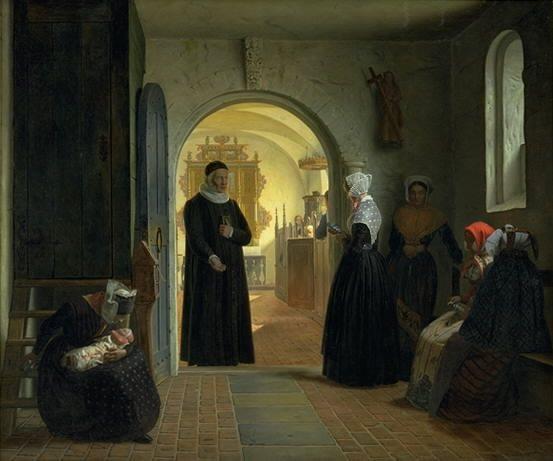
You know the old picture. The mother kneels with a lighted candle. The priest sprinkles her with holy water, leads her into the church, and prays that she who rejoices in motherhood arrive with her offspring at eternal happiness. That form was never a precept. It was a pious custom for a mother to present herself once she could leave the house, thank God for safe delivery, and receive grace to raise the child as a Christian.
Two changes reshaped it honestly. First, birth grew safer, so the thanksgiving lost its urgency. Second, baptism moved later, so mothers attend it. The revised baptism rite therefore folded the mother's blessing into its closing, and added the father so no one is excluded. The Book of Blessings then kept a separate order only for the mother unable to take part in the baptism. Number 237 states the limit plainly. Number 258 repeats it. Lay people may preside at certain blessings, with reservation growing as the blessing touches sacramental life more closely CCC 1669 (tier 1 citation), and blessings of persons come first among sacramentals CCC 1671 (tier 1 citation).
The current order reads Hannah's song in 1 Samuel, sings Psalm 128, gives thanks for new life and health and baptism, and prays God to defend mother and child from evil and accompany them through life.
How to use it
Ask for the baptism blessing first. Bring both parents to the font. When the mother missed the baptism, ask the parish for the Book of Blessings order afterward. Gather family. Hear the readings. Join the thanksgiving. Receive the prayer with hands outstretched over you.
Do not seek the old form as a purifying of uncleanness. The ceremony never contained such meaning. It thanks God for life and asks strength for raising it.
Where it gets misused
Some present churching as proof that childbirth made a woman unclean. The prayers say the opposite. They praise the Lord of life and thank him for health to mother and child. Others demand the old Latin form as the only valid one. The Church gives the current orders with her authority.
FAQ
Was churching suppressed?
No. The old Rituale form with candle, holy water, and Psalm 23 is no longer the ordinary parish practice, but its purpose lives on. The revised baptism rite includes a blessing of the mother and father at its close. The Book of Blessings keeps a separate order for a mother who could not attend the baptism.
Who may give the current blessing?
A priest, a deacon, or a lay minister may use the Book of Blessings order, adapting it to the place and the mother. The baptism rite blessing belongs to the baptism celebration itself. Any priest may impart blessings except those reserved higher (can. 1169 §2).
Must it happen in a church?
The old rubrics required a church or a place where Mass is celebrated, since the name itself means a thanksgiving pilgrimage to the church. The current Book of Blessings order is not necessarily held in a church. It may be celebrated where the mother and family can gather.
What if the child died without baptism?
The old instruction of 1896 said the blessing is given even then, without change or omission, since it is for the mother herself. Speak with your priest. The Church also permits funeral rites for a child whose parents intended baptism.
Sources
Last reviewed: 2026-10-05