Sacramentals · last reviewed 2026-10-27
Church-approvedAntimins: The Cloth That Makes an Altar
Good for
At a glance
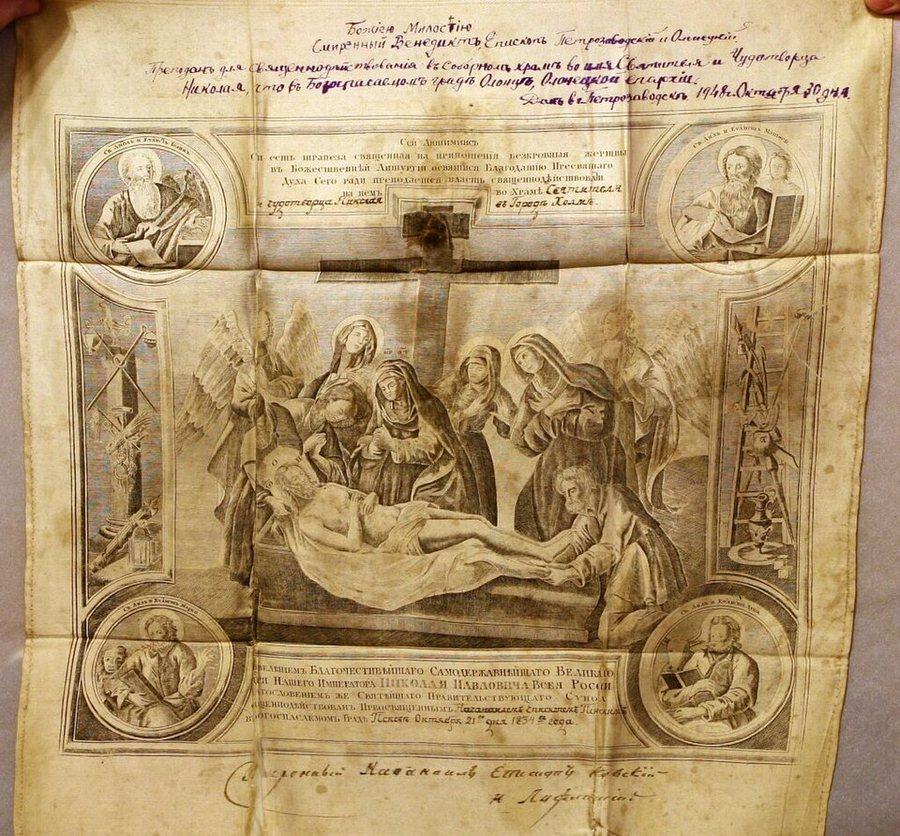
The antimins is a cloth bearing an icon of Christ's burial and containing a relic, used in the Byzantine rite to make any clean table a fitting altar for the Divine Liturgy.
- Category
- Liturgical Objects
- Status
- Church Approved
- Sources
- 3 cited
- Last reviewed
- 2026-10-27
Primary source Catechism of the Catholic Church 1674
The antimins is a consecrated cloth bearing an icon of Christ's burial and holding a relic. In the Byzantine rite it makes any clean table a fitting altar for the Divine Liturgy.
What it is
The Catechism recognizes the liturgies of the particular churches (CCC 1674). The antimins is consecrated by a bishop and carries a small relic; without it the Divine Liturgy is not celebrated.
How it is used
It is unfolded on the altar at the beginning of the Liturgy and refolded at the end, always with reverence, since it has held the Body and Blood of Christ.
A note on misuse
The antimins is not a decoration. It is a consecrated object and is treated with the respect due to the altar itself.
FAQ
Is the antimins the same as a corporal?
No. The corporal is a plain linen cloth used in the Latin rite to catch particles of the Host. The antimins is a consecrated cloth with an icon and a relic, and it is required for the Byzantine Liturgy.
Sources
| Tier | Reference |
|---|---|
| Tier 1 | Catechism of the Catholic Church 1674 (opens in new tab) |
| Tier 1 | Code of Canons of the Eastern Churches can. 671 (opens in new tab) |
| Tier 2 | Catholic Encyclopedia, "Rite of Constantinople" (Fortescue) (opens in new tab) |
Last reviewed: 2026-10-27