Fake or Catholic? · last reviewed 2026-10-03
Spirit Guides vs. Guardian Angels
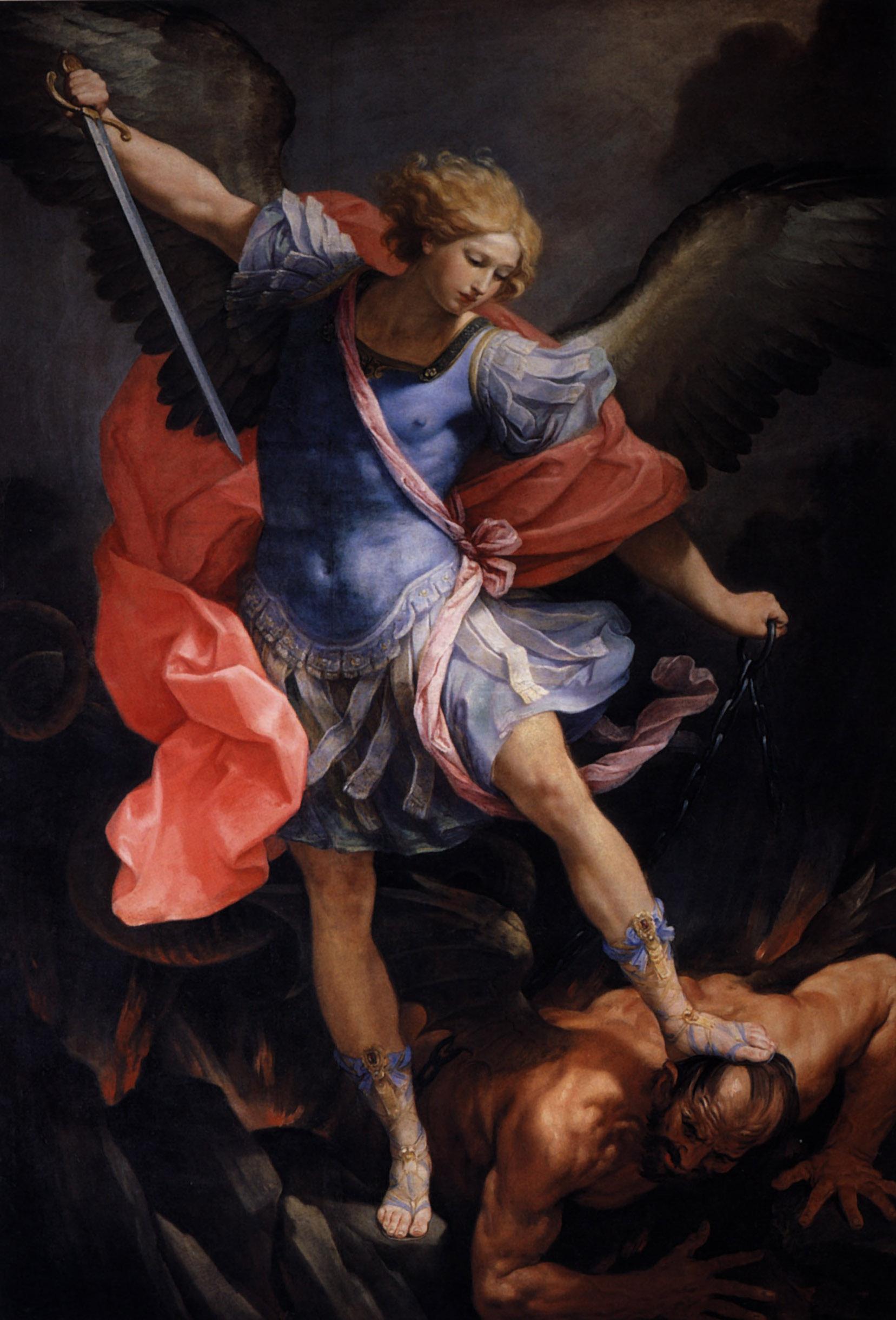
At a glance
Spirit guides and guardian angels are both presented as personal helpers in the unseen world, but an angel is a creature of God assigned to lead a person to heaven, while a guide is an unnamed spirit reached by technique.
- Verdict
- Counterfeit
- Sources
- 3 cited
- Last reviewed
- 2026-10-03
Primary source Catechism of the Catholic Church, The Angels (328–336)
| Spirit guides and channeling | Guardian angels |
|---|---|
| Seeking messages, protection, or instruction from unnamed spirits reached through meditation, channeling, or automatic writing. | Each person has a heavenly creature assigned by God to guard and guide them toward salvation. |
Guardian angels and spirit guides are not the same kind of being on the same kind of errand. A guardian angel is a creature of God assigned to a person in order to help that person reach heaven; a spirit guide is an unnamed spirit contacted through a technique such as meditation, channeling, or automatic writing. The Catechism teaches the first (CCC 328–336) and rejects the second when it is consulted as a source of guidance (CCC 2115–2117).
Why it looks real
The wish for a personal helper in the unseen world is ancient and understandable: prayer can feel one-directional, and a guide is offered as a relationship rather than a monologue. New Age teaching makes it effortless, since you need not believe in God to believe in guidance, and the standard language of love and light makes every entity sound friendly. The Vatican's 2003 study document on the New Age notes that guides, entities, and beings are presented as a menu available to whoever is drawn to them.
The Catholic answer
The Catechism teaches that God's angels are personal, spiritual creatures who serve his plan for the world, and that beside each believer stands an angel as protector and shepherd (CCC 328–336). The Directory on Popular Piety devotes its own section to the holy angels, treating their veneration as a normal part of Catholic devotion. The difference from a guide is one of authority: the angel's commission comes from God, is ordered to Christ, and cannot be summoned by a technique.
Consulting mediums stands outside that. The First Commandment section of the Catechism rejects recourse to mediums and conjuring up the dead precisely because it seeks what God has not promised to give (CCC 2115–2117), and the Vatican's New Age study describes channeling as a contemporary form of spiritualism in which a medium claims to be spoken for by another entity.
Pastoral note
Pray to your guardian angel by name, morning and night, and ask him to lead you to Christ rather than only to keep you safe. If you have been reaching for a guide through channeling or a meditation group, stop and mention it to a priest: the Church is not worried that you wanted guidance, only about where you went looking for it.
In one line
Pray to your guardian angel by name each morning, and if you have used channeling, automatic writing, or a meditation group to reach a guide, stop and mention it to a priest rather than carrying it alone.
FAQ
Are spirit guides the same as guardian angels?
No. The Catechism teaches that God assigns a personal angel to guard each believer (CCC 328–336), whereas a spirit guide is an unnamed spirit contacted by a human technique, which the First Commandment section rejects when it is sought as a source of guidance (CCC 2115–2117).
Why does the Church treat channeling as a serious matter?
Because it seeks revelation from a source God has not appointed. The Vatican's 2003 study document on the New Age describes channeling as a contemporary form of spiritualism in which entities are said to speak through a medium.
How do I pray to my guardian angel?
The traditional Angel of God prayer, said in the morning and at night, is the simplest start, together with asking your angel to lead you to Christ rather than simply to protect you.
Sources
| Tier | Reference |
|---|---|
| Tier 1 | Catechism of the Catholic Church, The Angels (328–336) (opens in new tab) |
| Tier 1 | Catechism of the Catholic Church, First Commandment (2115–2117) (opens in new tab) |
| Tier 2 | A Christian Reflection on the "New Age" (2003) (opens in new tab) |
Last reviewed: 2026-10-03